Signs of a Failing Wheel Bearing: Common Noises and Safety Risks

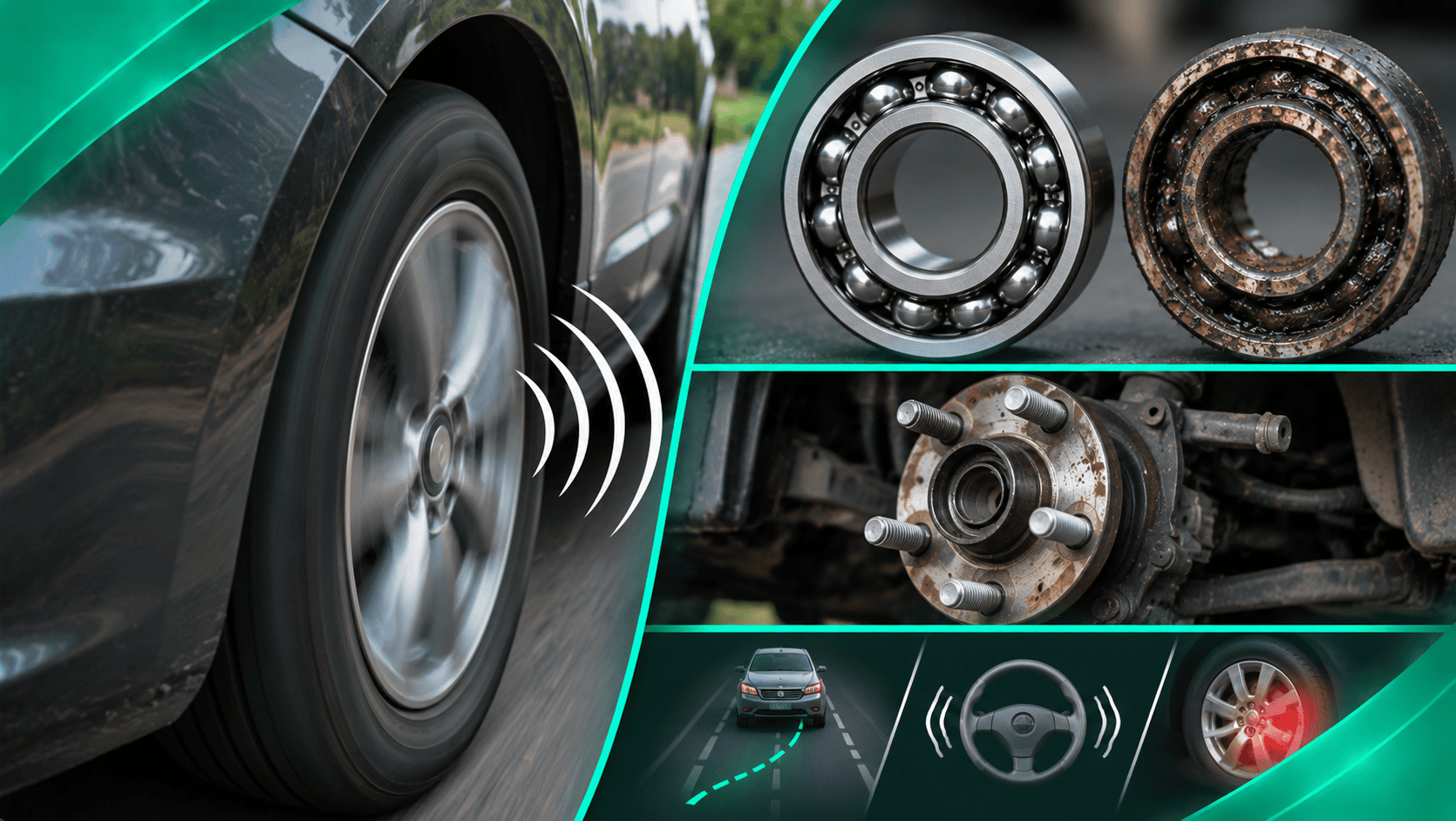
Today at MotorGuide, we're going to discuss an important vehicle component that directly affects driving safety but often receives little attention until something goes wrong. We're talking about wheel bearings, the unusual noises they can produce when worn, and the potential risks of continuing to drive with a damaged bearing.
Imagine driving along a road and suddenly noticing a humming or rumbling noise coming from one of your wheels. At first, you might assume it's normal tyre noise or a sound caused by the road surface. However, as you accelerate, the noise becomes louder and more noticeable.
In some cases, the sound may also change when you turn the steering wheel or drive around a bend.
Although several vehicle problems can produce similar noises, a worn or damaged wheel bearing is one possible explanation.
Ignoring a failing wheel bearing can lead to increased vibration, additional damage to surrounding components, and, in severe cases, dangerous mechanical failure.
So, what exactly does a wheel bearing do? How can you identify the warning signs, and what risks should you be aware of? Let's take a closer look.
What Is a Wheel Bearing and How Does It Work?
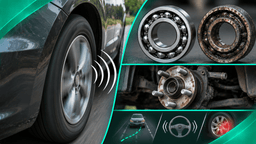
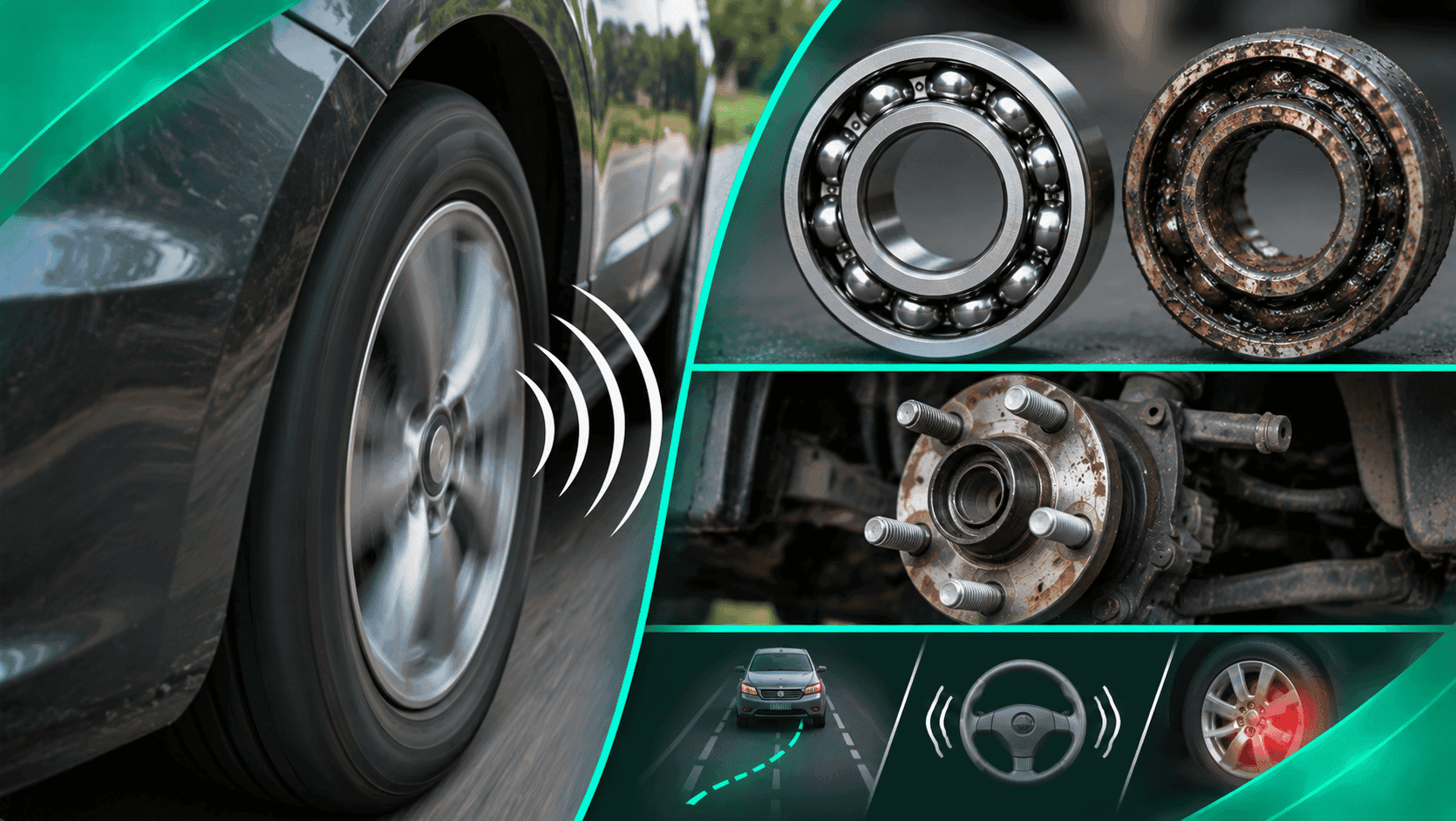
A wheel bearing is a mechanical component that allows a vehicle's wheel hub to rotate smoothly while supporting the loads placed on it during driving.
In many modern passenger vehicles, wheel bearings are incorporated into the wheel hub assembly or fitted into the steering knuckle or suspension assembly.
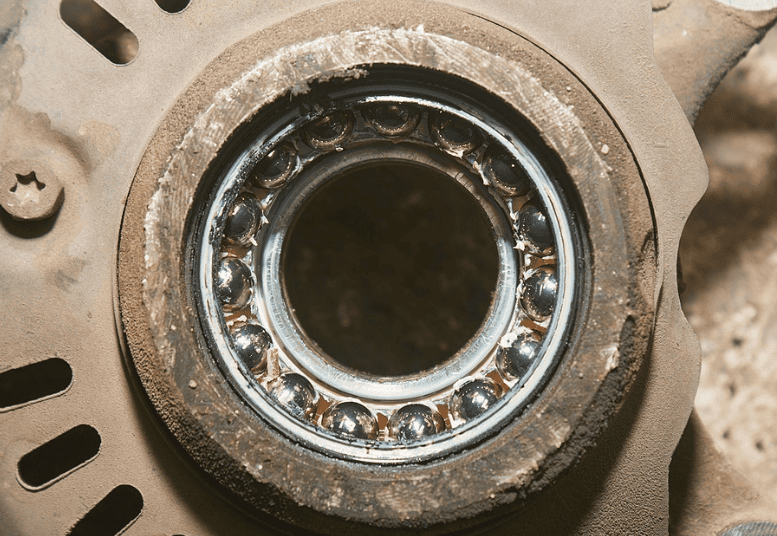
Depending on the design, the bearing may contain steel balls or rollers positioned between precision-machined inner and outer races.
These rolling elements are lubricated with suitable grease, which helps minimise friction and protect internal components from wear.
As the wheel rotates, the bearing supports forces created by the vehicle's weight, cornering, acceleration, and braking.
Without a properly functioning bearing, the wheel would not rotate smoothly under these loads.
However, wheel bearings do not operate completely without friction. Their design reduces friction to a controlled level while allowing the wheel assembly to rotate efficiently.
Over time, bearings can deteriorate because of ordinary wear, excessive loads, impact damage, moisture intrusion, or contamination.
For example, driving through potholes repeatedly can place substantial loads on wheel and suspension components.
Similarly, if a bearing seal becomes damaged, water and contaminants may enter the assembly and affect the lubricant.
When lubrication deteriorates or internal bearing surfaces become damaged, unusual noise and vibration may begin to develop.
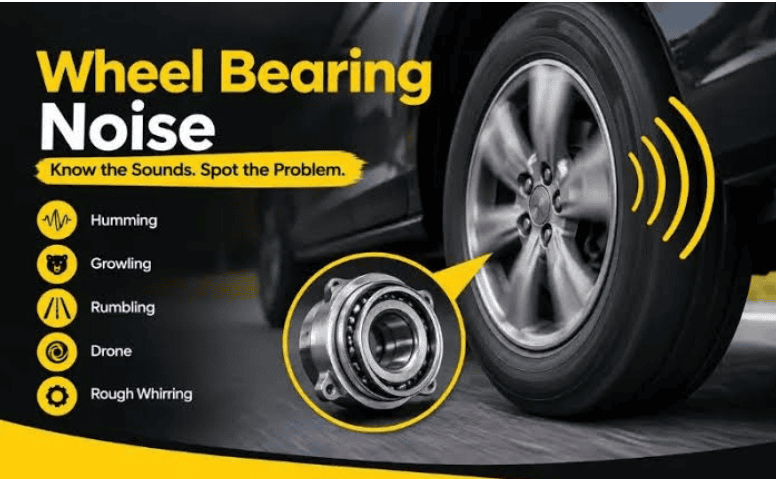
1. Humming, Rumbling or Growling Noise
One of the most common symptoms of a worn wheel bearing is a continuous humming, rumbling, or growling noise coming from the wheel area.
Some drivers describe the sound as being similar to a distant aircraft or a deep mechanical drone.
At lower speeds, the noise may be difficult to notice, especially when there is significant traffic or road noise.
However, as vehicle speed increases, the sound often becomes more noticeable.
This happens because damaged rolling elements or bearing surfaces can produce vibration and noise as they rotate.
Unlike engine noise, which is often related to engine RPM, wheel-bearing noise typically changes with vehicle road speed.
For example, the sound may increase as the vehicle accelerates even when the engine operates at relatively low RPM in a higher gear.
However, this pattern does not automatically confirm a wheel-bearing fault.
Tyres with uneven tread wear, certain road surfaces, and other rotating drivetrain components can produce similar humming noises.
Therefore, further inspection is necessary to identify the source.
Does Wheel Bearing Noise Change When Turning?
Another useful clue is whether the noise changes when the vehicle travels around a bend.
During cornering, the forces acting on the left and right wheel bearings change.
For example, when a vehicle turns left, additional load is generally transferred towards the right side of the vehicle.
If a damaged bearing becomes noisier under that additional load, the sound may become more noticeable during the turn.
In some cases, a right-side wheel bearing may therefore produce more noise during a left-hand bend.
However, this is not a guaranteed diagnostic rule.
Bearing design, suspension geometry, tyre condition, and the location of the damage can affect how the noise changes.
A wheel bearing may also remain noisy regardless of steering direction.
It is therefore unsafe to conclude that a particular bearing has failed based only on whether the sound becomes louder while turning left or right.
If the noise changes during ordinary cornering, report this observation to a qualified mechanic rather than performing sudden steering movements to test it.
2. Grinding Noise from the Wheel Area
Another possible warning sign of wheel bearing damage is a rough grinding sound.
While humming and rumbling may appear during earlier stages of bearing wear, grinding can indicate more significant internal deterioration.
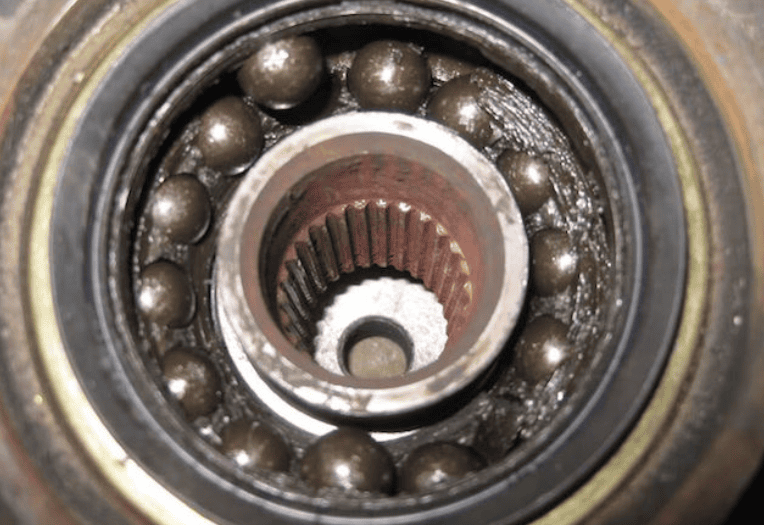
This may happen when the bearing's rolling elements or race surfaces have become damaged.
In some cases, insufficient lubrication, contamination, or corrosion can accelerate this damage.
As the affected components rotate, they may generate rough mechanical noise and vibration.
However, a grinding sound near a wheel is not necessarily caused by a wheel bearing.
Severely worn brake pads, a damaged brake disc, stones trapped near the brake assembly, and certain drivetrain faults can also produce grinding noises.
If you hear a new or severe grinding sound, arrange an inspection promptly.
If the sound is accompanied by substantial vibration, wheel looseness, or difficulty controlling the vehicle, stop driving as soon as it is safe and arrange recovery assistance.
3. Clicking or Snapping Sounds When Turning
Some drivers notice clicking or snapping noises when turning the steering wheel or travelling over uneven roads.
Although a severely worn wheel bearing may sometimes produce unusual mechanical noises, clicking during turns is not one of the most reliable signs of wheel-bearing failure.
In front-wheel-drive and all-wheel-drive vehicles, repeated clicking during tight turns is commonly associated with a worn outer constant velocity joint, often called a CV joint.
Other possible causes include loose suspension components, damaged steering joints, or problems within the wheel hub assembly.
For this reason, clicking sounds should not automatically be blamed on the wheel bearing.
A proper inspection of the bearing, CV joint, steering system, and suspension components is needed to identify the cause.
4. Steering Wheel Vibration and Uneven Tyre Wear
A damaged wheel bearing may also contribute to vibration while driving.
If the bearing develops excessive internal clearance or mechanical damage, the wheel assembly may no longer operate as smoothly as intended.
Depending on the vehicle and the severity of the problem, the driver may notice vibration through the steering wheel, floor, or vehicle body.
However, vibration can also result from wheel imbalance, damaged tyres, bent wheels, brake problems, or worn suspension components.
Similarly, uneven tyre wear can have several causes, including incorrect wheel alignment, improper tyre pressure, and suspension faults.
A severely worn bearing with excessive wheel movement may contribute to abnormal tyre wear, but it is not the most common explanation for every unevenly worn tyre.
Therefore, vibration and unusual tyre wear should be investigated alongside other symptoms rather than treated as definitive proof of bearing failure.
What Happens If You Continue Driving with a Bad Wheel Bearing?
Wheel bearings are designed to support substantial loads, but they must remain in suitable mechanical condition to operate safely.
As a damaged bearing continues to deteriorate, friction, vibration, and internal wear may increase.
In some cases, continued driving can lead to more serious mechanical problems.
The following are among the important risks associated with severe wheel-bearing failure.
5. Wheel Bearing Seizure
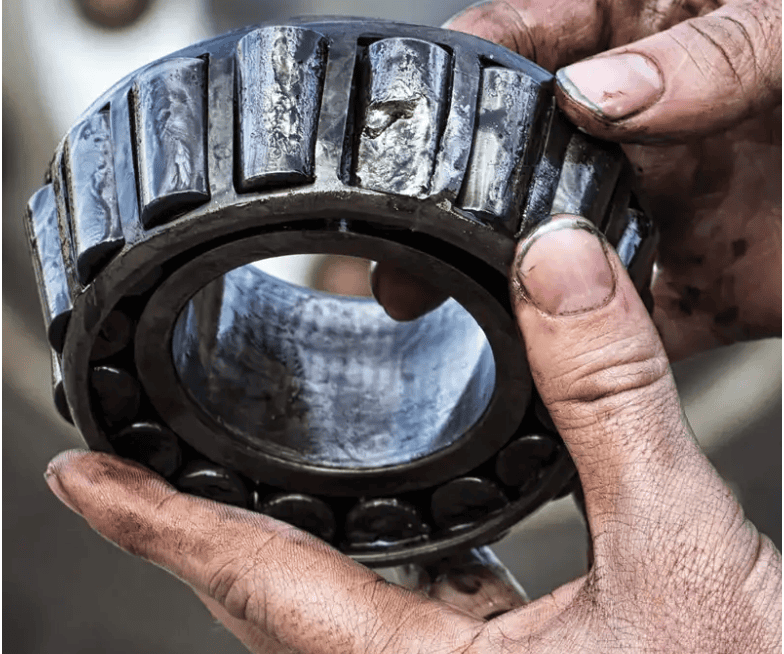
One potential risk of severe wheel-bearing failure is seizure.
When a bearing becomes seriously damaged, its internal components may generate excessive heat and mechanical friction.
Under extreme conditions, the bearing may partially seize or become unable to rotate normally.
This can affect wheel movement and may create a dangerous situation while driving.
However, it is important to understand that wheel-bearing seizure is not an inevitable outcome of every noisy bearing.
Some worn bearings continue operating while producing increasingly noticeable noise, whereas others may deteriorate more rapidly.
The rate of failure depends on the type of bearing, the extent of damage, driving conditions, and other mechanical factors.
Nevertheless, the possibility of serious failure is one reason why suspicious bearing noise should never be ignored.
6. Risk of Wheel or Hub Assembly Failure
Another serious concern is the possibility of structural failure within a severely damaged wheel hub or bearing assembly.
Wheel bearings help support the wheel hub and maintain correct positioning of the rotating components.
If the bearing becomes severely worn, excessive movement or instability may develop.
In extreme cases, bearing or hub assembly failure can compromise the wheel's attachment or support.
Depending on the vehicle's design and the failure mode, this can potentially lead to dangerous wheel movement or separation.
However, not every wheel-bearing failure causes a wheel to detach from the vehicle.
Wheel retention depends on several components, including the hub design, retaining hardware, axle arrangement, and wheel fasteners.
Even so, severe bearing deterioration can create a significant safety risk and should be treated urgently.
7. Damage to Other Vehicle Components
A worn wheel bearing may also affect nearby mechanical components.
When excessive play develops in the wheel hub, the wheel may move beyond its intended operating limits.
Depending on the vehicle and the severity of the damage, this can place additional stress on surrounding components.
Possible affected areas include the brake disc, brake caliper, steering knuckle, and related hub components.
On some vehicles, abnormal hub movement may also affect the relationship between the ABS wheel-speed sensor and its corresponding magnetic encoder or tone ring.
This can potentially cause wheel-speed signal problems and trigger an ABS warning light.
However, a bad wheel bearing does not automatically damage the ABS sensor or disable the entire braking system.
The actual effect depends on the construction of the wheel hub and the location of the fault.
In some cases, a damaged bearing can be replaced separately.
In other vehicles, the bearing forms part of an integrated hub assembly that must be replaced as a complete unit.
Addressing the problem early may help prevent additional damage and unnecessary repair costs.
8. How to Check If a Wheel Bearing Is Damaged
If you suspect a wheel-bearing problem, a qualified mechanic can inspect the affected wheel and hub assembly.
The inspection may begin with a road test to identify when the noise occurs and whether it changes with vehicle speed or cornering load.
The mechanic may also check tyre condition, brake components, and other possible sources of noise.
When appropriate, the vehicle can be raised safely using suitable lifting equipment and the wheel checked for abnormal movement.
Excessive play may indicate a worn bearing or another problem involving the wheel, steering, or suspension assembly.
However, some damaged wheel bearings produce noise without having noticeable looseness.
Therefore, the absence of wheel play does not automatically mean the bearing is in good condition.
Technicians may also rotate the wheel by hand, check for roughness, or use specialised diagnostic equipment to identify the source of the noise.
Never attempt to raise a vehicle using an unsuitable jack or work beneath a vehicle supported only by a jack.
9. What Causes Wheel Bearings to Fail?
Several factors can contribute to wheel-bearing deterioration over time.
One common factor is ordinary mechanical wear after extended use.
However, the service life of a wheel bearing varies considerably depending on its design, manufacturing quality, vehicle load, and operating conditions.
Repeated impacts from potholes and damaged roads can also place additional stress on the bearing and surrounding suspension components.
Another possible cause is water contamination.
If the bearing's protective seals become damaged, water and dirt may enter the assembly and affect its lubrication.
Contaminated grease can contribute to corrosion, internal wear, and premature bearing failure.
Improper installation, incorrect tightening torque, or damage during previous repairs can also shorten bearing life.
For this reason, wheel-bearing replacement should be carried out using the correct procedures and specifications.
10. Can Driving Through Floodwater Damage Wheel Bearings?
Floodwater can create additional risks for several vehicle components, including wheel bearings.
Many modern wheel bearings are sealed and designed to resist contamination during ordinary road use.
However, prolonged exposure to deep water, pressure washing directed at seals, or damaged bearing seals can increase the possibility of water entering the assembly.
Once water contaminates the lubricant, corrosion and accelerated wear may occur.
This does not mean that every vehicle driven through rain or shallow water will develop bearing problems.
Nevertheless, if your vehicle has been exposed to deep floodwater, it is sensible to arrange an appropriate mechanical inspection.
Pay particular attention to new humming noises, rough wheel rotation, or changes in the way the vehicle handles.
11. When Should You Replace a Wheel Bearing?
Unlike some routine maintenance components, wheel bearings generally do not have a universal replacement interval.
Some wheel bearings remain serviceable for many years, while others may fail earlier because of damage, contamination, or operating conditions.
Replacement is usually recommended when inspection confirms excessive wear, abnormal noise, roughness, excessive play, or another fault that makes the bearing unsuitable for continued use.
If the bearing is integrated into the hub assembly, the entire assembly may need replacement.
When replacing a bearing, the technician should use a component that meets the vehicle manufacturer's specifications.
Correct installation and tightening procedures are especially important because improper installation can damage a new bearing or affect wheel safety.
Is It Safe to Drive with a Noisy Wheel Bearing?
A new humming or rumbling noise should be investigated as soon as practical, particularly if it increases with road speed.
However, the seriousness of the problem cannot be determined from the sound alone.
If the vehicle has noticeable wheel looseness, severe grinding, strong vibration, overheating around the hub, or abnormal handling, do not continue driving.
Stop in a safe location and arrange professional assistance or vehicle recovery.
Even when the noise appears mild, a wheel-bearing fault should not be ignored or left for an extended period without inspection.
Early diagnosis can help identify the problem before additional components become damaged.
MotorGuide's Advice: Don't Ignore Unusual Wheel Noises
At MotorGuide, our advice is to pay attention whenever your vehicle develops an unfamiliar humming, rumbling, growling, or grinding noise near the wheels.
Although these sounds can have several causes, a worn wheel bearing is one possibility that deserves prompt inspection.
If the noise becomes louder with vehicle speed or changes during ordinary cornering, describe these symptoms to a qualified mechanic.
Have the wheel bearing, hub assembly, tyres, brakes, and relevant suspension components inspected to identify the actual fault.
Remember that a bearing may be damaged even when the wheel does not show obvious play.
If your vehicle has recently travelled through deep floodwater or experienced a severe pothole impact, pay attention to any unusual noises that develop afterwards.
Replacing a damaged wheel bearing at the appropriate time can help maintain smooth wheel operation, reduce the likelihood of additional repairs, and protect your safety on the road.
Stay connected with MotorGuide for more useful information about vehicle maintenance, mechanical problems, driving safety, and the latest automotive technologies.

Written by
Nisaga Sandaru
A versatile and highly experienced professional, currently an Automobile undergraduate at the University of Jaffna, with strong technical expertise grounded in hands-on work as a technician with SriLankan Airlines Ground Support Equipment (GSE). Holding an Automobile NVQ Level 3 qualification, along with specialized certifications in Vehicle ECU Programming and Diagnosis, and extensive experience in arc welding and vehicle body painting, and well equipped to handle complex automotive, diagnostic, and fabrication-related tasks with a high level of competence.