Let's Learn Properly About Tinted Films

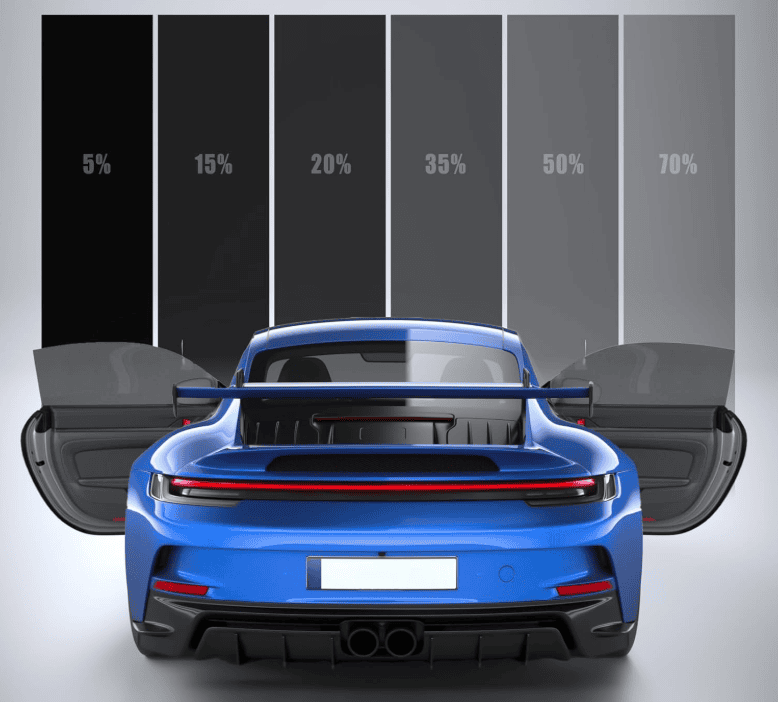
Today at Motor Guide, we are discussing a topic that is highly important and frequently misunderstood by all of you who use and love vehicles. That is the Tinted Films applied to vehicle windows, or as we all colloquially say, "blackening the windows." Given the climate and intense heat in Sri Lanka, driving a vehicle during the daytime is not an easy task. Due to the harsh sunlight, the interior of the vehicle overheats, the dashboard bakes, and the seats become so hot that getting into the vehicle becomes impossible. As a solution to all this, many people simply go to the nearest shop and get their windows tinted.
However, the problem is that many people do not properly understand the technology behind these films and the differences between them. Many issues arise only after just going to a shop and pasting a film in a color they like or just black. Visibility drops at night, signals get blocked, or the film gets ruined within a few months. That is exactly why we decided to discuss this from the basics, simply and very accurately.
The Technical Factors of Tinted Films
First, let's look at the technical factors inside a tinted film. There are three main factors important to us in every film.
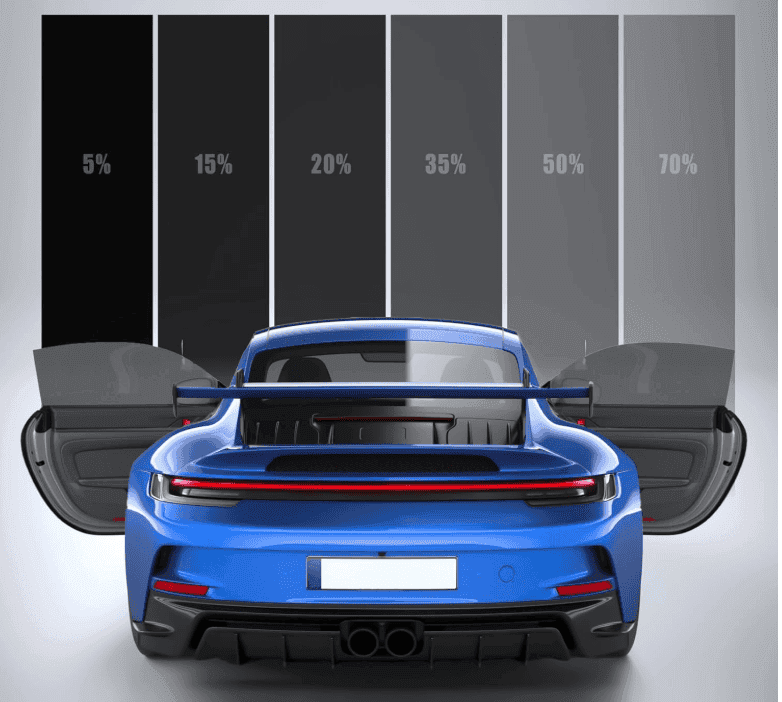
- VLT (Visible Light Transmission): This measures how much light passes through the film into the vehicle. For example, if you paste a film marked as 5% VLT, only 5% of light enters through it. That means it is a very dark film. However, if you paste a 70% VLT film, it is highly transparent and you can see very clearly.
- UVR (Ultraviolet Rejection): Ultraviolet rays from the sun are very harmful to our skin as well as the leather seats and plastic parts inside the vehicle. A high-quality film blocks 99% of these rays.
- IRR (Infrared Rejection): Infrared rays are the primary reason heat from the sun enters the vehicle. Therefore, the higher the IRR value, the less heat enters the vehicle.
Main Types of Films in the Market
Now let's see what the main types of films available in the market are, because these are available at various price points in shops.
1. Dyed Films
These are the cheapest and simplest type. Here, they simply add black dye to a standard plastic film to color it. Heat control is extremely minimal in these. Over time, due to the sun's heat, the color of this film turns purple or blue, and it starts bubbling all over the glass.
2. Metallized Films
These contain microscopic metal particles. Because of this, they have a good ability to reflect heat and light, and their durability is also higher. However, the biggest disadvantage of this is that it interferes with the vehicle's GPS devices, mobile phone signals, and radio signals. If you are someone who constantly looks at maps on your phone inside the vehicle, this type is not suitable.
3. Carbon Films
This is a very successful and popular type. These films have a matte finish and have the ability to block about 40% of the heat. Since there are no metal particles in them, there is no signal interference whatsoever. Also, the color does not change over time.
4. Ceramic Films
This is the highest technology type available in the world. These contain microscopic nano-ceramic particles. Although this type of film is slightly higher in price, it blocks heat and UV rays at a maximum level. The heat rejection capability of some ceramic films is well over 90%. Furthermore, their special feature is that even if they look dark from the outside, they provide excellent visibility from the inside, even at night.
The Danger of Cheap Films
As professionals in this field, one thing we constantly see and experience is that many people only look at the price when applying a film to their vehicle. When you install a cheap film, it might look beautiful for the first few months, but after a while, its adhesive melts and it starts bubbling all over the glass. Specifically, the defogger lines on the rear windshield can completely break off when removing a cheap film.
Another problem with cheap films is that when the headlights of oncoming vehicles hit them at night, the light scatters across the entire glass, impairing vision. This is a highly dangerous situation while driving. Therefore, it is always very important to choose a guaranteed film from a good brand. Additionally, the skill of the technician applying it has a massive impact. These must be applied in a clean, dust-free, well-enclosed environment. Otherwise, if even a tiny dust particle or a strand of hair gets trapped between the glass and the film, it will later turn into a large bubble.
Legal and Safety Considerations
Another important aspect is considering the legal status and safety in Sri Lanka. When applying a film to the front windshield, it must absolutely be one with a high VLT value. Generally, a clear one with 70% or higher is suitable for the front windshield. Because if you cannot see the road properly at night or when it's raining, you are putting your own life as well as the lives of others in danger.
Even for the side windows, if you completely black out the interior of the vehicle unnecessarily, you might face issues with the police. Also, when looking at the side mirrors, it becomes difficult to identify vehicles coming from behind at night. Therefore, you must think twice about your practical safety just as much as making the vehicle look beautiful. Everyone should remember that when using a good quality ceramic film, you can achieve maximum heat control without having to make it heavily dark.
Motor Guide's Final Advice
Motor Guide's advice is this: when choosing a tinted film for your vehicle, first identify your budget as well as your actual needs. If you absolutely need to control the heat, going for a nano-ceramic film—even if the price is a bit higher—will be beneficial in the long run. Because it keeps the interior of the vehicle cool, the load on the A/C drops, and even fuel economy increases.
Never apply cheap types from unstandardized roadside places and regret it later. Get this done with a certified warranty from a recognized institution. After applying a film, you must avoid rolling down the windows for two or three days, because the moisture in it needs time to dry completely. Also, remember not to use harsh chemicals or ammonia-based cleaners when cleaning the inside of the windows.
And don't forget to always stay tuned with Motor Guide to learn more valuable information like this about modern vehicles and technology!

எழுதியவர்
Nisaga Sandaru
A versatile and highly experienced professional, currently an Automobile undergraduate at the University of Jaffna, with strong technical expertise grounded in hands-on work as a technician with SriLankan Airlines Ground Support Equipment (GSE). Holding an Automobile NVQ Level 3 qualification, along with specialized certifications in Vehicle ECU Programming and Diagnosis, and extensive experience in arc welding and vehicle body painting, and well equipped to handle complex automotive, diagnostic, and fabrication-related tasks with a high level of competence.