What Is Tyre Retreading?

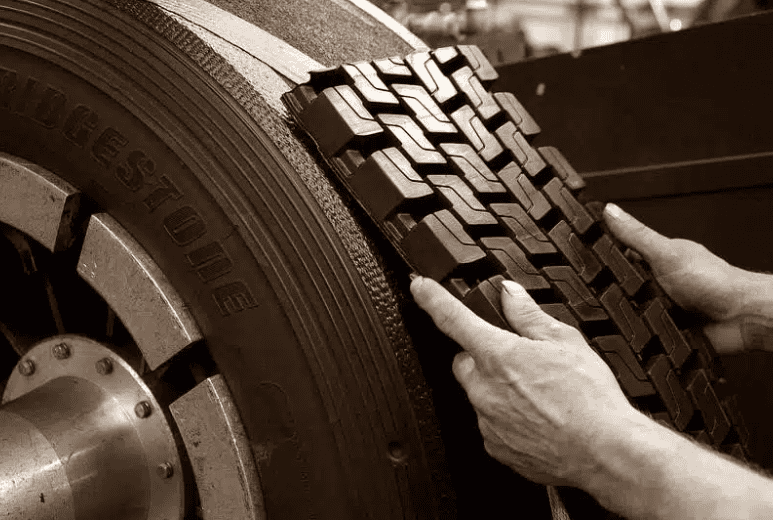
Today at MotorGuide, we're going to talk about an important topic related to vehicle maintenance, one that can help reduce costs while also having a direct impact on road safety. It's called "Tyre Retreading."
We all know that tyres gradually wear out with regular driving. Over time, the tread loses its grip, and eventually, the tyre needs to be replaced. However, buying a brand-new tyre can be quite expensive, especially for commercial vehicle owners. This is where tyre retreading comes in as a practical and cost-effective solution. It is also widely used in Sri Lanka's heavy vehicle industry.
So, how does tyre retreading actually work? What are the different methods used, and what are the real benefits of this technology? Let's take a closer look.
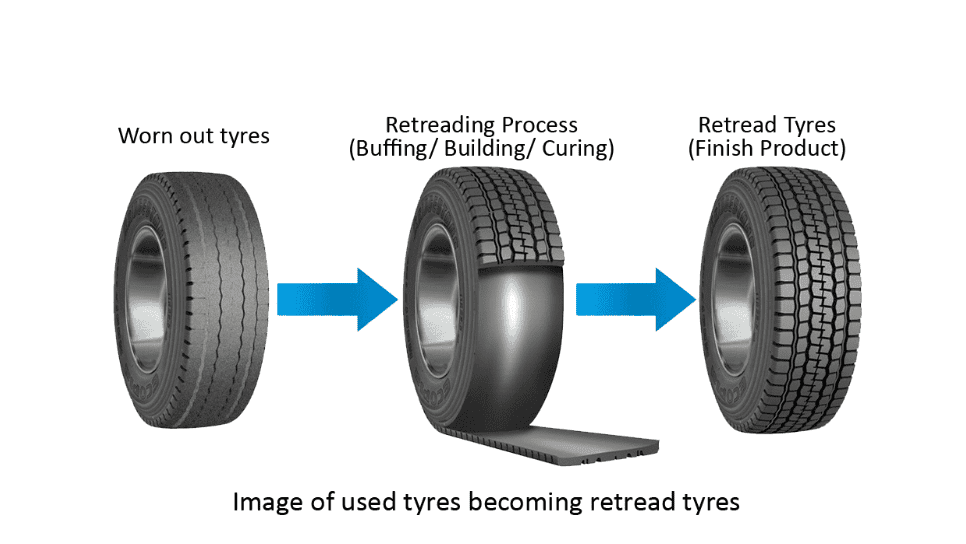
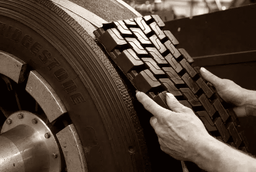
In simple terms, tyre retreading, also known as recapping or remoulding, is the process of removing the worn-out tread from a used tyre and replacing it with a new layer of rubber through a specialised bonding process.
Instead of replacing the entire tyre, the process reuses its main structural component, known as the casing or carcass. In fact, more than 70% of the total manufacturing cost of a tyre is associated with producing this strong internal structure. Therefore, if the casing is still in good condition and free from damage, giving it a second life makes both financial and practical sense.
The retreading process involves several carefully controlled technical steps. First, the tyre casing undergoes a detailed inspection to identify any internal or external damage. Advanced inspection techniques, including Non-Destructive Testing (NDT), may be used to assess the condition of the casing and determine whether it is suitable for retreading.
Once the casing passes the inspection, it moves to a process known as "Buffing." During this stage, the remaining worn-out tread rubber is mechanically removed to create a smooth and even surface. This prepares the casing for the application of the new rubber tread.
There are two main methods used in tyre retreading.
1. Pre-Cure (Cold-Cure) Method
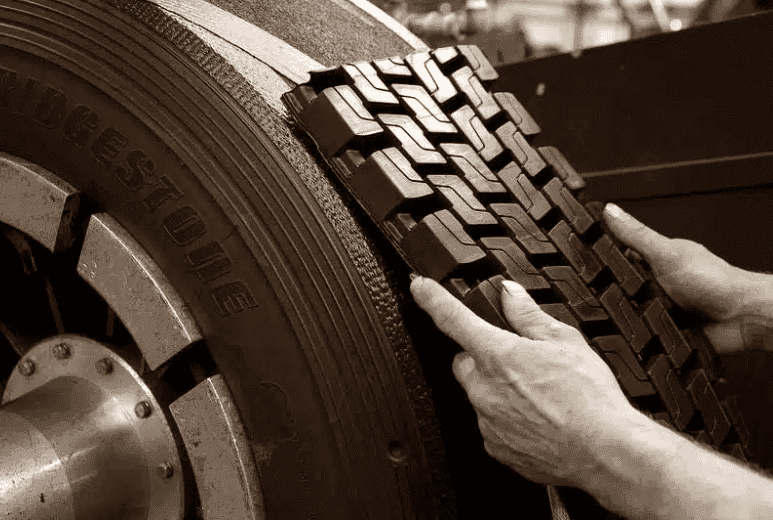
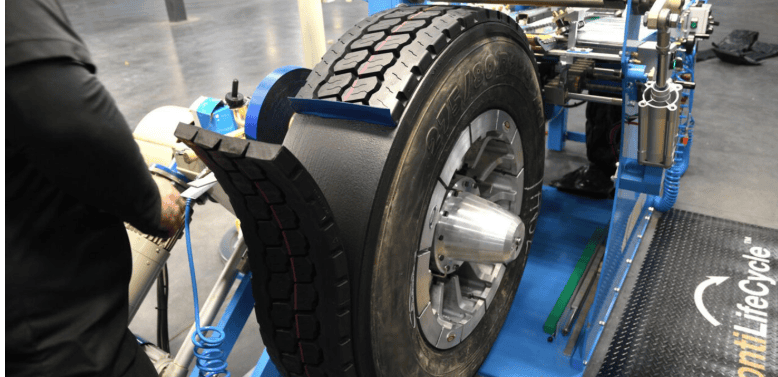
In the Pre-Cure method, a specially manufactured rubber tread strip is used. This tread has already been moulded and cured at the factory, complete with its tread pattern.
The prepared tread strip is wrapped around the tyre casing and bonded using a special layer of rubber known as "Cushion Gum." The tyre is then placed inside a curing chamber, where controlled heat and pressure, typically around 100°C to 120°C, are applied to create a strong bond between the new tread and the existing casing.
2. Mold Cure (Hot-Cure) Method
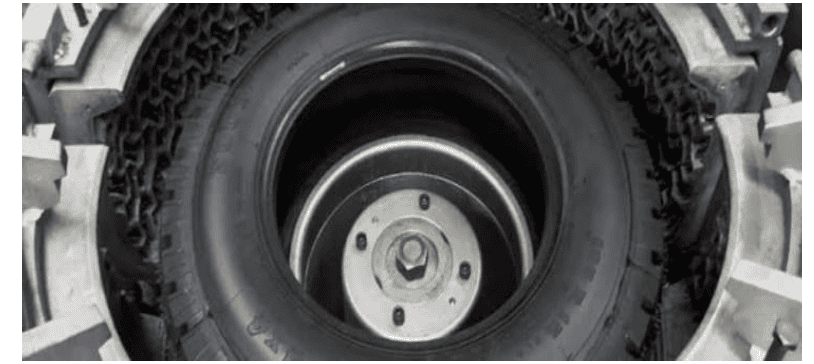
Unlike the Pre-Cure method, the Mold Cure process uses an uncured layer of rubber without a pre-formed tread pattern. This raw rubber is applied around the prepared tyre casing.
The tyre is then placed inside a large metal mould, known as a Rigid Mold, where it is exposed to high temperatures of around 150°C to 160°C and considerable pressure.
During this process, the rubber is cured and the tread pattern is formed directly onto the tyre. The result is a finish similar to that of a newly manufactured tyre, with a strong bond between the tread and the casing.
One common question is how many times a single tyre casing can be retreaded.
Generally, a high-quality tyre casing that has been properly maintained may be retreaded two or even three times, depending on its condition and suitability.
Interestingly, tyre retreading is also used in the aviation industry, where safety standards are extremely strict. Some aircraft tyres can be retreaded up to 12 times, provided they successfully pass the required inspections and meet the applicable safety requirements.
This demonstrates how reliable tyre retreading technology can be when the process is carried out correctly and according to established standards.
One of the biggest advantages of tyre retreading is the potential cost saving. A retreaded tyre may cost around 40% to 50% of the price of a new tyre, while offering approximately 50% to 90% of the service life of a new tyre, depending on its quality, application, and operating conditions.
There are also considerable environmental benefits. Manufacturing a new tyre may require approximately 22 gallons of oil, while retreading an existing tyre may use around 7 gallons. By reusing the tyre casing, retreading helps reduce the consumption of raw materials, carbon dioxide (CO2) emissions, and the number of discarded tyres entering the environment.
However, the safety and performance of a retreaded tyre depend heavily on proper maintenance and operating conditions.
One of the most important factors is maintaining the correct tyre pressure. When a tyre is operated with insufficient air pressure, it can generate excessive heat while driving.
This overheating may weaken the bond between the newly applied tread and the existing casing, increasing the risk of tread separation. This is a serious issue that can affect vehicle stability and road safety.
Some of the damaged tyre pieces commonly seen along highways are associated with tyre failures caused by incorrect inflation pressure, excessive heat, or poor-quality retreading processes.
That's why choosing a properly qualified retreading service provider is extremely important.
At MotorGuide, our advice is to always use a reputable tyre retreading company that follows applicable SLS or internationally recognised safety and quality standards, particularly when retreading tyres for heavy vehicles and commercial transport.
For smaller passenger cars, retreaded tyres may not always be the most practical option. It is also advisable to avoid using retreaded tyres on the front steering axle of heavy vehicles operating at high speeds, where tyre reliability is especially critical.
Most importantly, regularly checking and maintaining the correct tyre pressure can help improve the safety, performance, and lifespan of retreaded tyres.
When done correctly, tyre retreading can be a smart way to reduce operating costs while making better use of existing resources.
Stay connected with MotorGuide for more useful information about vehicle maintenance, modern automotive technologies, and everything you need to know about the world of vehicles.
எழுதியவர்
Nisaga Sandaru
A versatile and highly experienced professional, currently an Automobile undergraduate at the University of Jaffna, with strong technical expertise grounded in hands-on work as a technician with SriLankan Airlines Ground Support Equipment (GSE). Holding an Automobile NVQ Level 3 qualification, along with specialized certifications in Vehicle ECU Programming and Diagnosis, and extensive experience in arc welding and vehicle body painting, and well equipped to handle complex automotive, diagnostic, and fabrication-related tasks with a high level of competence.