How Worn Engine Mounts Cause Excessive Vehicle Vibration

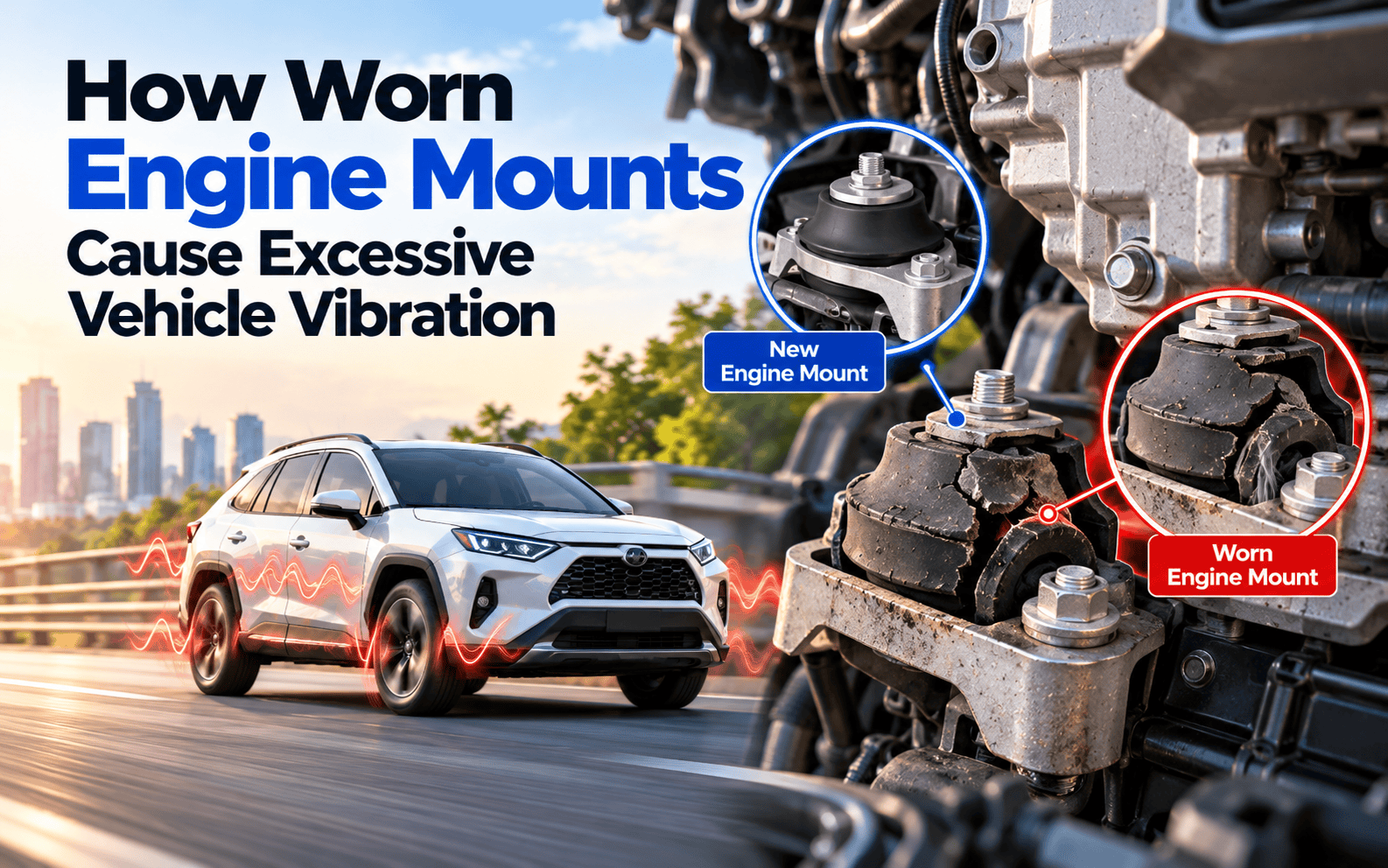
Today at MotorGuide, we're going to talk about an important mechanical component that directly affects your driving comfort and can even cause damage to other vehicle parts if it isn't maintained properly. We're talking about Engine Mounts and how worn-out mounts can lead to excessive vibration.
When you get into a relatively new vehicle and start the engine, you usually notice very little vibration inside the cabin. However, after years of use, things can start to change.
You might notice the dashboard vibrating while the engine is idling, the steering wheel shaking more than usual, or an unusual knocking sound when shifting gears. While these symptoms can have several causes, worn engine mounts are one possible explanation.
So, what exactly are engine mounts? How do they reduce vibration, and what happens when they begin to wear out? Let's take a closer look.
What Are Engine Mounts?
In simple terms, engine mounts are supporting components that secure the engine and transmission to the vehicle's chassis, frame, or supporting structure.
Their main purpose is to hold the powertrain securely in position while reducing the amount of engine vibration transmitted into the passenger cabin.
Many vehicles use three or four engine and transmission mounts, although the exact number and arrangement depend on the vehicle's design.
Most conventional engine mounts consist of metal components separated by a specially designed rubber section. Some modern vehicles also use hydraulic mounts containing fluid to improve vibration isolation.
When an engine operates, the combustion process and the movement of internal components such as pistons and crankshafts create vibrations.
Without suitable engine mounts, much of this vibration would travel directly through the vehicle's structure, making the cabin significantly less comfortable.
Engine mounts help absorb and isolate these movements while allowing a controlled amount of engine movement during acceleration and other driving conditions.
However, no engine mount can eliminate every vibration completely.
Why Do Engine Mounts Wear Out?
Like many rubber and mechanical components, engine mounts gradually deteriorate with age and use.
During everyday driving, they are exposed to engine heat, repeated movement, vibration, and changes in mechanical load.
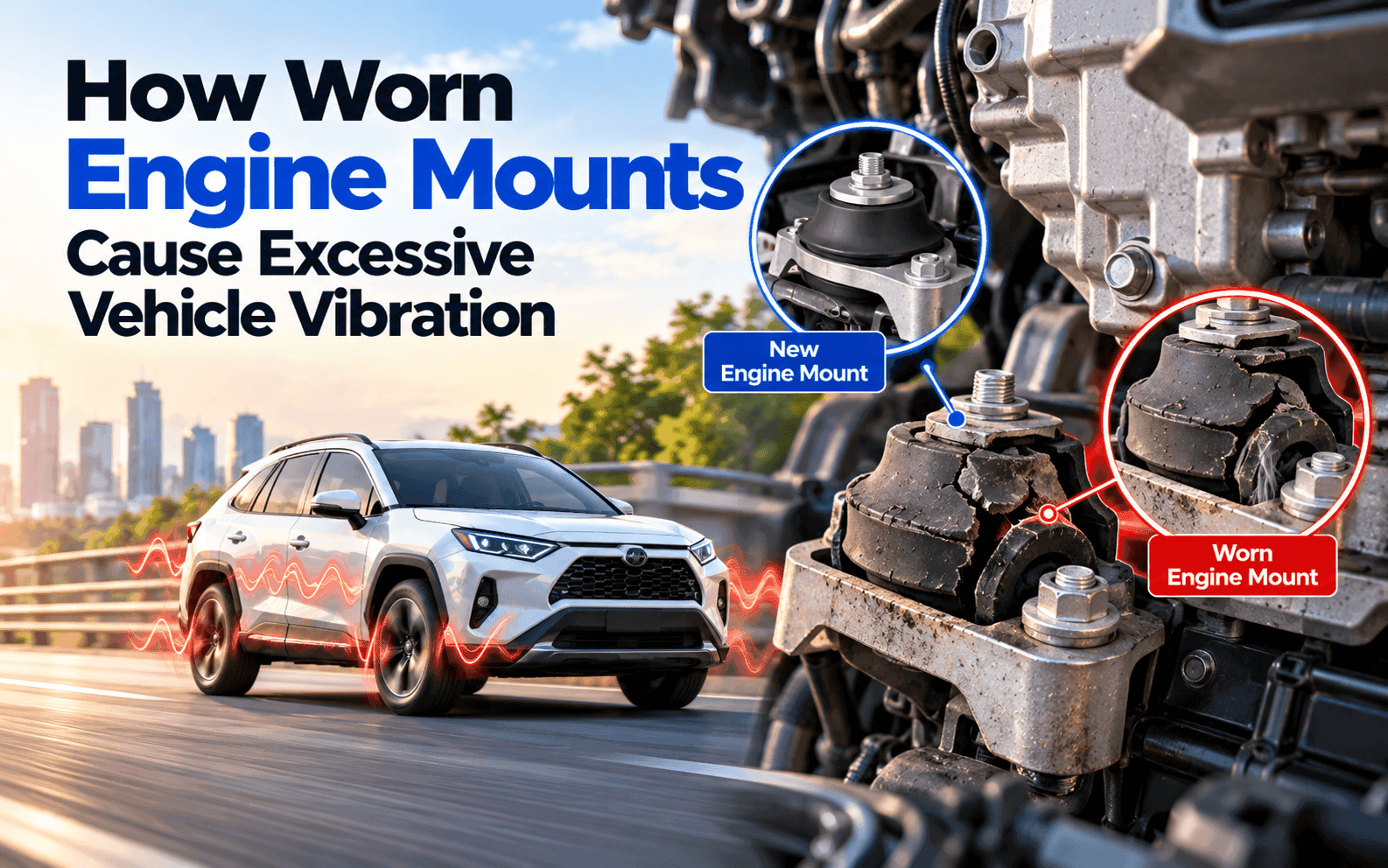
Over time, these conditions can cause the rubber sections to harden, crack, or tear.
Engine oil leaks can also accelerate the deterioration of certain rubber mounts, particularly when oil remains in contact with the rubber for an extended period.
In hydraulic engine mounts, the internal fluid may leak if the mount's housing or sealing components become damaged.
When an engine mount loses its ability to provide proper support and vibration isolation, more engine movement and vibration can be transmitted through the vehicle's chassis or body.
As a result, drivers and passengers may begin to notice vibrations that were previously barely noticeable.
Common Signs of Worn Engine Mounts
Engine mounts can develop several noticeable symptoms as they deteriorate. Here are three of the most common warning signs.
1. Excessive Vibration While Idling
One of the most common symptoms of worn engine mounts is increased vibration when the vehicle is stationary and the engine is running.
For example, you might notice unusual shaking while waiting at a traffic light or sitting in traffic with an automatic transmission in Drive (D) and your foot on the brake pedal.
When the engine mounts are working properly, they help isolate much of the vibration produced by the engine.
However, when the rubber becomes damaged or the mount loses its ability to absorb movement, additional vibration can travel into the vehicle's body.
You may begin to feel this through the dashboard, steering wheel, seats, or even the floor.
In some cases, switching on the air conditioning system can make the vibration more noticeable because the A/C compressor places an additional load on the engine.
This extra load may slightly change the engine's vibration characteristics, making an already weak engine mount more noticeable.
In severe cases, interior plastic panels and other components may also begin producing rattling noises.
However, excessive idle vibration can also be caused by engine misfires, incorrect idle speed, or other mechanical problems, so proper diagnosis is important.
2. Clunking or Thumping Noises When Changing Gears
Another common warning sign is a knocking, clunking, or thumping sound when changing gears.
In a manual vehicle, you might hear this noise when releasing the clutch or applying power after a gear change.
In an automatic vehicle, a similar sound may occur when shifting between Park (P), Drive (D), and Reverse (R).
These noises can happen because the engine and transmission naturally move slightly as torque is applied or changes direction.
Healthy engine mounts are designed to control this movement.
However, when a mount is broken or severely worn, the engine may move more than intended.
This excessive movement can cause the powertrain to shift or rock against its supports, producing noticeable clunking or thumping sounds.
The sound may appear to come from the engine compartment, under the dashboard, or beneath the vehicle.
It's important to remember that similar noises can also result from worn suspension components, transmission mounts, or drivetrain problems.
3. Increased Vibration During Acceleration
Worn engine mounts can also cause noticeable vibration when accelerating.
When you press the accelerator, the engine produces additional torque, creating forces that act on the engine and transmission assembly.
Engine mounts are designed to control these forces while keeping the powertrain properly positioned.
However, damaged mounts may allow excessive movement, resulting in increased vibration or shaking.
This can become especially noticeable when accelerating strongly, climbing a hill, or carrying additional passengers and luggage.
In some vehicles, the vibration may reduce when you release the accelerator because the load on the engine changes.
However, acceleration-related vibration can also be caused by damaged driveshafts, worn CV joints, wheel problems, or other drivetrain faults.
Therefore, a technician should confirm the actual cause before replacing engine mounts.
What Happens If You Ignore Worn Engine Mounts?
Ignoring damaged engine mounts can lead to more than just an uncomfortable driving experience.
When a mount becomes severely worn or breaks, the engine and transmission may move beyond their intended limits.
This additional movement can place unnecessary stress on nearby components.
For example, radiator hoses, air conditioning lines, wiring connections, and other components located around the engine may be pulled, stretched, or subjected to repeated movement.
Over time, this could lead to leaks, damaged connections, or component failure.
Excessive engine movement can also affect the exhaust system, particularly flexible joints, pipes, and mounting points.
In severe cases, repeated movement may contribute to cracks or damage in exhaust components.
Another possible concern is additional stress on the drivetrain.
In vehicles where the engine and transmission arrangement affects driveshaft alignment, excessive powertrain movement may increase the load on certain joints and connections.
However, the amount of damage depends on the vehicle's design and the severity of the mount failure.
This is why it is important to inspect and replace defective engine mounts before the problem becomes more serious.
What Are Active Engine Mounts?
Some modern vehicles use a more advanced technology known as Active Engine Mounts.
Unlike conventional rubber mounts, these systems can adjust their vibration-isolation characteristics according to engine operating conditions.
Depending on the design, active engine mounts may use electronically controlled components, hydraulic mechanisms, or actuators to help reduce vibrations transmitted into the cabin.
Some systems are designed to generate counteracting forces that help cancel particular engine vibrations.
This can improve passenger comfort, especially during idling or when the engine operates under varying loads.
However, active engine mounts cannot guarantee a completely vibration-free or silent cabin.
Like other electronic and mechanical systems, they can also develop faults over time.
Problems with an active mount or its electrical controls may produce increased vibration, diagnostic trouble codes, or warning messages, depending on the vehicle.
Not every active mount fault will necessarily activate the Check Engine Light.
How to Maintain Engine Mounts and Prevent Problems
At MotorGuide, our advice is to have your engine mounts inspected if you notice unusual vibration, knocking sounds, or excessive engine movement.
Rather than immediately removing or replacing the mounts, a qualified mechanic should first inspect their condition and check for other possible causes of vibration.
Depending on the vehicle, this may involve visual inspection, checking the rubber for cracks, looking for hydraulic fluid leaks, and assessing engine movement under controlled conditions.
If one engine mount is found to be damaged, the condition of the remaining mounts should also be checked.
This is important because a failed mount can change how engine movement and mechanical loads are distributed across the other mounts.
As a result, the remaining mounts may experience additional stress, particularly if they are already worn.
However, this doesn't automatically mean that every engine mount needs to be replaced at the same time.
The decision should depend on the condition of each mount and the vehicle manufacturer's recommendations.
When replacing engine mounts, choosing high-quality components that meet the manufacturer's specifications is important.
Original Equipment Manufacturer (OEM) parts or suitable equivalent-quality replacements can help maintain the intended balance between engine support and vibration isolation.
Using mounts with incorrect specifications or unsuitable rubber stiffness may result in increased cabin vibration even after replacement.
Remember, excessive vibration isn't something you should simply accept as a normal part of owning an older vehicle.
With proper diagnosis and timely maintenance, you can help restore driving comfort, reduce unnecessary stress on surrounding components, and keep your vehicle operating smoothly.
Stay connected with MotorGuide for more useful information about modern automotive technologies, vehicle maintenance, common mechanical problems, and everything you need to know about the world of vehicles.

எழுதியவர்
Nisaga Sandaru
A versatile and highly experienced professional, currently an Automobile undergraduate at the University of Jaffna, with strong technical expertise grounded in hands-on work as a technician with SriLankan Airlines Ground Support Equipment (GSE). Holding an Automobile NVQ Level 3 qualification, along with specialized certifications in Vehicle ECU Programming and Diagnosis, and extensive experience in arc welding and vehicle body painting, and well equipped to handle complex automotive, diagnostic, and fabrication-related tasks with a high level of competence.