Brake Pads vs Brake Discs: What's the Difference and When Should You Replace Them?

Today at MotorGuide, we're going to discuss one of the most important systems in your vehicle: the braking system. More specifically, we'll explore the differences between brake pads and brake discs, how these components work together, and how to identify when they need replacement.
We all know that a vehicle's ability to stop safely is just as important as its ability to accelerate. Whether you're driving through busy city traffic, travelling on a highway, or descending a steep hill, a properly functioning braking system plays a critical role in keeping you and other road users safe.
However, many vehicle owners pay attention to brake pads during routine servicing while overlooking the condition of the brake discs.
Although these components perform different functions, they work together whenever the driver applies the brakes. If either component becomes excessively worn or damaged, braking performance can be affected.
So, what exactly is the difference between brake pads and brake discs? How long do they usually last, and what warning signs should you look for? Let's take a closer look.
What Are Brake Pads and Brake Discs?
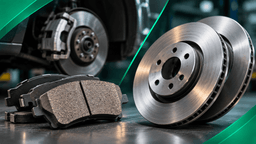
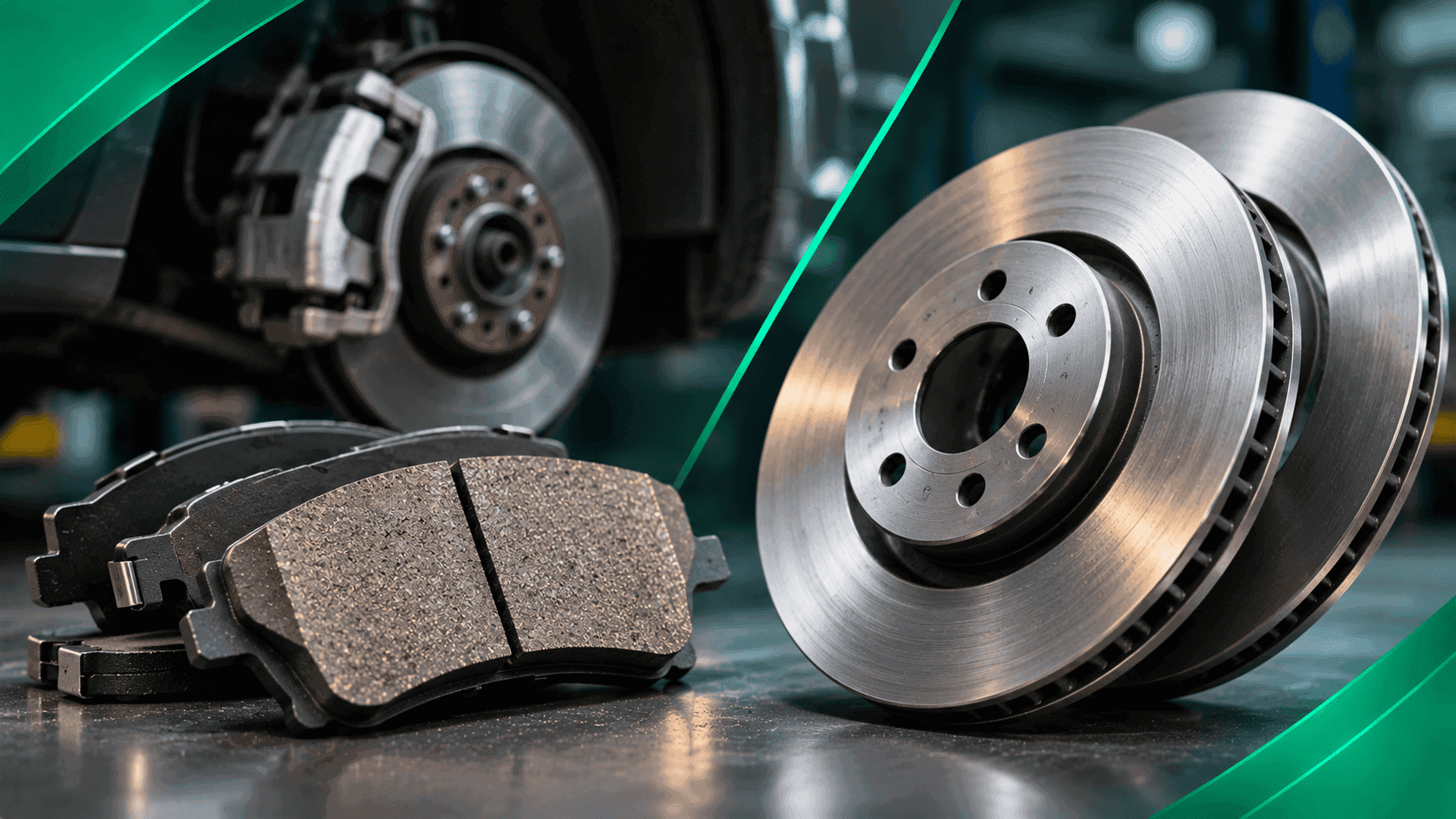
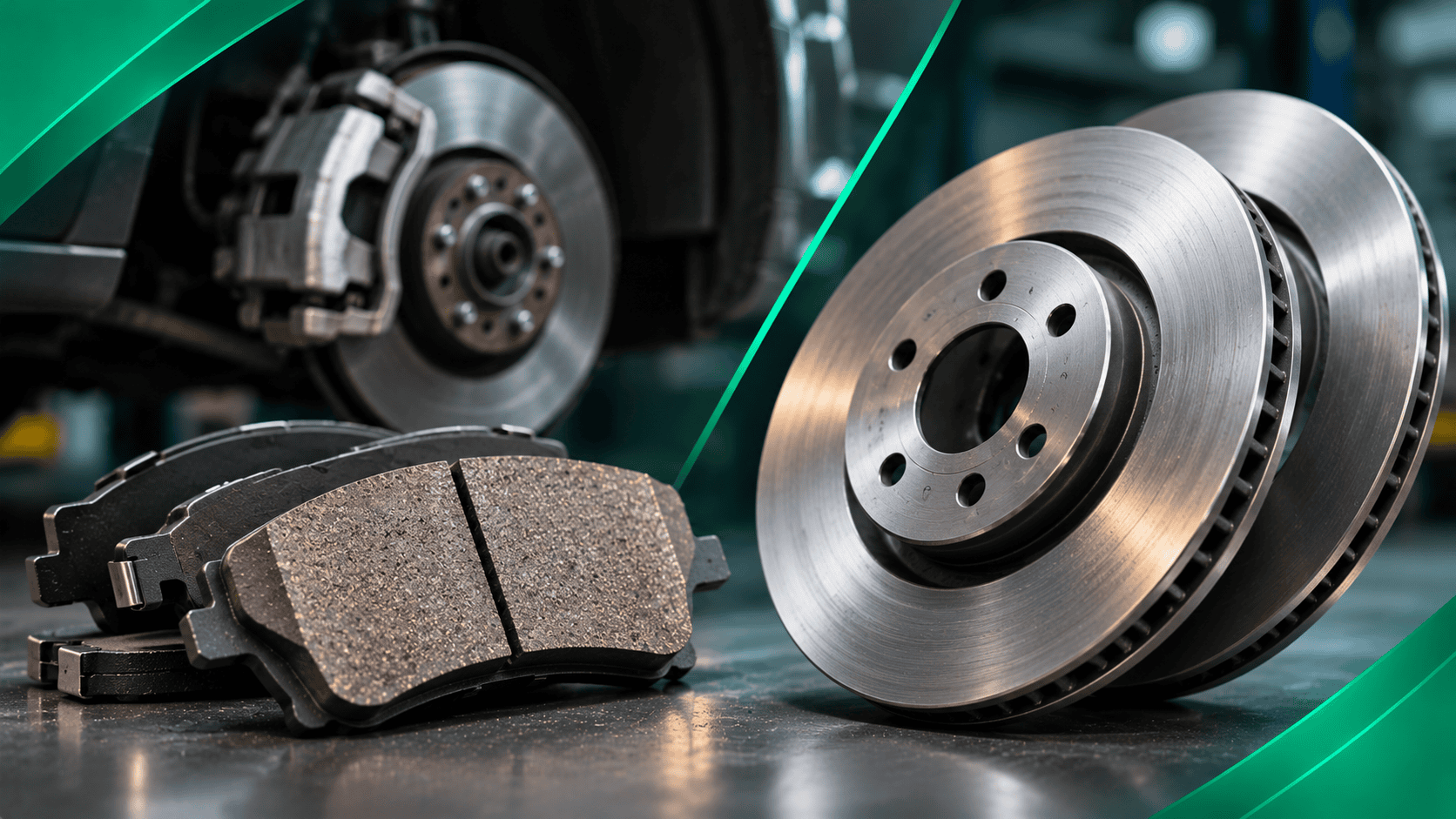
In simple terms, brake discs, also known as brake rotors, are circular metal components that rotate together with the vehicle's wheels.
Most brake discs are manufactured from cast iron, although some high-performance vehicles use specialised materials such as carbon-ceramic composites.
Brake pads, on the other hand, are friction components designed to press against the rotating brake disc when the driver applies the brakes.
A typical disc brake assembly contains a brake disc, brake caliper, brake pads, and hydraulic components.
When you press the brake pedal, hydraulic pressure is generated within the braking system.
This pressure operates the brake caliper, causing the brake pads to clamp against the surfaces of the rotating disc.
The friction between the pads and disc produces braking torque, which helps slow the rotation of the wheel.
During this process, much of the vehicle's kinetic energy is converted into heat.
This is why brake discs and pads are designed to tolerate repeated friction and high operating temperatures.
Although the basic principle is straightforward, the condition of both components is essential for consistent and reliable braking.
What Is the Main Difference Between Brake Pads and Brake Discs?
The main difference is their construction, function, and typical wear characteristics.
Brake pads contain specially formulated friction materials attached to a metal backing plate.
Depending on the application, these friction materials may be ceramic-based, semi-metallic, or organic compounds.
Brake pads are designed as replaceable wear components. Their friction material gradually becomes thinner as the brakes are used.
Brake discs are comparatively larger and more substantial metal components that provide the rotating surfaces against which the pads operate.
Although brake discs are generally designed to last longer than brake pads, they also gradually wear down with use.
Over time, a disc may become thinner or develop surface irregularities, corrosion, scoring, or excessive thickness variation.
For this reason, brake pads and brake discs do not necessarily need replacement at the same time.
The correct replacement decision should be based on inspection, measurements, and the vehicle manufacturer's specifications.
1. When Should You Replace Brake Pads?
Brake pads are usually among the most frequently replaced components in a disc braking system.
Every time the brakes are applied, friction gradually removes a small amount of material from the pad surfaces.
How quickly this happens depends on driving style, traffic conditions, vehicle weight, brake design, and the materials used in the pads.
For example, vehicles frequently driven through heavy urban traffic may require more braking than vehicles travelling mostly on open roads.
This can increase brake pad wear, particularly if the vehicle is repeatedly accelerating and stopping.
As a general illustration, some passenger vehicles may require front brake pad replacement around 30,000 to 50,000 kilometres.
However, this is not a fixed replacement interval. Some pads wear sooner, while others last considerably longer.
Hybrid and electric vehicles with regenerative braking may also experience different pad wear patterns because the electric motor can perform part of the braking work.
The most reliable way to determine whether replacement is necessary is to inspect the remaining friction material.
Many automotive technicians recommend arranging replacement when the pad lining approaches approximately 3 mm, although the manufacturer's service limits and recommendations should always take priority.
Brake pads should also be replaced if they are damaged, contaminated, or worn unevenly beyond acceptable limits.
What Are the Warning Signs of Worn Brake Pads?
One common warning sign is a squealing or high-pitched noise when braking.
Some brake pads contain a mechanical wear indicator that produces a squealing sound when the friction material becomes sufficiently thin.
However, not every squealing noise means the brake pads are completely worn out.
Brake noise can also result from moisture, dust, glazing, vibration, or other mechanical conditions.
Another warning sign is a grinding or harsh metallic sound while braking.
This may indicate that the friction material is severely worn and metal components are contacting the brake disc.
Continuing to drive under these conditions can damage the disc and increase repair costs.
Some vehicles also have electronic brake pad wear sensors that display a warning on the dashboard.
A low brake fluid level can sometimes be associated with brake pad wear because the caliper pistons move farther outward as the pads become thinner.
However, a sudden or substantial drop in brake fluid should never be assumed to be normal pad wear.
It may indicate a hydraulic leak, which requires urgent attention.
If you notice a brake fluid warning, reduced braking performance, unusual pedal behaviour, or a grinding noise, have the vehicle inspected promptly.
2. When Should You Replace Brake Discs?
Brake discs generally last longer than brake pads because of their construction and the amount of material available to absorb and distribute heat.
However, they are not permanent components.
As the brake pads repeatedly press against the disc surfaces, the discs gradually lose material.
Some vehicle owners find that a set of brake discs lasts through two or three sets of brake pads.
Depending on the vehicle and operating conditions, brake discs may remain serviceable for approximately 80,000 to 120,000 kilometres or longer.
However, these figures should only be considered broad examples rather than guaranteed service intervals.
The correct time for replacement depends primarily on the condition of the discs.
Every brake disc has a minimum allowable thickness specified by the vehicle or brake component manufacturer.
If the measured thickness reaches or falls below this minimum specification, the disc must be replaced.
Brake discs may also require replacement earlier if they develop excessive scoring, cracking, severe corrosion, or other damage that makes them unsuitable for continued use.
What Happens If You Continue Driving with Worn Brake Pads?
Ignoring worn brake pads can cause additional damage to the brake discs.
When the friction lining becomes extremely thin or wears away, the metal backing plate of the brake pad may begin contacting the rotating disc.
This metal-to-metal contact can produce a harsh grinding sound.
It can also create deep grooves and scratches on the disc surface.
As the damage becomes more severe, the disc may no longer provide a suitable braking surface for new pads.
In such situations, replacing only the brake pads may not fully resolve the problem.
The brake discs may also require replacement, increasing the overall repair cost.
This is why timely brake pad inspections are important.
3. Why Does the Steering Wheel Vibrate When Braking?
Another common problem experienced by drivers is vibration through the steering wheel when applying the brakes.
For example, you may notice the steering wheel shaking when slowing down from highway speed.
This can happen when the front brake discs have excessive disc thickness variation, lateral runout, or uneven friction characteristics.
These conditions may produce variations in braking force as the discs rotate.
Drivers often describe the problem as warped brake discs.
Although genuine thermal distortion can occur, steering wheel vibration does not always mean the discs have physically bent because of overheating.
Uneven pad material deposits, disc thickness variation, improper wheel installation, or other mechanical issues may also contribute.
Suspension and steering system faults can sometimes produce similar symptoms.
Therefore, the cause should be diagnosed before deciding whether the brake discs need resurfacing or replacement.
4. What Is Brake Disc Resurfacing?
Brake disc resurfacing, sometimes called disc machining or disc facing, is a procedure used to restore an appropriate friction surface on a serviceable brake rotor.
During this process, a specialised brake lathe removes a small amount of material from the disc surface.
This can help correct certain surface irregularities or reduce thickness variation when the disc is suitable for machining.
However, not every damaged disc can or should be resurfaced.
Before machining, the technician must measure the disc and confirm that sufficient thickness will remain after the procedure.
If the disc is already too thin, cracked, severely damaged, or otherwise unsuitable, replacement is the safer option.
Some manufacturers also restrict or discourage resurfacing for particular brake disc designs.
Always follow the relevant service specifications.
5. Should You Resurface Brake Discs Every Time You Replace Brake Pads?
Many drivers believe that brake discs must be resurfaced whenever new brake pads are installed.
However, resurfacing is not automatically necessary during every pad replacement.
If the brake discs are within their specified thickness limits and have acceptable surface condition, runout, and thickness variation, they may be suitable for continued use without machining.
Unnecessary resurfacing removes material from the disc and reduces the thickness available for future wear.
On the other hand, installing new pads against badly scored or damaged discs may cause noise, vibration, uneven wear, or unsatisfactory braking performance.
Therefore, the correct approach is to inspect the discs carefully whenever brake pads are replaced.
The technician should evaluate the disc condition, measure its thickness, and determine whether continued use, resurfacing, or replacement is appropriate.
6. Why Is Brake Disc Thickness Important?
Brake disc thickness plays an important role in braking performance and thermal management.
During braking, the discs absorb and release a considerable amount of heat.
As the discs wear thinner, their ability to absorb heat and maintain the intended operating characteristics can be reduced.
Excessively thin discs may also compromise the correct operation of the brake assembly.
This is why manufacturers specify a minimum permissible thickness.
The minimum thickness is often marked on the disc itself or provided in the vehicle's service documentation.
Technicians typically use suitable measuring equipment, such as a micrometer, to check the disc thickness at the specified positions.
If the disc has reached its minimum service limit, it should be replaced rather than resurfaced.
7. How Can You Make Brake Pads and Discs Last Longer?
Driving habits can have a noticeable effect on brake component wear.
One useful practice is to avoid unnecessarily harsh braking when road and traffic conditions allow.
Maintaining a safe following distance gives you more time to slow down progressively rather than braking aggressively at the last moment.
When descending long hills, use the appropriate transmission gear and engine braking or regenerative braking where suitable.
This can help reduce continuous reliance on the friction brakes.
However, engine braking should never replace the use of the brake pedal when additional stopping force is needed.
Regular servicing is equally important.
Brake calipers, guide pins, hydraulic components, and related hardware should be inspected according to the vehicle manufacturer's recommendations.
For example, a sticking caliper can cause one brake pad to remain in contact with the disc, producing excessive heat and uneven wear.
Brake fluid must also be maintained according to the specified service schedule.
Using suitable replacement components and addressing unusual braking symptoms early can help protect the braking system.
8. Should You Use OEM Brake Pads and Discs?
When replacing brake components, quality and compatibility are extremely important.
Original Equipment Manufacturer (OEM) parts are designed or specified for the vehicle's braking system.
However, reputable aftermarket brake components that meet the vehicle manufacturer's requirements and relevant safety standards may also be suitable.
The most important consideration is choosing parts with the correct specifications, dimensions, material characteristics, and compatibility.
Poor-quality or incorrectly matched brake components can create problems such as noise, excessive wear, reduced braking consistency, or inappropriate heat performance.
Brake repairs should be performed by a qualified technician using the correct installation and inspection procedures.
MotorGuide's Advice: Never Ignore Brake Wear
At MotorGuide, our advice is to inspect both brake pads and brake discs during routine servicing rather than concentrating on only one component.
Whenever new brake pads are installed, make sure the brake discs are checked for thickness, scoring, cracks, runout, and other signs of damage.
If the discs are still within the manufacturer's specifications and in good condition, replacement or resurfacing may not be necessary.
However, if they have reached their minimum thickness or developed serious damage, replace them with correctly specified components.
If your vehicle produces unusual grinding sounds, develops strong vibrations during braking, or shows a significant reduction in braking performance, arrange an inspection without delay.
If braking ability is seriously compromised, do not continue driving. Stop safely and arrange professional assistance.
Remember, there is no universal mileage at which every vehicle must replace its brake pads or discs. Regular inspections, accurate measurements, suitable parts, and responsible driving are the best ways to maintain reliable braking performance.
Stay connected with MotorGuide for more useful information about automotive maintenance, vehicle safety, braking technology, and everything you need to know about the world of vehicles.

எழுதியவர்
Nisaga Sandaru
A versatile and highly experienced professional, currently an Automobile undergraduate at the University of Jaffna, with strong technical expertise grounded in hands-on work as a technician with SriLankan Airlines Ground Support Equipment (GSE). Holding an Automobile NVQ Level 3 qualification, along with specialized certifications in Vehicle ECU Programming and Diagnosis, and extensive experience in arc welding and vehicle body painting, and well equipped to handle complex automotive, diagnostic, and fabrication-related tasks with a high level of competence.