Why Does an Engine Have a Flywheel?

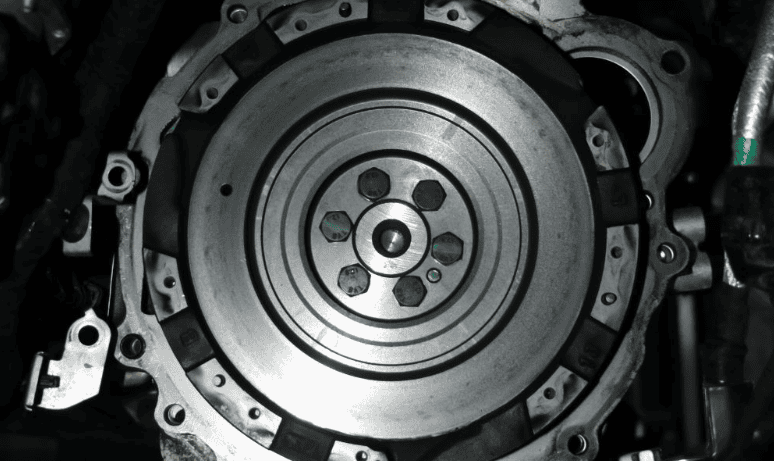
Today at Motor Guide, we are going to talk about a highly crucial, yet often misunderstood, component of a vehicle's engine. That is the Flywheel—why an engine needs it and what actually happens regarding it inside the motor.
As professionals in this field, we often notice that when people think of an engine, they only visualize the main parts like pistons, valves, and spark plugs. However, none of these components can function properly if the flywheel is not doing its job.
What is a Flywheel?
First, let's look at what a flywheel actually is. Simply put, it is a heavy metal wheel attached to the rear end of the engine's crankshaft. Usually, it is located right next to where the gearbox or the clutch plate begins. Its weight and size can vary depending on the vehicle's engine capacity and the number of cylinders.
Why is this Heavy Wheel Essential for an Engine?
Okay, let's get to the main question. Here are the primary functions of a flywheel:
- 1. Retaining Power and Providing Smooth Operation: If you take a standard four-cylinder engine, out of the four strokes of a piston, the engine receives power from only one (the power stroke). During the other three phases, the piston must move using existing momentum. During these gaps, the engine's speed naturally tries to drop or jerk. This is exactly where the flywheel steps in. The heavy flywheel stores rotational energy during the power stroke and releases that stored energy back into the engine during the idle strokes. This ensures the engine spins continuously at a steady speed without any violent jerking.
- 2. Overcoming Irregular Engine Operation: Imagine when the engine is idling or the vehicle is stopped. The combustion inside the cylinders doesn't happen with perfect, continuous smoothness; there are slight variations in the power delivered from piston to piston. Because of the flywheel's high weight (inertia), the engine doesn't just stall or stop abruptly. The flywheel smooths out these pulses and maintains a consistent operation.
- 3. Connecting to the Clutch System: In a manual transmission vehicle, the clutch plate rests against this flywheel, much like a foundation. The engine's power is entirely transmitted to the gearbox and wheels through the flywheel. When you press the clutch pedal, the clutch plate separates from the flywheel. This allows us to stop the vehicle or shift gears while the engine is still running.
- 4. Helping to Start the Engine: When you turn the key or push the start button, the small gear (pinion gear) on the starter motor engages with the ring gears located around the outer edge of the flywheel. The starter motor spins the flywheel, which in turn spins the crankshaft and fires up the engine. Since these teeth have to bear a massive load, they are manufactured to be incredibly strong.
- 5. Measuring Engine Speed (RPM) and Crankshaft Position: In modern vehicles, the flywheel features special shapes or holes that send signals to the Crankshaft Position Sensor. Through this, the Engine Control Unit (ECU) knows exactly how fast the engine is spinning and the exact position of the pistons. This is a massive help in accurately controlling fuel injection and spark timing.
The Importance of Maintenance
Now you understand, right? Even though it just looks like a standard metal disc, it performs a massive operation for the vehicle's functionality. Some people assume that damage to the flywheel is not a big deal and ignore it. If the teeth on the flywheel wear out, or if the internal springs of a Dual-Mass Flywheel break, the vehicle will start to vibrate terribly, make unusual noises, and the clutch will start slipping while driving. Therefore, when servicing a vehicle or doing a clutch repair, it is absolutely essential to have this component properly inspected.
Motor Guide's Final Advice
Motor Guide's advice is that no part in a vehicle engine is put there for no reason. Every single component has its own unique and valuable role. Therefore, if you experience abnormal vehicle vibrations, difficulty shifting gears, or a delay in starting, do not ignore it. Immediately consult a qualified technician and get it fixed.
And don't forget to always stay tuned with Motor Guide to learn more valuable information like this about modern vehicles and technology!

எழுதியவர்
Nisaga Sandaru
A versatile and highly experienced professional, currently an Automobile undergraduate at the University of Jaffna, with strong technical expertise grounded in hands-on work as a technician with SriLankan Airlines Ground Support Equipment (GSE). Holding an Automobile NVQ Level 3 qualification, along with specialized certifications in Vehicle ECU Programming and Diagnosis, and extensive experience in arc welding and vehicle body painting, and well equipped to handle complex automotive, diagnostic, and fabrication-related tasks with a high level of competence.