Why Do Electric Vehicles Use an Inverter and How Does It Work?


Today at MotorGuide, we're going to explore one of the most important electrical components inside an electric vehicle. It's a technology that most drivers never see, yet it plays a major role in how an EV accelerates, controls its electric motor, and recovers energy while slowing down. We're talking about the EV Inverter.
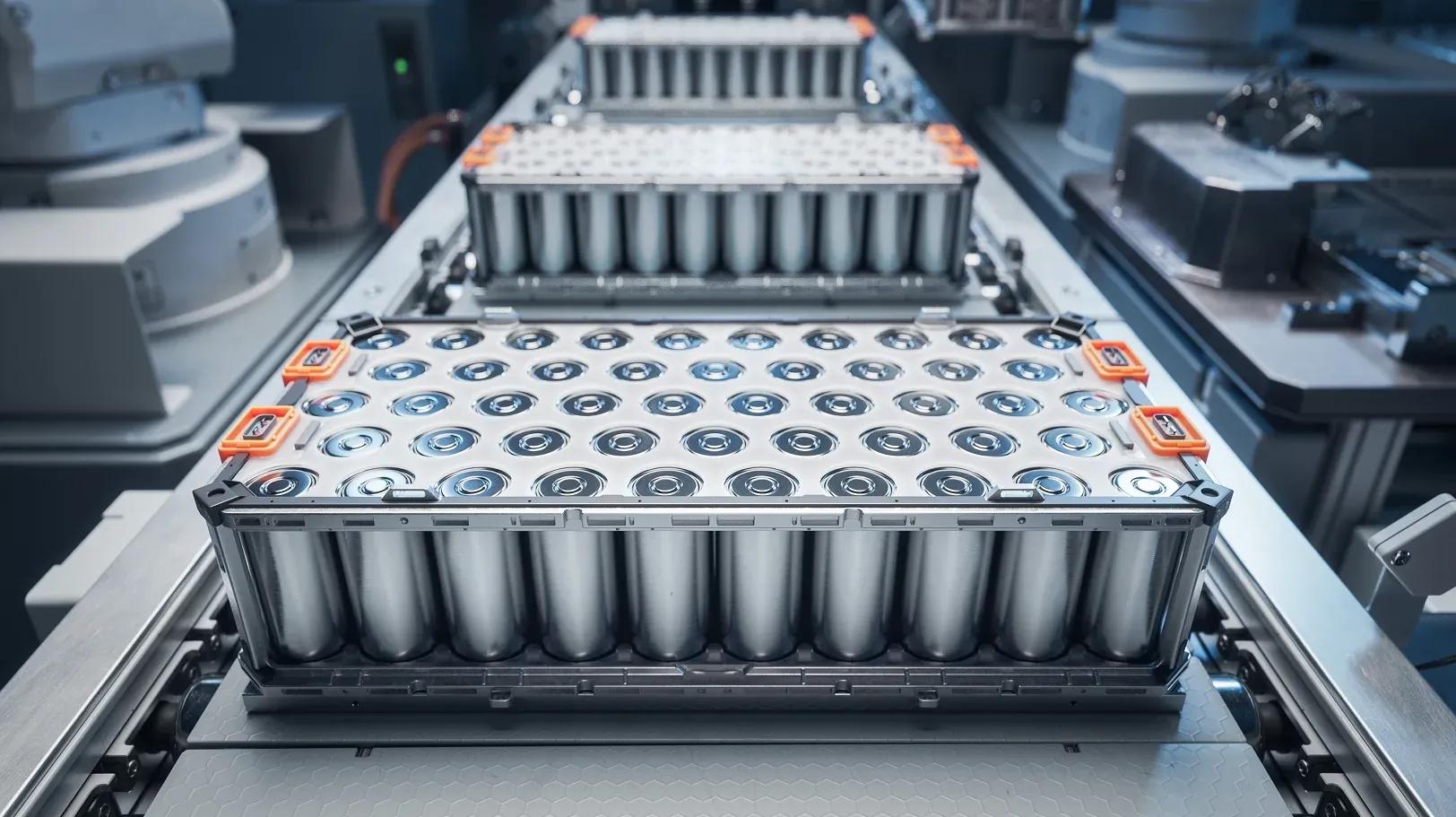
We all know that electric vehicles store energy in large high-voltage battery packs, usually installed beneath the passenger compartment or within the vehicle's structure.
These batteries supply Direct Current, commonly known as DC electricity. However, many modern electric vehicles use three-phase Alternating Current, or AC, traction motors to drive their wheels.
This creates an important requirement. The electricity coming from the battery must be converted into a form that the electric motor can use.
That's where the inverter comes in.
But converting electricity is only part of its job. The inverter also helps control motor performance and plays an essential role in regenerative braking.
So, why do electric vehicles need inverters, how do they operate, and why is proper maintenance so important? Let's take a closer look.
What Is an Inverter in an Electric Vehicle?
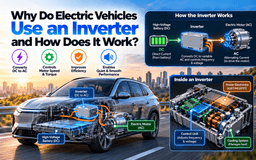
In simple terms, an EV inverter is a power electronic device that converts the DC electricity stored in the high-voltage battery into controlled AC electricity for the vehicle's traction motor.
In vehicles with AC traction motors, this conversion is essential because the battery and motor use different forms of electrical power.
The inverter works together with the motor control system to regulate how electrical energy is supplied to the motor.
This makes it possible to control acceleration, motor torque, and rotational speed smoothly and efficiently.
Inverters are used in many battery electric vehicles, including models such as the Tesla Model 3 and Nissan Leaf.
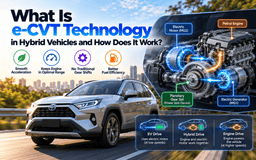
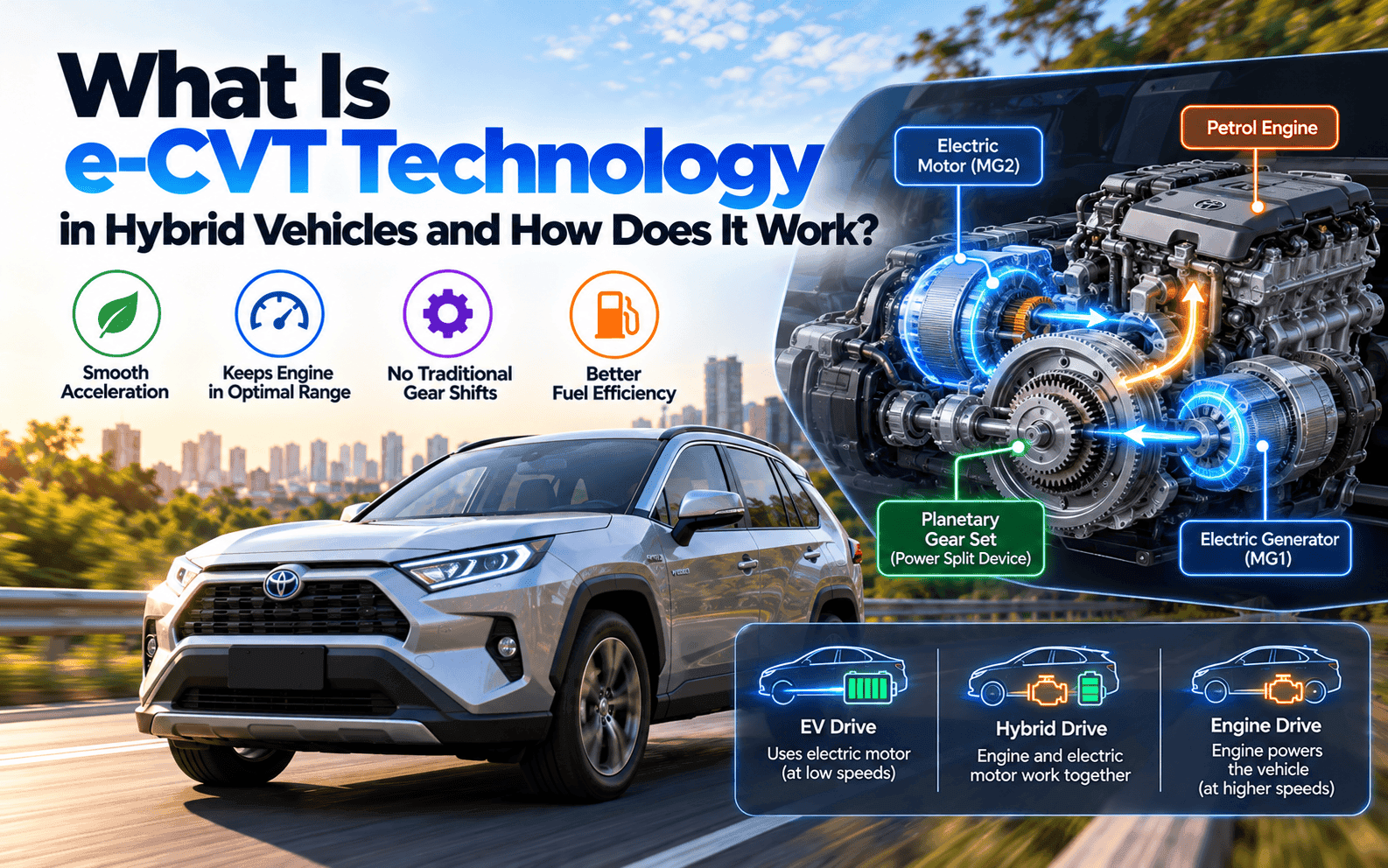
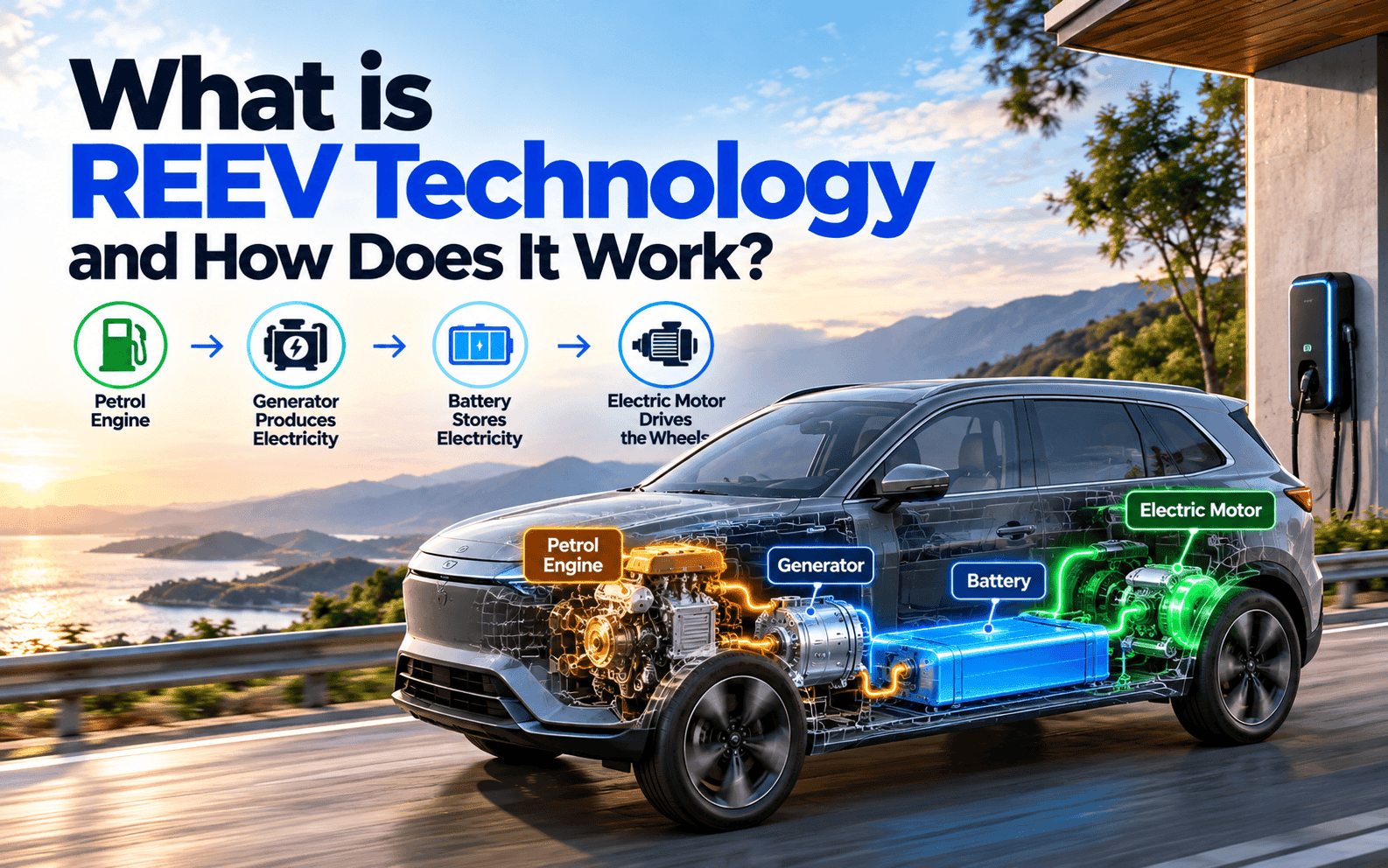
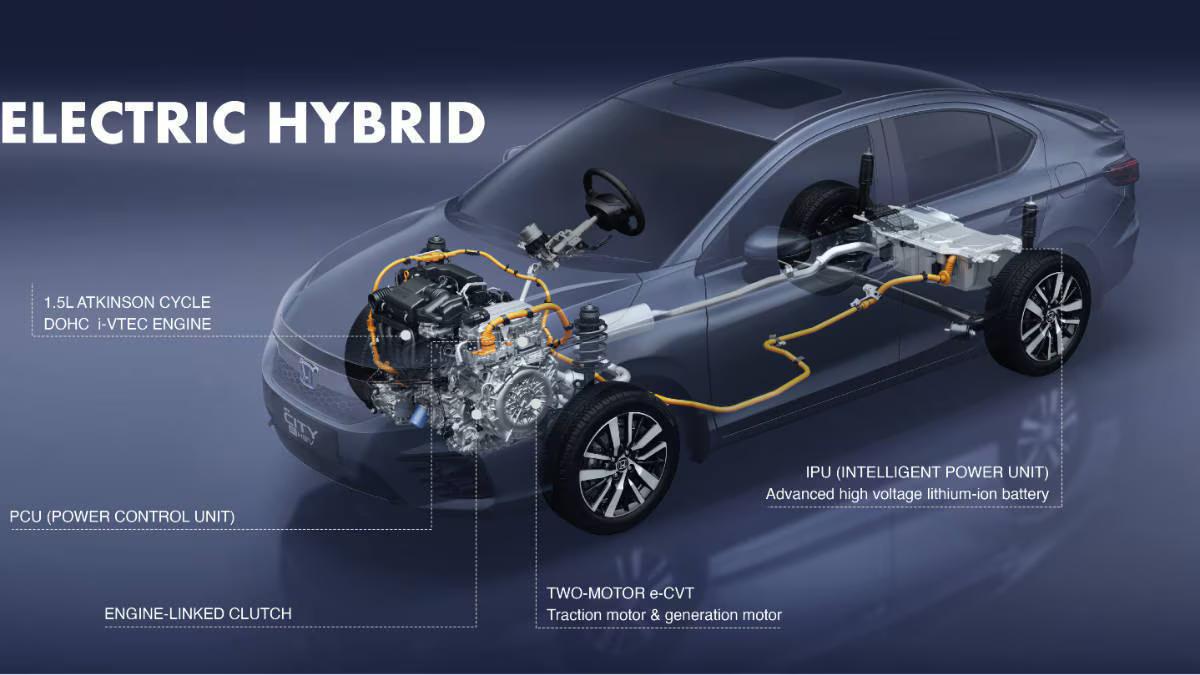
They are also important components in many hybrid vehicles, including Honda's e:HEV models, where electric motors operate alongside a petrol engine.
However, inverter designs vary between manufacturers and vehicle models.
Why Do Electric Vehicles Need an Inverter?
There are three main reasons why an inverter is important in a modern EV with an AC traction motor.
- Power Conversion: The inverter converts high-voltage DC electricity from the battery into AC electricity suitable for the traction motor.
- Motor Control: It regulates the motor's electrical output to help deliver the acceleration, speed, and torque requested by the driver.
- Regenerative Braking: It helps convert electrical energy generated by the motor during deceleration into DC electricity that can be returned to the battery.
These functions make the inverter an important part of the electric drivetrain.
Without suitable power electronics, the vehicle would not be able to operate its AC traction motor efficiently using the electricity stored in the battery.
What Are the Main Components of an EV Inverter?
Modern EV inverters contain several advanced electrical and electronic components.
These may include high-power semiconductor switches, DC-link capacitors, current and voltage sensors, gate driver circuits, electronic control components, and thermal management systems.
Two semiconductor technologies commonly associated with automotive inverters are Insulated Gate Bipolar Transistors (IGBTs) and silicon carbide-based MOSFETs.
Both technologies can be used to control the flow of high-voltage electrical power.
Silicon carbide technology can offer advantages in switching efficiency and thermal performance in suitable designs, while IGBTs remain an established solution in automotive power electronics.
The exact semiconductor type depends on the vehicle and inverter design.
Many high-power inverters also use liquid cooling to manage the heat generated during operation.
1. How Does an Inverter Convert DC Electricity into AC?
When the driver selects Drive and presses the accelerator pedal, the vehicle's electronic control systems interpret the requested driving force.
The accelerator pedal position sensor sends information to the vehicle's control system, which determines the amount of torque required from the electric motor.
The inverter then uses its high-power semiconductor switches to control the electricity flowing from the battery to the motor.
These switches turn on and off rapidly according to precisely timed electronic commands.
Through this switching process, the inverter produces controlled three-phase electrical output from the battery's DC supply.
The switching pattern is managed so that the motor receives the electrical waveforms needed to operate.
One commonly used control technique is Pulse Width Modulation, or PWM.
By carefully adjusting the switching signals, the inverter can control the motor's electrical current and operating conditions.
This allows the drivetrain to respond smoothly when the driver accelerates, maintains speed, or reduces power.
2. How Does the Inverter Control Vehicle Speed and Torque?
One of the biggest advantages of an electric drivetrain is its ability to deliver precise and responsive motor control.
The inverter plays an important role in this process by regulating the electrical power supplied to the traction motor.
In an AC motor, the frequency of the electrical supply is related to the speed of the rotating magnetic field.
Meanwhile, motor torque is strongly influenced by the controlled electrical current and the motor's electromagnetic characteristics.
Modern motor control systems adjust current, voltage, frequency, and switching patterns together to produce the required performance.
For this reason, it is not completely accurate to say that increasing voltage alone always increases torque or that frequency alone determines vehicle speed.
The vehicle's actual acceleration depends on the interaction between the inverter, traction motor, battery, motor control software, drivetrain gearing, and available tyre grip.
When the driver presses the accelerator, the control system requests more driving torque within the vehicle's operating limits.
The inverter then helps deliver the required electrical output to the motor.
This coordinated control is one of the reasons electric vehicles can provide smooth acceleration and responsive throttle behaviour.
3. How Does the Inverter Work During Regenerative Braking?
The inverter performs another important function when an electric vehicle slows down.
During suitable braking or deceleration conditions, the traction motor can operate as a generator.
Instead of consuming electrical energy to turn the wheels, the motor converts some of the vehicle's kinetic energy into electrical energy.
For AC traction motors, this generated electrical energy is processed by the inverter and converted into DC electricity for the high-voltage battery.
This process is known as regenerative braking.
For example, when the driver releases the accelerator pedal or presses the brake pedal, the vehicle may request regenerative braking torque.
The motor then creates resistance against the vehicle's motion while generating electrical energy.
The inverter manages the electrical power flow, and the battery receives the recovered energy when charging conditions permit.
This helps improve energy efficiency because some of the energy that would otherwise be lost as heat during braking can be reused.
However, regenerative braking cannot recover all the vehicle's kinetic energy.
Its effectiveness depends on factors such as battery charge level, battery temperature, vehicle speed, available traction, and the regenerative braking limits of the powertrain.
Conventional friction brakes remain essential, especially when stronger braking is required or regenerative braking is limited.
What Is the Difference Between an Inverter and a DC-DC Converter?
Another important electrical component found in many electric vehicles is the DC-DC Converter.
Although it is sometimes packaged near the inverter or integrated into a larger power electronics assembly, the DC-DC converter performs a different function.
The traction inverter primarily converts DC electricity into controlled AC electricity for the traction motor.
The DC-DC converter, on the other hand, converts one DC voltage level into another.
For example, many electric vehicles use high-voltage battery systems operating at nominal voltages of approximately 400V or 800V, although actual voltages vary by design.
However, ordinary vehicle accessories such as exterior lighting, control modules, and many dashboard electronics operate using a low-voltage electrical system.
The DC-DC converter reduces the high-voltage DC supply to a suitable lower voltage, commonly associated with a nominal 12V system.
This allows the vehicle to power its low-voltage equipment and maintain the auxiliary battery.
Some newer vehicles use different low-voltage architectures, including 48V systems.
It is also worth remembering that an electric A/C compressor may operate directly from the high-voltage system through its own motor electronics rather than using the vehicle's 12V supply.
Therefore, the inverter and DC-DC converter are related components within the vehicle's electrical architecture, but they should not be confused with one another.
Why Is Inverter Cooling Important?
During operation, an inverter handles significant electrical power.
Even highly efficient power electronics generate heat because of switching losses and electrical resistance.
If temperatures become excessive, the performance and reliability of the inverter's electronic components may be affected.
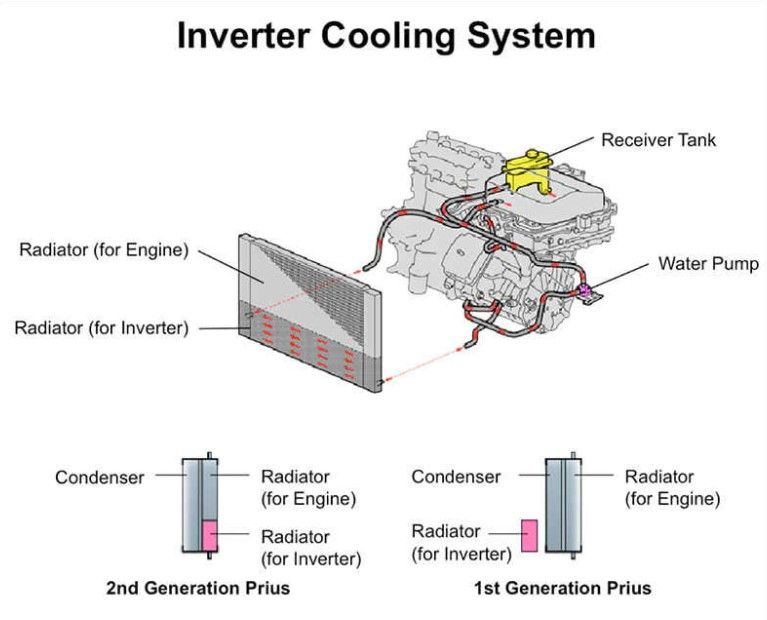
To control temperatures, many modern electric vehicles use liquid cooling systems for their traction inverters.
Depending on the vehicle, the inverter may share a thermal management circuit with other electrical components or use a dedicated cooling arrangement.
The cooling system can include coolant passages, pumps, hoses, radiators, temperature sensors, and electronic controls.
These components help keep the inverter within its designed operating temperature range.
If the cooling system develops a fault, the vehicle may reduce available power or display a warning to protect the electrical components.
In severe cases, prolonged overheating can cause costly damage.
Common EV Inverter Problems
Although modern EV inverters are designed for demanding operating conditions, they can still develop faults.
Possible causes include overheating, cooling system failures, damaged electrical connections, semiconductor faults, insulation problems, and failures within the inverter's electronic control circuits.
The symptoms can vary depending on the vehicle.
For example, a faulty inverter may cause reduced acceleration, warning messages, difficulty entering Ready mode, or an inability to drive.
However, these symptoms can also be caused by battery, motor, charging, or other electronic faults.
Proper diagnostic equipment is therefore necessary to identify the actual cause of the problem.
How to Maintain an EV Inverter Properly
At MotorGuide, our advice is to pay close attention to the vehicle's thermal management system and follow the maintenance requirements specified by the manufacturer.
If the inverter uses liquid cooling, make sure the cooling system is inspected according to the recommended service schedule.
Check for coolant leaks, warning messages, and other signs of cooling system problems.
Coolant replacement intervals vary between manufacturers and vehicles, so there is no single replacement schedule that applies to every EV inverter.
Always use the coolant type recommended for your exact vehicle model.
It is also extremely important to understand the risks associated with high-voltage electrical systems.
Electric vehicles may contain components operating at several hundred volts, and their power electronics can store dangerous electrical energy even after the vehicle has been switched off.
Never attempt to disconnect orange high-voltage cables, remove inverter covers, or repair high-voltage components without the appropriate training, equipment, and manufacturer-approved safety procedures.
High-voltage inspections and repairs should be carried out only by qualified EV technicians.
With proper care, a correctly functioning inverter helps the electric drivetrain deliver efficient power conversion, precise motor control, and effective regenerative braking.
Although it usually remains hidden beneath the bonnet or within the vehicle's electrical assemblies, the inverter is one of the key technologies that makes modern electric driving possible.
Stay connected with MotorGuide for more useful information about modern automotive technologies, electric and hybrid vehicles, maintenance tips, and everything you need to know about the future of transportation.

எழுதியவர்
Nisaga Sandaru
A versatile and highly experienced professional, currently an Automobile undergraduate at the University of Jaffna, with strong technical expertise grounded in hands-on work as a technician with SriLankan Airlines Ground Support Equipment (GSE). Holding an Automobile NVQ Level 3 qualification, along with specialized certifications in Vehicle ECU Programming and Diagnosis, and extensive experience in arc welding and vehicle body painting, and well equipped to handle complex automotive, diagnostic, and fabrication-related tasks with a high level of competence.