Let's Learn About Run Flat Tires

What is RFT? At Motor Guide, we decided to discuss Run Flat Tires, a topic important to anyone who uses a vehicle.
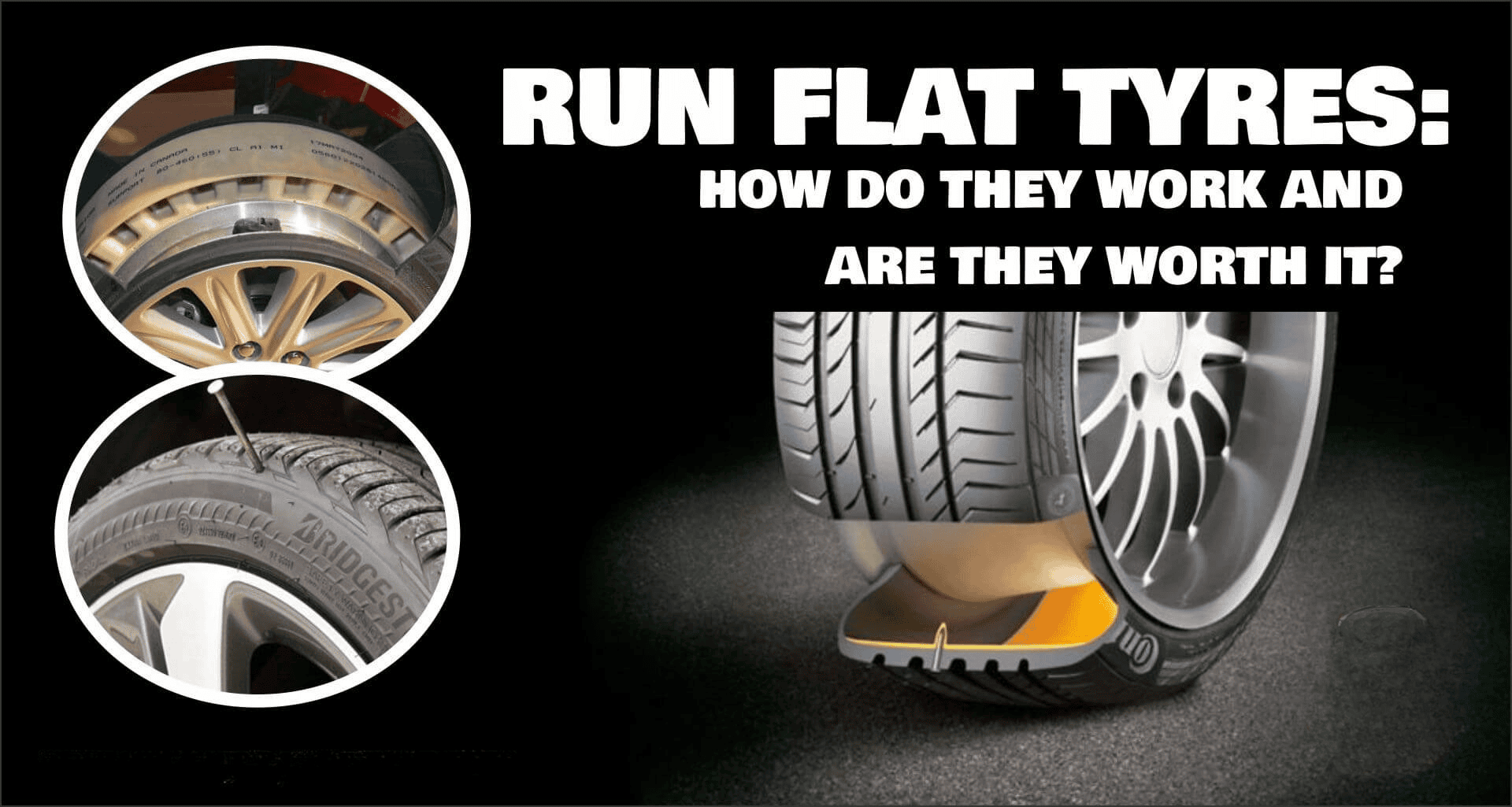
Usually, if a tire punctures on our vehicle, we cannot travel any further. We have to change the tire right there. However, Run Flat Tires are a specially designed type of tire. Even after a puncture, thanks to their special Reinforced Sidewall, the tire does not completely flatten to the ground. It allows you to drive for a specific distance at a specific speed. This means you don't need to change the tire in the middle of the road.
How Does RFT Work?
The main secret of RFT lies in its thicker and stronger sidewall. When a normal tire loses air, the sidewall collapses completely, unable to bear the vehicle's weight. But in an RFT, even after the air is gone and pressure is lost, this reinforced sidewall maintains the tire's shape and temporarily supports the vehicle's weight. This gives you the ability to drive safely at a speed of around 80 km/h (50 mph) for a distance of about 80 km (50 miles) to reach a tire shop or your home.
What are the Advantages of RFT?
- Safety: This is the main advantage. If a tire deflates suddenly while driving at high speed, you could lose control of the vehicle. RFT reduces that risk.
- Convenience: You can avoid the hassle of changing tires in the middle of the night or on a busy road.
- Extra Space: Vehicles with RFT do not need to carry a Spare Tire. This reduces the vehicle's weight and increases the Boot Space.
Are There Disadvantages to RFT?
Indeed, there are pros and cons to everything.
- Price: RFT tires are more expensive than standard tires.
- Harsher Ride: Because the sidewall is stiff, you might feel road bumps and vibrations a bit more than with a standard tire.
- TPMS Requirement: Since they maintain their shape, it can sometimes be difficult to tell if the tire pressure has dropped unless you have a pressure sensor. Therefore, vehicles with RFT must have a Tire Pressure Monitoring System (TPMS).
Run Flat Tires are an advanced technology that makes your journey easier and, more importantly, safer. If you drive a modern or luxury vehicle, these can be the best choice for you. However, you must remember that just because it's an RFT, you cannot continue driving on it indefinitely after a puncture. It exists to give you the opportunity to safely reach the nearest location to repair or replace the tire.
Types of RFT Systems
Run Flat Tires mainly operate in two ways. We usually talk about the first type.
1. Self-Supporting Run Flats

This is the most common type of RFT. As we explained earlier, the sidewall is reinforced to support the weight even when air is lost. Many manufacturers like BMW, Mercedes, and Lexus use these.
2. Support Ring Systems

In these systems, there is a special hard rubber or plastic Support Ring mounted on the rim inside the tire. When the tire punctures, this internal ring helps support the weight and prevents the tire from slipping off the rim. These are likely to be used for very heavy vehicles.
RFT Maintenance and Repair
There are several important facts RFT users should know.
- TPMS is Crucial: Since low pressure in an RFT is not visibly obvious from the outside, you must keep the Tire Pressure Monitoring System (TPMS) active. If TPMS gives a warning, immediately reduce speed and drive safely.
- Repair: Unlike a standard tire, most tire manufacturers do not recommend repairing Run Flat Tires. This is because the sidewall may have heated up and sustained damage while driving without air. Since this damage might not be visible from the outside, replacement is recommended for safety reasons.
- Replacement: When replacing Run Flat tires, it is essential to reuse the specific RFT model recommended by your vehicle manufacturer. Mixing RFT with standard tires can compromise the vehicle's Handling.
The "Run-Flat" Distance and Speed (The 50/50 Rule)
The general guideline for most RFT tires is to drive at a speed less than 80 km/h (50 mph) for a distance of up to 80 km (50 miles) after losing tire pressure. However, these limits may vary depending on the tire manufacturer and the vehicle's load conditions. Therefore, it is important to check your tire and vehicle's Owner's Manual. Paying attention to safety and maintenance is extremely important when using RFT.

எழுதியவர்
Nisaga Sandaru
A versatile and highly experienced professional, currently an Automobile undergraduate at the University of Jaffna, with strong technical expertise grounded in hands-on work as a technician with SriLankan Airlines Ground Support Equipment (GSE). Holding an Automobile NVQ Level 3 qualification, along with specialized certifications in Vehicle ECU Programming and Diagnosis, and extensive experience in arc welding and vehicle body painting, and well equipped to handle complex automotive, diagnostic, and fabrication-related tasks with a high level of competence.