What are Hazard Lights For in a Vehicle?

For all of you automotive enthusiasts, a crucial topic you need to understand is the use of Hazard Lights, commonly referred to in everyday language as "double signals." A frequent sight on our roads is drivers confusing exactly where and when these lights should—and shouldn't—be used. Today at Motor Guide, we are going to provide you with a technically and practically accurate understanding of this feature.
What exactly is a Hazard Light?
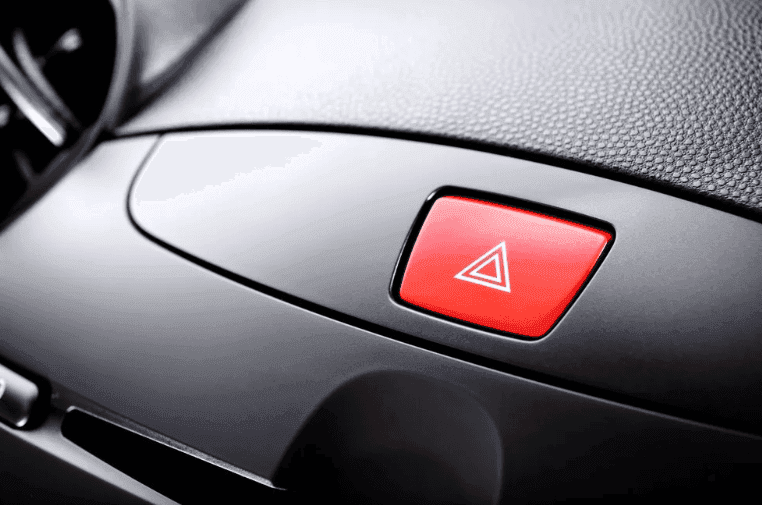
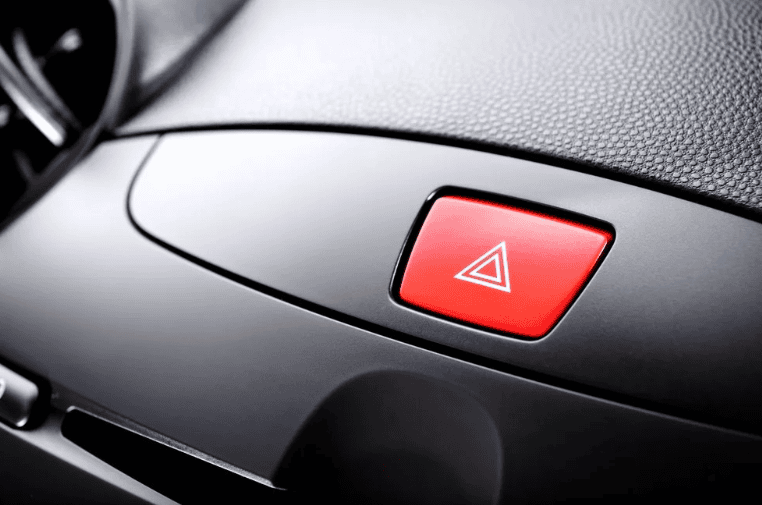
Simply put, engaging the hazard lights causes all four turn signal indicators (front and rear) of a vehicle to flash simultaneously. This sends one singular message to other drivers on the road: "My vehicle poses a potential hazard to others, please be attentive." This is not a light used to indicate that you have simply parked your car; it is a sign indicating an "emergency situation."
When the Vehicle Suffers a Mechanical Breakdown
If your vehicle suddenly breaks down while driving, the engine stalls, or a tire blows out making the vehicle hard to control, this is the exact time to activate your hazard lights. Especially if your vehicle stops dead in the middle of the road and you cannot pull over, drivers approaching from behind need to see from a distance that your vehicle is immobilized. This allows them to control their speed and safely navigate around you. Remember, even after you manage to pull over to the side of the road, if the shoulder is narrow or the area is poorly lit, you should keep these lights on.
Warning Others About Road Obstacles
Imagine you are driving at speed and suddenly spot a large fallen tree ahead, or a major accident blocking the road. If you slam on your brakes, the driver behind you doesn't immediately know why. In such instances, turning on your hazard lights while braking hard alerts the driver behind that there is a major problem ahead, prompting them to slow down immediately. This simple action can prevent massive chain-reaction crashes.
During a Towing Operation
If you are towing another vehicle, it is important that both the towing vehicle and the towed vehicle have their hazard lights on. Because both vehicles are traveling much slower than normal traffic and are connected by a tow rope or chain, they pose a risk to others. However, there is a technical catch here: when hazard lights are on, your standard turn signals do not work. Therefore, when you need to make a turn, you must briefly turn off the hazard lights, activate the appropriate turn signal, complete the turn, and then immediately turn the hazard lights back on.
Incorrect Usages: Never Do These!
Now let's discuss the biggest mistakes drivers make.
- Going straight at a 4-way intersection: Many people mistakenly believe they need to turn on their hazard lights to indicate they are driving straight through a crossroad. This is completely wrong and highly dangerous. If you are going straight, you do not need any signals. If you drive through an intersection with hazards on, a driver waiting on the intersecting side will only see one flashing light. They will assume you are turning into their road and might pull out in front of you, causing a severe accident.
- Driving in heavy rain: Driving with hazard lights on during a downpour is incredibly dangerous. When they are on, drivers behind you cannot distinguish if you are braking or attempting to change lanes. Furthermore, the flashing lights reflect off the wet tarmac, causing severe glare that can blind other drivers. In heavy fog or rain, you should use your fog lights and standard low-beam headlights—not your hazard lights.
Technical Considerations to Keep in Mind
A vehicle's hazard light system operates via a Direct Battery Connection. This means the lights will function even if the vehicle's ignition is completely turned off and the key is removed. Therefore, if you park your car on the side of the road and leave the hazards on for hours, there is a high risk of battery drain. This is especially true for older vehicles that use standard halogen bulbs, which consume a lot of electricity. Modern vehicles with LED lights have minimized this issue, but you still shouldn't leave them on unnecessarily outside of an actual emergency.
Additionally, as a built-in safety feature from manufacturers, some modern vehicles will automatically engage the hazard lights if the driver performs an Emergency Braking maneuver.
Motor Guide's Final Advice
Be a disciplined driver on the road. The hazard light switch is not a "license to park anywhere." It is completely wrong to turn these lights on when you stop in the middle of the road to buy bread, or when you pull over just to answer a phone call. For situations like that, you should be using your Parking Lights.
Hazard lights must strictly be used to signal an actual "hazard." Using signals correctly protects your life as well as the lives of everyone else on the road. As we always say, every switch in a vehicle is designed for a specific reason. Knowing that reason and using it accordingly is the true mark of an intelligent driver.

எழுதியவர்
Nisaga Sandaru
A versatile and highly experienced professional, currently an Automobile undergraduate at the University of Jaffna, with strong technical expertise grounded in hands-on work as a technician with SriLankan Airlines Ground Support Equipment (GSE). Holding an Automobile NVQ Level 3 qualification, along with specialized certifications in Vehicle ECU Programming and Diagnosis, and extensive experience in arc welding and vehicle body painting, and well equipped to handle complex automotive, diagnostic, and fabrication-related tasks with a high level of competence.