What is Hill Hold Assist?

Today at Motor Guide, we are discussing a highly valuable modern vehicle feature that brings immense relief when driving in hilly areas: the Hill Hold Assist or Hill Start Assist system. Let's dive directly into exactly what this technology is, how it works, and the core benefits it provides to drivers.
What is Hill Hold Assist?
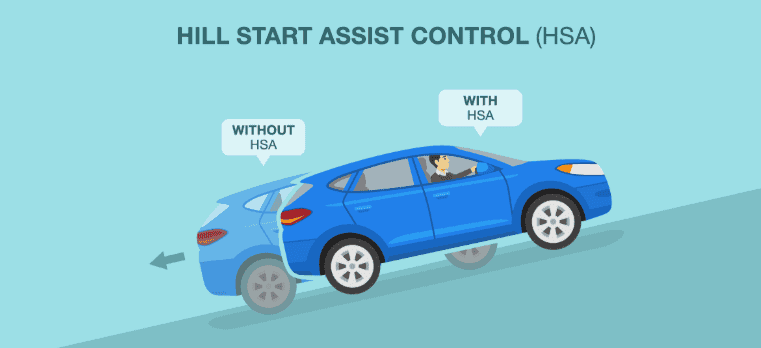
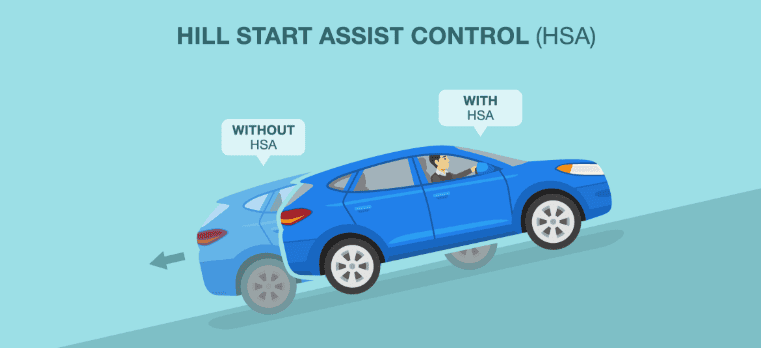
Simply put, when you stop a vehicle on an incline and attempt to move forward, this automatic braking system prevents the vehicle from rolling backward. In older vehicles, drivers had to rely heavily on the handbrake or perfectly balance the clutch and accelerator to avoid rolling back and crashing into vehicles behind them. For new and experienced drivers alike, managing a vehicle on a steep slope can be highly stressful—especially with a manual transmission. Hill Hold Assist completely eliminates this fear by automatically holding the brake pressure for a few seconds after you lift your foot off the brake pedal.
The Science and Technology Behind It
The mechanism relies on an array of vehicle sensors. An Inclinometer or G-sensor detects whether the vehicle is resting on a slope. When the vehicle is stopped facing uphill, wheel speed sensors and brake pressure sensors send real-time signals to the vehicle's computer (ECU).
The moment you release the brake pedal, the system maintains the hydraulic pressure in the brake lines for about 2 to 3 seconds. This brief time window allows you to press the accelerator and generate enough engine power to move forward. As soon as the engine delivers the required torque to the wheels, the brake system automatically releases. This ensures the vehicle begins moving forward smoothly without rolling back a single inch.
Crucial for Both Manual and Automatic Vehicles
This technology is now widely utilized in both manual and automatic vehicles. While standard automatics equipped with torque converters naturally resist rolling back, vehicles with Dual-Clutch Transmissions (DCT) or CVTs are highly prone to rolling backward on steep inclines. Therefore, Hill Hold Assist has become an essential safety feature for all types of modern transmissions.
Key Benefits of Hill Hold Assist
- Accident Prevention: Completely stops backward rolling on steep inclines, protecting the vehicles behind you.
- Stress-Free Driving: Eliminates the anxiety and panic associated with hill starts in mountainous regions.
- Reduces Mechanical Wear: Minimizes unnecessary clutch burn in manual cars and prevents rapid brake pad degradation.
- Fully Automatic Operation: Engages seamlessly via the vehicle's ECU without requiring the driver to press any extra buttons.
Motor Guide's Final Advice
Navigating mountainous routes like Nuwara Eliya or Badulla becomes significantly safer and more effortless with this feature. While some drivers struggle with engine stalling when using the traditional handbrake method, this system makes hill climbing seamless. Motor Guide's advice is to prioritize Hill Hold Assist when purchasing your next vehicle, especially if you frequent hilly terrain or are a beginner driver. It not only simplifies your driving experience but massively enhances your overall safety.
And don't forget to always stay tuned with Motor Guide to learn more valuable information like this about modern vehicles and technology!

எழுதியவர்
Nisaga Sandaru
A versatile and highly experienced professional, currently an Automobile undergraduate at the University of Jaffna, with strong technical expertise grounded in hands-on work as a technician with SriLankan Airlines Ground Support Equipment (GSE). Holding an Automobile NVQ Level 3 qualification, along with specialized certifications in Vehicle ECU Programming and Diagnosis, and extensive experience in arc welding and vehicle body painting, and well equipped to handle complex automotive, diagnostic, and fabrication-related tasks with a high level of competence.