What are 4-Way Adjustments in a Vehicle Seat?


Today at Motor Guide, we are going to talk about a feature found in many vehicles that most people don't exactly know how to use correctly. That is the '4-way adjustment' technical facility, which is essential when setting up a vehicle seat. Generally, as a driver, the biggest challenge we face when driving is maintaining both comfort and safety simultaneously. Many people think adjusting a seat simply means moving it to wherever they want it to be. But as professionals in this field, we know that failing to adjust a seat correctly can increase back pain and neck aches during long journeys, and can also exacerbate the physical injuries sustained during a sudden accident.
Understanding the 4-Way Adjustment
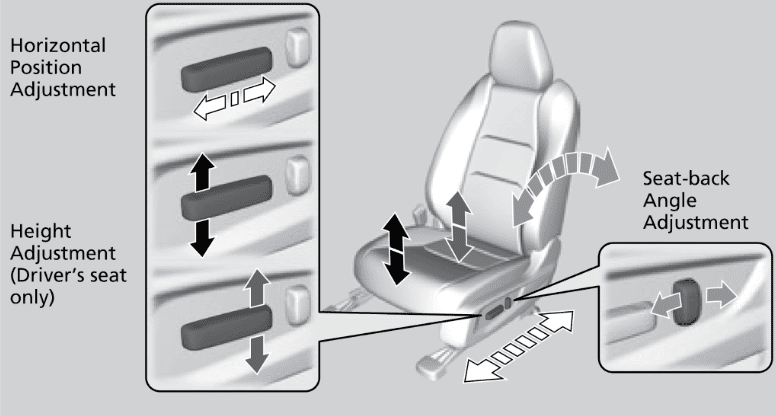
First, let's look at what this 4-way adjustment actually means. Simply put, this refers to the ability to move four basic components of the seat. The two most fundamental adjustments in a standard vehicle are moving the seat forward and backward (Fore-Aft adjustment) and controlling the tilt of the seat's back portion (Recline adjustment). However, in a 4-way adjustment, in addition to these, features like the ability to adjust the height of the seat (Height adjustment) and the ability to change the angle of the seat base (Seat cushion tilt) are included. It is only when all these factors come together that you can create the perfect driving posture tailored to your body height and shape.
Fore-Aft Adjustment: Distance from the Pedals
Now let's look at what you need to be mindful of when moving the seat forward and backward. Many people drive with the seat pushed too far back. That is highly dangerous. When you apply the brakes or step on the clutch, your knees should not be completely straight. Your knees must be slightly bent. If they are not, it will be difficult for you to apply the necessary pressure on the brake pedal during a sudden braking situation. Furthermore, having your knees slightly bent helps minimize injuries to your legs in the event of an accident.
Recline Adjustment: The Backrest Angle
Next is an extremely important factor: the back portion of the seat, or the Backrest. Many people like to drive with the seat tilted far back, much like in a race car. This is a very bad habit. When holding the vehicle's steering wheel, your elbows should be slightly bent. If you sit leaning too far back, it not only becomes difficult to control your arms, but your ability to control the vehicle during a sudden turn is also significantly reduced. Therefore, keeping the backrest relatively upright is the safest position for your back and neck.
Height Adjustment: Optimal Visibility
Thirdly, adjusting the height of the seat. This is a point many people tend to ignore. If the seat is positioned too low, your blind spots increase when looking out at the road. Conversely, if the height is too high, your head might hit the roof. The correct height is the point where your eye level aligns with the middle of the windscreen. This allows you to gain a clear and comprehensive understanding of the road conditions ahead.
Seat Cushion Tilt: Under-Thigh Support
Fourthly, the angle of the seat base, or the Seat cushion tilt. This is a feature frequently seen in luxury vehicles. By slightly elevating the front part of the seat, your thighs receive excellent support. Through this, leg numbness and back pain during long journeys can be drastically reduced. Adjust this angle so that your body weight is evenly distributed across the entire seat.
Motor Guide's Final Advice
As professionals in this field, something we constantly observe is people adjusting their seats very carelessly. A car isn't just a tool for transportation; it is a machine that works in tandem with your body. Therefore, do not rush when adjusting your seat. Take the time while the vehicle is parked to check these settings one by one and select the most comfortable and safe position for yourself. Properly adjusting your seat will make driving a highly pleasant experience for you.
Motor Guide's advice is to make it a habit to check if your seat adjustments are perfectly set as the very first thing you do as soon as you get into your vehicle. You will be able to understand the benefits of this through your own driving experience. And don't forget to always stay tuned with Motor Guide to learn more valuable information like this about modern vehicles and technology!

எழுதியவர்
Nisaga Sandaru
A versatile and highly experienced professional, currently an Automobile undergraduate at the University of Jaffna, with strong technical expertise grounded in hands-on work as a technician with SriLankan Airlines Ground Support Equipment (GSE). Holding an Automobile NVQ Level 3 qualification, along with specialized certifications in Vehicle ECU Programming and Diagnosis, and extensive experience in arc welding and vehicle body painting, and well equipped to handle complex automotive, diagnostic, and fabrication-related tasks with a high level of competence.