What are 2K and 3K in Vehicle Body Paint?

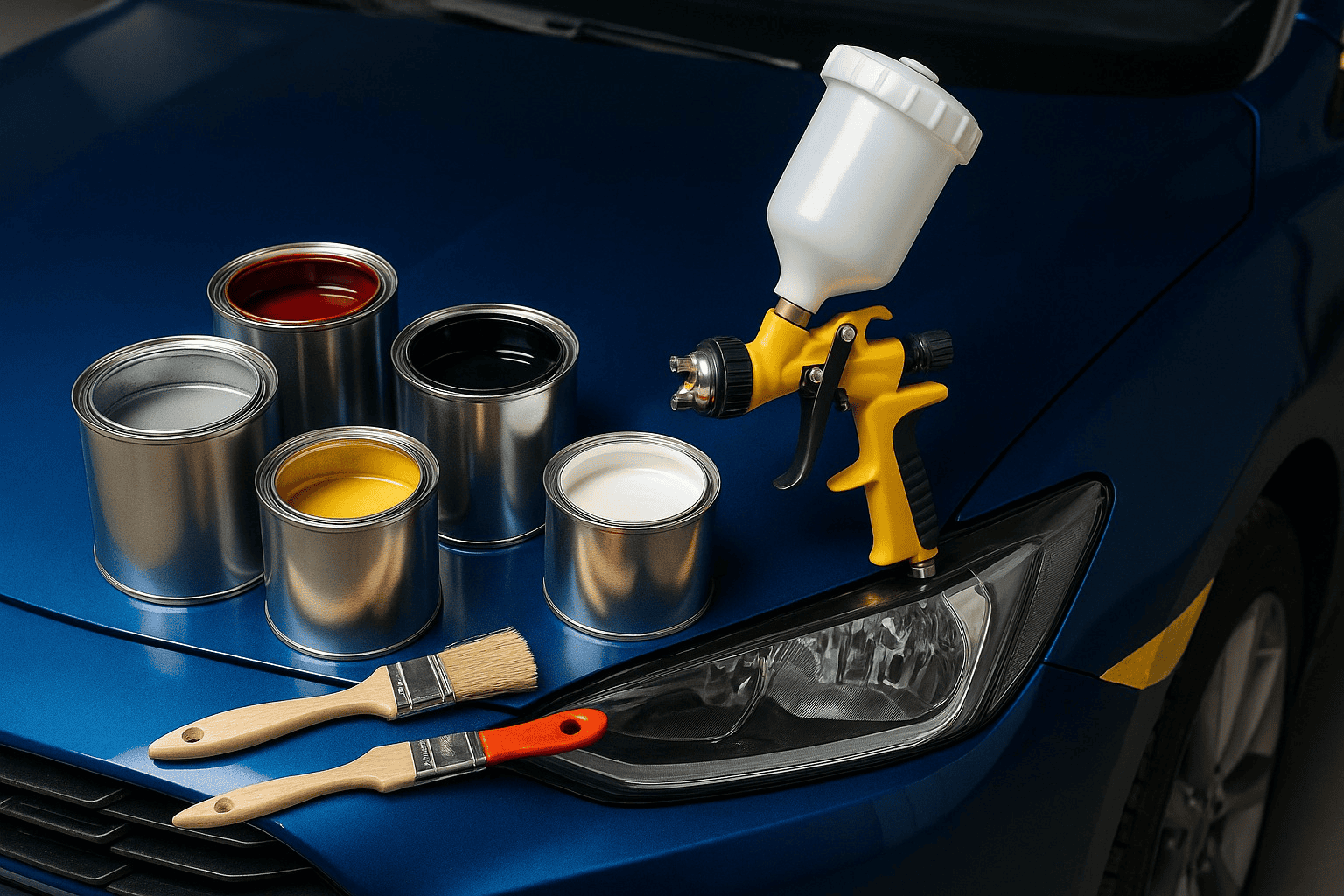
Indeed, when discussing vehicle paints, the terms 2K and 3K can be a bit confusing. Therefore, we at Motor Guide thought to simply discuss the main differences between the two. Before that, let's look at what the letter K signifies. **K** stands for the **number of components**. That is, the number of substances that need to be mixed before the paint can be used.
Let's now look at the differences between 2K and 3K.
What is 2K?
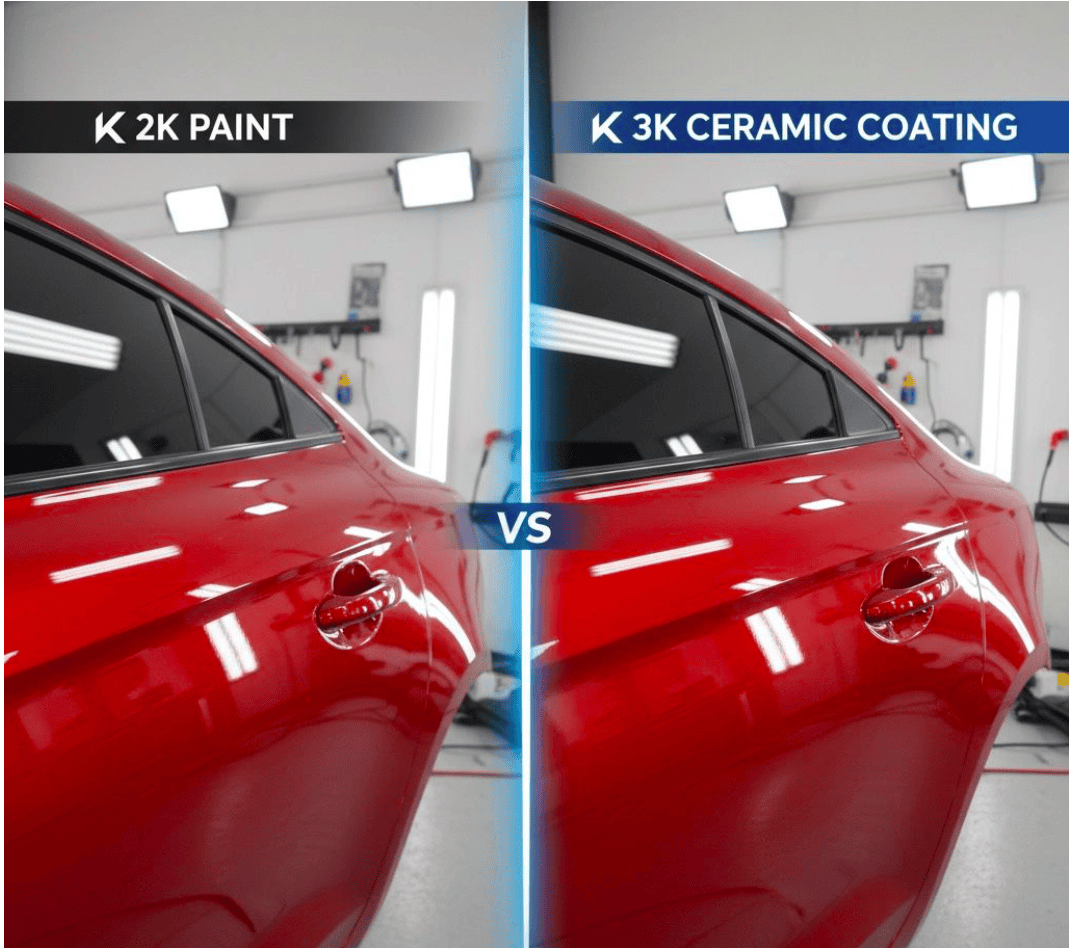
As discussed before, K indicates the number of components required for mixing. The **2** here signifies two main components. The first is the **Base Paint** (the main paint), which contains the color. The second is the **Hardener / Activator**. When these two are mixed, a chemical reaction occurs, causing the paint to dry very quickly and rigidly. This is what is most commonly used in automobiles and industries.
A thinner, called **Thinner**, is also added to this. This is added to bring the paint to a suitable viscosity for the spray gun and to smooth the finish. However, even when Thinner is added, it does not contribute to the chemical reaction. It only performs a physical action of thinning. Therefore, technically, it is still referred to as a **2K system**.
Now let's look at the advantages of 2K paints:
- **Strong Durability:** Once dried, it yields a very strong and rigid surface.
- **Resistance:** It has good resistance to fuels, oils, and chemical substances.
- **UV and Weather Resistance:** It has a higher ability to withstand sun, rain, and ultraviolet (UV) rays.
What is 3K?
Now let's look at what 3K paint is. 3K paint is a further enhanced type of paint system.
Three main components are mixed into 3K paints. This is often used when the manufacturer itself mandatorily recommends both **Hardener** and **Thinner** components for the mixture. Here, the Thinner is prescribed in a very precise dosage by the manufacturer and is considered an essential part of the mixture. The purpose of Thinner being a mandatory component in 3K is to achieve **better flow** and a **mirror-like finish**.
Rarely, in some **Ultra High Performance** paints, there are instances where a third active chemical component (e.g., a special additive) is added in addition to the Hardener and Thinner. In such cases, since the third component contributes directly to the chemical reaction, much like the Hardener, it becomes a **True Three-Component system**. However, these are relatively uncommon in vehicle Body Paint.
Simply put, **2K** is a strong paint type of the highest standard. **3K** is a more advanced system, specifically a method that uses an **extra Thinner** to achieve the best flow and a smooth finish.
Both 2K and 3K are often used for automobiles that require very high chemical resistance, durability, and hardness. They can even be used for the everyday vehicles we use. When using 3K paint, it is necessary to ensure the mixture is at the exact, correct dosage. That is when the true quality of 3K can be achieved.
Since both 2K and 3K paint types contain chemicals, **safety equipment** (Respirator, gloves, goggles) must always be used.
Looking at the difference in prices, **3K paints** are higher in price due to the use of high-quality additional materials like Hardener and **Premium Thinner** necessary to achieve a good finish. Generally, the price of **2K paints** is relatively lower compared to 3K.
Brand and country are other factors that determine the prices. Paints and materials from international brands like PPG, 3M, Sikkens, MaxMeyer, and DeBeer are more expensive than locally produced or less-known brands.
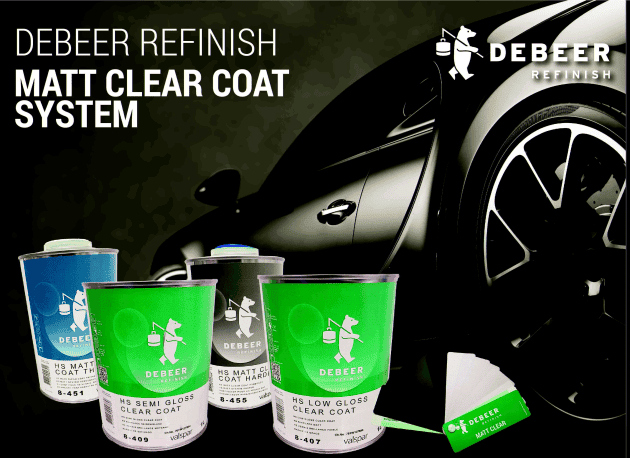
To learn about prices, let's discuss the prices of the **DeBeer** brand paints, which are well-known among professional painters in Sri Lanka. DeBeer is a high-quality automotive repair paint brand under Valspar Automotive. DeBeer is represented in Sri Lanka by Causeway. The DeBeer brand is generally considered a medium-to-high-level brand in the market, and due to its high quality, the prices are also relatively high. The price range per liter here is between **Rs. 6,000 and Rs. 11,000**, and this may vary.
எழுதியவர்
Nisaga Sandaru
A versatile and highly experienced professional, currently an Automobile undergraduate at the University of Jaffna, with strong technical expertise grounded in hands-on work as a technician with SriLankan Airlines Ground Support Equipment (GSE). Holding an Automobile NVQ Level 3 qualification, along with specialized certifications in Vehicle ECU Programming and Diagnosis, and extensive experience in arc welding and vehicle body painting, and well equipped to handle complex automotive, diagnostic, and fabrication-related tasks with a high level of competence.