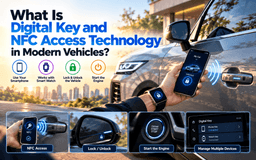
What Is Digital Key and NFC Access Technology in Modern Vehicles?

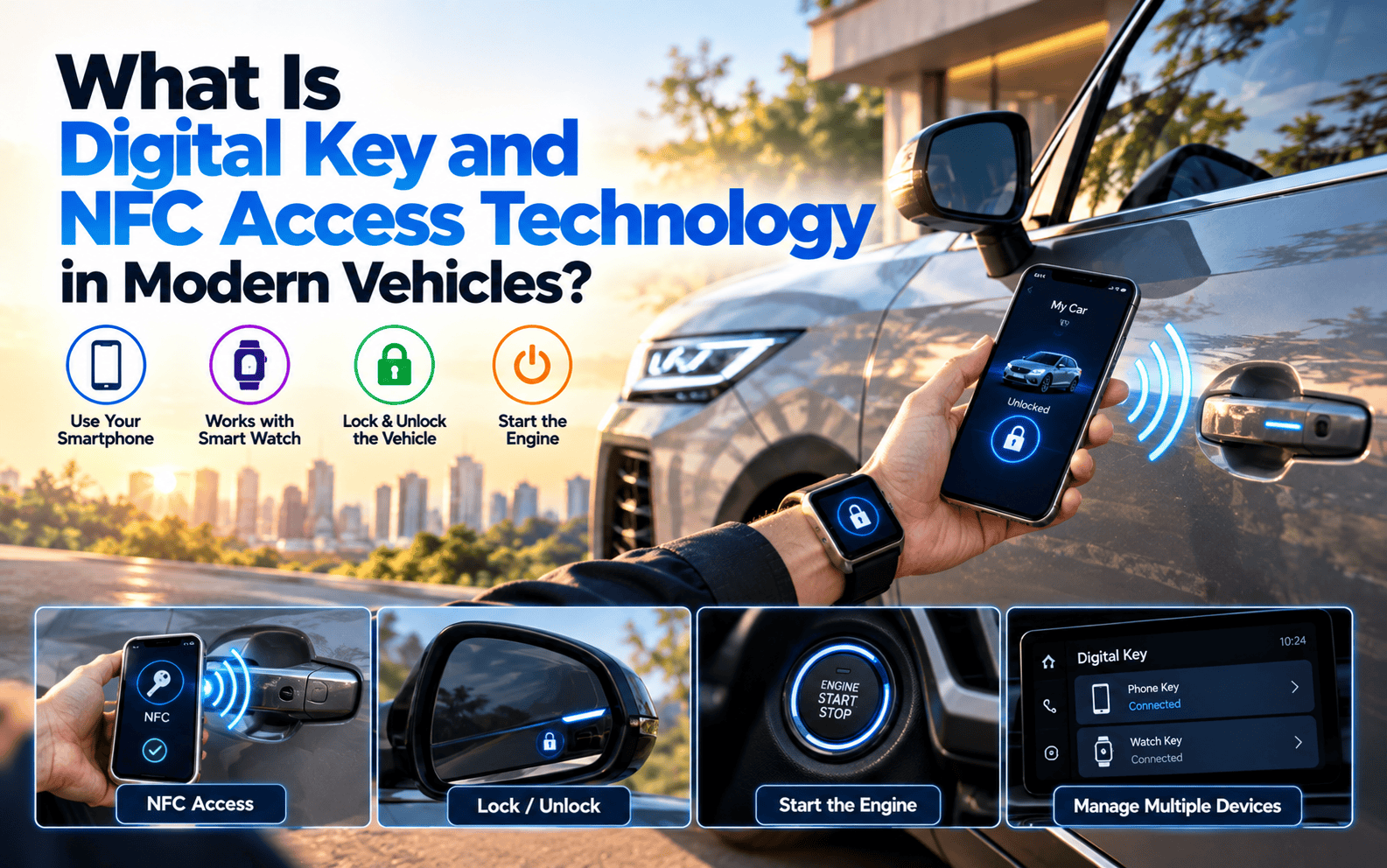
Today at MotorGuide, we're going to explore a modern automotive technology that makes everyday driving more convenient and changes the way we access and operate our vehicles. We're talking about Digital Key and NFC Access technology.
In the past, drivers relied on traditional metal keys to unlock their vehicles and start the engine. As automotive technology developed, these were gradually replaced by remote key fobs and smart key systems that allowed drivers to unlock and start their vehicles without inserting a physical key.
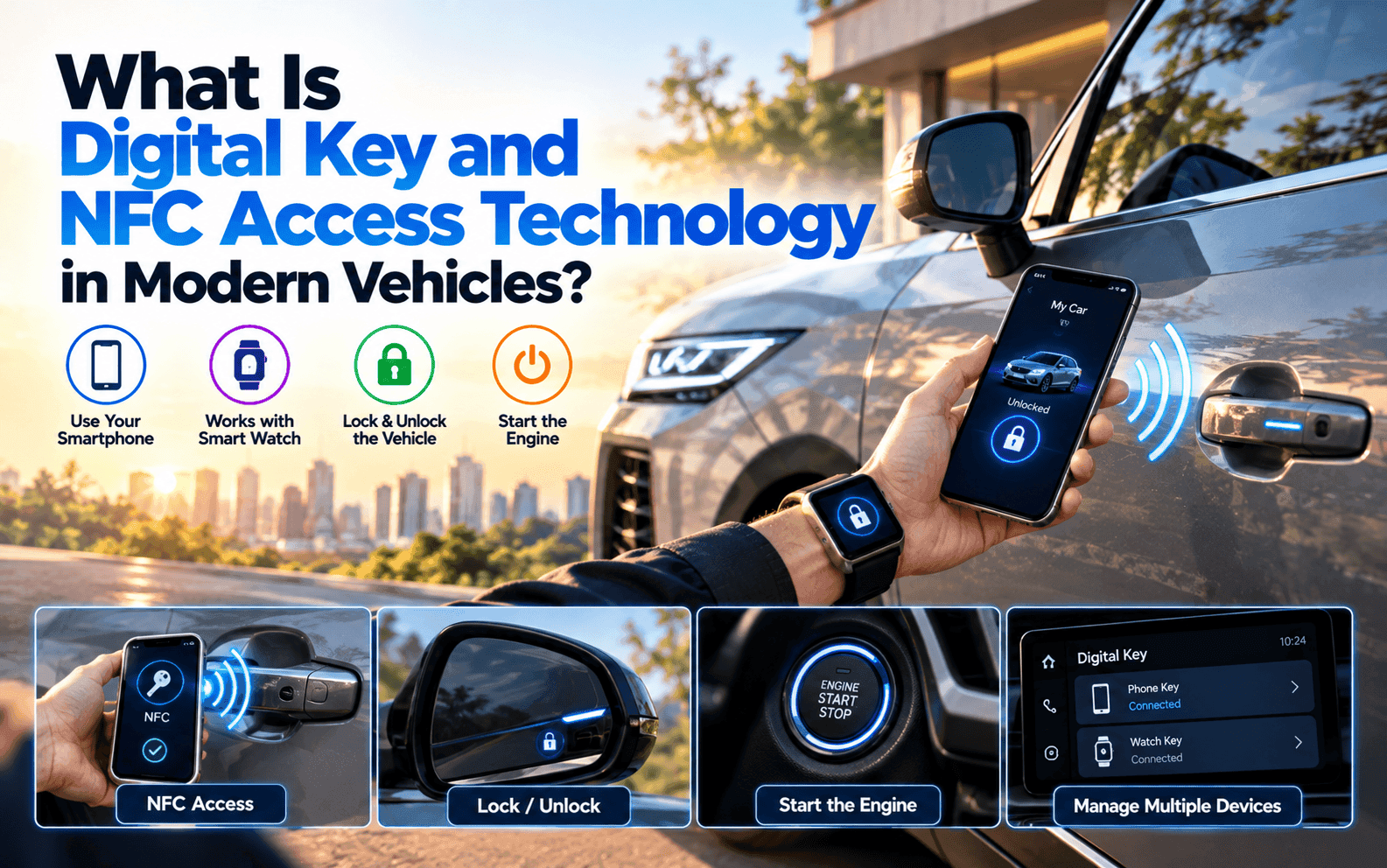
Today, some modern vehicles take this convenience even further. With a compatible smartphone or smartwatch, drivers can unlock their doors and start their vehicles without carrying a conventional car key.
So, how does Digital Key technology work? What roles do NFC and UWB play, and how secure is this system? Let's take a closer look.
What Is a Digital Key?
In simple terms, a Digital Key is a secure digital credential stored on a compatible smartphone, smartwatch, or another supported device that allows the owner to access and operate a vehicle.
Instead of relying entirely on a conventional physical key, the vehicle recognises an authorised digital credential through secure wireless communication.
Depending on the vehicle and device, Digital Key systems may use technologies such as Near Field Communication (NFC), Bluetooth Low Energy (BLE), and Ultra-Wideband (UWB).
Manufacturers including BMW, Mercedes-Benz, Hyundai, Toyota, and Tesla offer smartphone-based vehicle access features on selected models, although their technologies, supported devices, and available functions differ.
For example, some vehicles support digital keys through Apple Wallet or Google Wallet, while others use manufacturer-specific applications and Bluetooth-based access systems.
These technologies make everyday vehicle access more convenient, but they do not completely eliminate the possibility of losing access because of device failures, compatibility issues, or other technical problems.
What Components Make a Digital Key System Work?
A modern Digital Key system combines hardware, software, and wireless communication technologies.
Depending on the vehicle's design, the system may include NFC readers near the door handles or inside the cabin, UWB antennas, Bluetooth communication modules, electronic control units, and secure cryptographic hardware.
The smartphone or smartwatch also needs compatible hardware and software to store and communicate the digital credential.
For vehicles supporting wallet-based digital keys, the owner generally needs to complete an initial setup process using the vehicle manufacturer's instructions and a compatible digital wallet.
Once the device has been registered and authorised, it can communicate securely with the vehicle to perform supported access and starting functions.
How Does NFC Access Work?
NFC stands for Near Field Communication.
It is a short-range wireless communication technology that allows compatible devices to exchange information when they are placed very close to each other.
In vehicles equipped with NFC-based Digital Key technology, the driver typically holds a compatible smartphone or smartwatch near a designated reader on the vehicle's door handle.
When the device is brought within the required range, the vehicle and device begin a secure communication process.
During this process, cryptographic authentication helps the vehicle confirm that the digital credential is authorised.
If the authentication succeeds, the system allows the doors to unlock.
To start the vehicle, some NFC-based systems require the driver to place the smartphone on a designated interior reader, which may be integrated into the wireless charging tray or another specified location.
The driver can then press the Start Button, provided the vehicle's other starting conditions are satisfied.
However, the exact procedure depends on the vehicle model and digital key system.
What Is UWB Technology?
UWB stands for Ultra-Wideband, a wireless technology that can measure the distance and relative position of compatible devices with high precision.
Compared with basic NFC access, UWB-based Digital Key systems can provide a more convenient hands-free experience.
On supported vehicles, the driver may not need to remove the smartphone from their pocket or bag.
Instead, the vehicle uses compatible wireless technologies to detect an authorised device and determine whether it is within the required proximity.
When the driver approaches the vehicle, the system may allow the doors to unlock automatically or enable unlocking by touching the door handle.
Some vehicles also support automatic locking when the authorised device moves away, depending on the manufacturer's system and user settings.
UWB can also help improve security against certain relay attacks by measuring the physical distance between the device and the vehicle.
However, no wireless vehicle access system should be considered completely immune to security vulnerabilities.
Can You Share a Digital Car Key with Someone Else?
Another useful feature of modern Digital Key systems is the ability to share vehicle access with another person.
Depending on the manufacturer and supported device ecosystem, owners may be able to share a digital credential with family members, friends, or other authorised drivers.
For example, supported wallet-based systems allow the owner to send a digital key invitation through an approved sharing process.
This may involve a messaging service or an invitation link, but the actual key must be securely provisioned to the recipient's compatible device.
Simply sending an ordinary message through WhatsApp or iMessage does not automatically provide access to every Digital Key system.
Some manufacturers also allow owners to manage access permissions, revoke shared keys, or apply certain restrictions.
Time limits and other controls are available only on systems that specifically support them.
This feature can be particularly useful for households where multiple people regularly use the same vehicle.
What Are the Advantages of Digital Key Technology?
One of the biggest advantages of Digital Key technology is convenience.
Instead of searching for a physical car key inside a pocket or bag, drivers can use a compatible smartphone or smartwatch to access their vehicles.
On vehicles with hands-free access, this can make entering the vehicle even easier.
Another benefit is flexible access management.
On supported systems, owners can share vehicle access with authorised users without physically handing over a conventional key.
Digital Key systems may also offer additional security features through device authentication, encrypted communication, and secure storage of access credentials.
However, these benefits depend on the vehicle manufacturer, supported devices, system configuration, and available features.
Does a Digital Key Work When Your Phone Battery Is Dead?
One interesting feature supported by certain smartphone-based Digital Key systems is the ability to operate for a limited period after the phone's battery becomes too low for normal use.
For example, some compatible devices provide a power-reserve function that allows supported NFC digital keys to remain accessible for a limited time after the phone has entered a low-power or shutdown state.
This can help drivers unlock their vehicles even when the phone cannot be used normally.
However, this feature is not available on every smartphone, smartwatch, or vehicle.
It also may not work if the device has been completely discharged for an extended period, manually powered off under certain conditions, or affected by a hardware fault.
For this reason, drivers should not assume that their Digital Key will always work when the phone has no usable battery power.
How Secure Is Digital Key Technology?
Security is an important consideration for any system that allows a smartphone to unlock and start a vehicle.
Modern Digital Key technologies use cryptographic authentication and other security mechanisms to help prevent unauthorised access.
However, if a smartphone is lost, stolen, or compromised, the vehicle owner should take appropriate security measures.
Where supported, enabling Face ID, fingerprint authentication, a strong device passcode, and additional account security features can help protect access to the digital credential.
Owners should also know how to suspend or remove digital keys from a lost device through the relevant vehicle account, digital wallet, or manufacturer-supported process.
It's important to understand that some express-access features may allow certain digital key functions without biometric authentication for every individual use.
Therefore, secure device settings and careful management of shared credentials remain important.
Important Maintenance and Safety Tips for Digital Key Users
At MotorGuide, our advice is to treat your Digital Key as an important part of your vehicle's security system.
Keep your smartphone and vehicle software updated, as manufacturers may release updates that improve compatibility, system reliability, and security.
Whenever possible, maintain a suitable backup method of accessing your vehicle.
Some manufacturers provide a physical NFC key card that can be used as an alternative to smartphone access.
However, not every vehicle includes an NFC card, and some models instead rely on a conventional key fob or another authorised backup method.
If your vehicle supports a physical NFC key card, keeping it in a secure and accessible location can be helpful when your phone is lost or malfunctioning.
When installing or configuring a Digital Key, always follow the manufacturer's official instructions and use supported applications and devices.
Avoid sharing account passwords, verification codes, or access credentials with unauthorised people.
If you sell your vehicle, remember to remove your digital keys, revoke shared access, and complete the manufacturer's recommended account transfer or reset procedures.
With the right security practices, Digital Key and NFC Access technologies can provide a convenient and flexible way to access modern vehicles.
Although these systems do not eliminate every security risk or the need for backup access, they represent an important development in the way drivers interact with their vehicles.
Stay connected with MotorGuide for more useful information about modern automotive technologies, vehicle security systems, smart features, and everything you need to know about the future of transportation.

Written by
Nisaga Sandaru
A versatile and highly experienced professional, currently an Automobile undergraduate at the University of Jaffna, with strong technical expertise grounded in hands-on work as a technician with SriLankan Airlines Ground Support Equipment (GSE). Holding an Automobile NVQ Level 3 qualification, along with specialized certifications in Vehicle ECU Programming and Diagnosis, and extensive experience in arc welding and vehicle body painting, and well equipped to handle complex automotive, diagnostic, and fabrication-related tasks with a high level of competence.