What is SOH in an EV Battery?

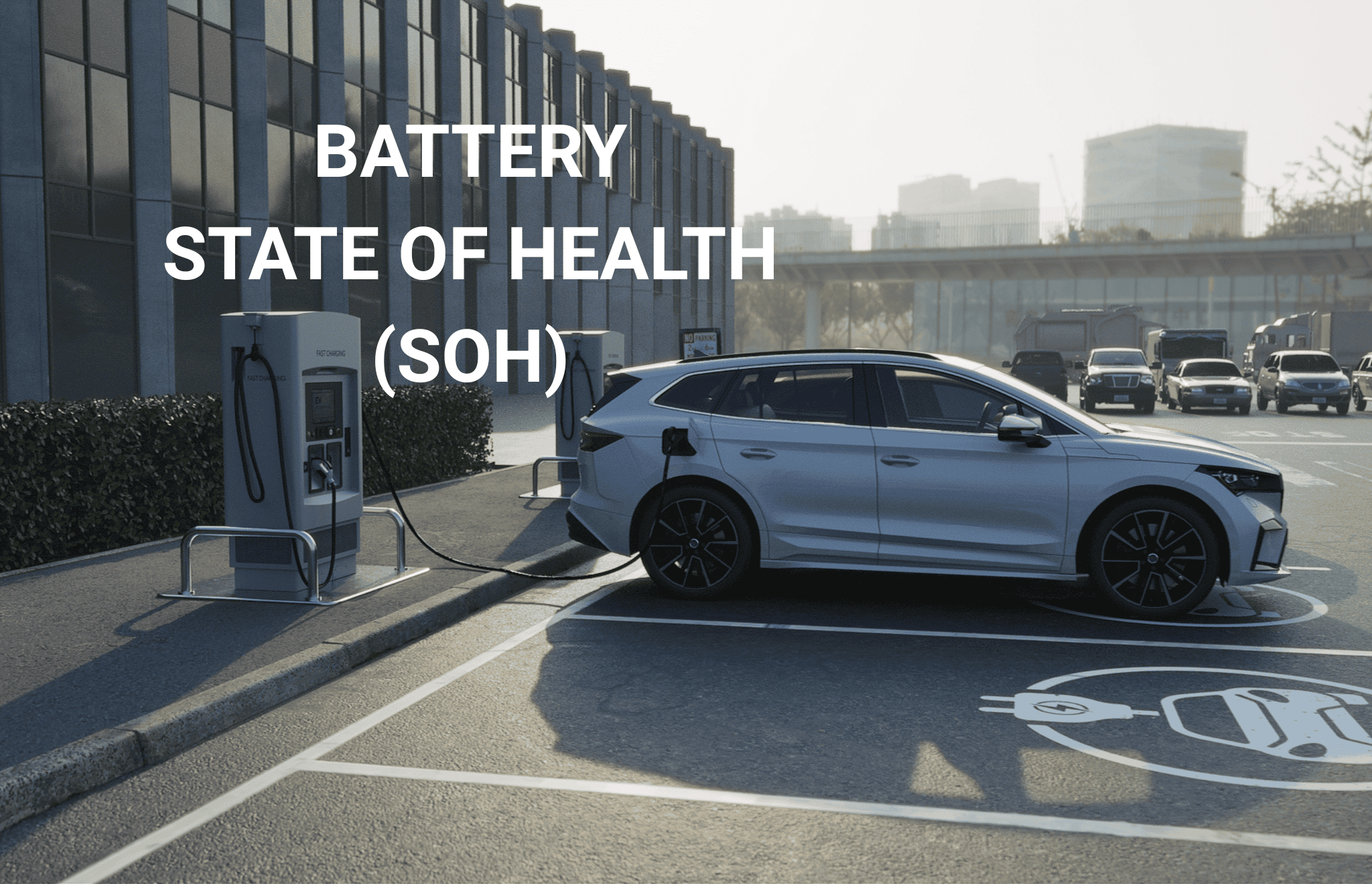
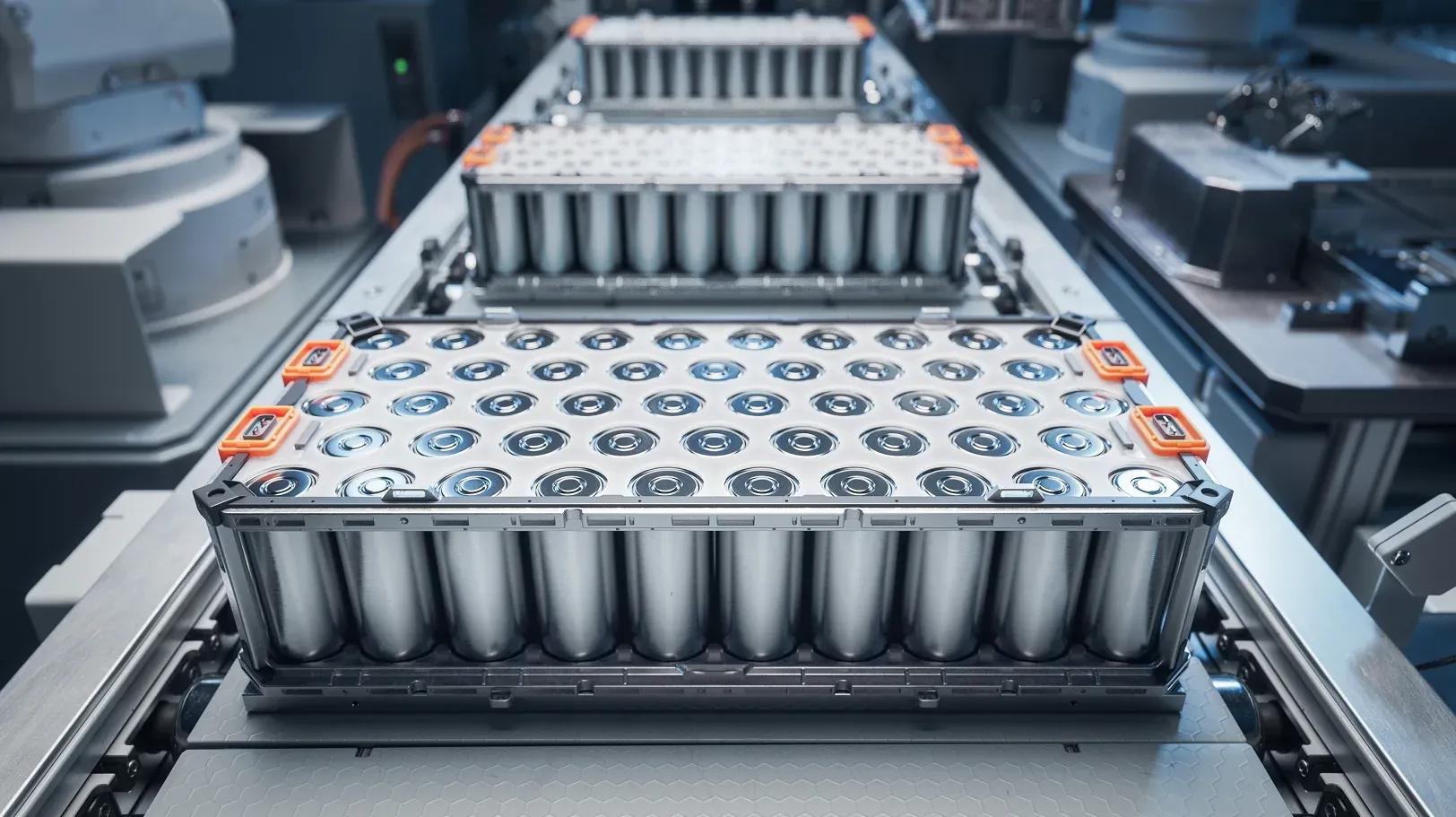
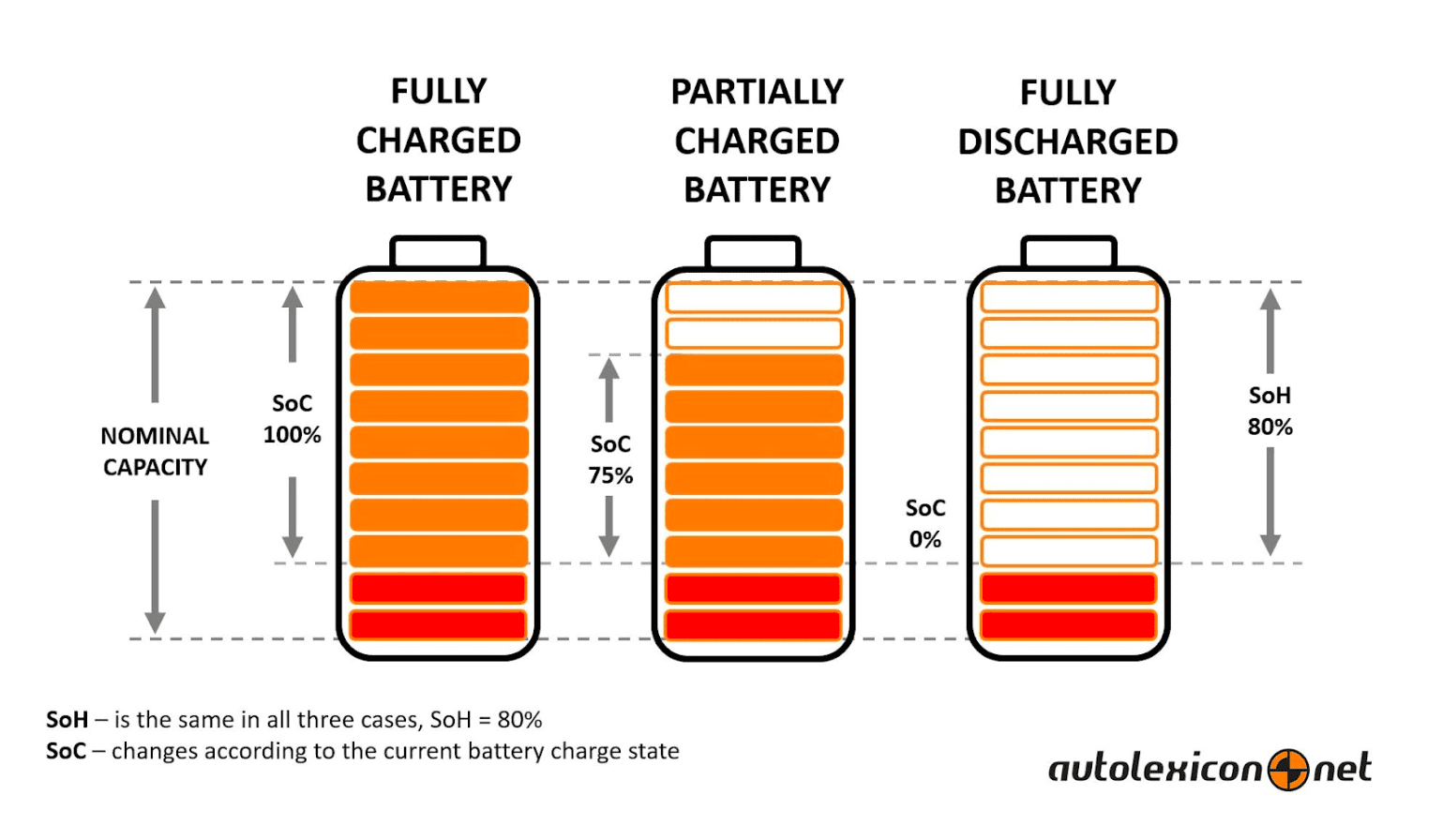
If you use an EV (Electric Vehicle), one thing you must know is the battery's SOH, or State of Health. Simply put, SOH indicates the remaining capacity of the battery relative to its original capacity when new.
The SOH value is usually expressed as a percentage. A new EV battery is considered to have an SOH of 100%.
Remember when you first bought a phone and it lasted two or three days without charging? But after two or three years, you have to charge it three times a day. The reason for this is the decrease in the battery's SOH. The same thing happens to an EV battery.
Why Does SOH Decrease?
There are two main reasons affecting the decrease in SOH:
-
Calendar Aging:
This is a natural process that occurs over time since the battery was manufactured. Whether you use the vehicle or not, the battery gradually ages. Heat is the main factor that accelerates this process. If the battery is exposed to excessive heat, the SOH decreases faster.
-
Cycle Aging:
This is the damage caused by the battery's charging and discharging cycles. Every charge and discharge creates chemical changes within the battery. This gradually reduces the capacity of the electrodes to store charge. Fast Charging and frequently keeping the battery near 0% or 100% increase this damage. If you maintain the charge between 20% and 80%, this process can be slowed down.
Why is SOH Important to You?
- Vehicle Value: If you are buying a used EV, SOH becomes the main factor determining the value or price of that vehicle. A vehicle with an SOH of 95% can be significantly more expensive than a vehicle with an SOH of 80%.
- Warranty Coverage: EV manufacturers typically offer an 8-year or 160,000 km warranty for the battery. This warranty often applies only if the SOH drops below a level such as 70% or 75%.
How Exactly is SOH Measured?
Measuring SOH accurately is somewhat complex. It's like a doctor determining a patient's 'health status' by checking pulse, eye colour, and many other parameters. EVs use factors like these to determine SOH:
-
Battery Internal Resistance:
As a battery ages, chemical changes within it cause the internal resistance to increase. Increased resistance means more heat is generated when charging or discharging the battery. High internal resistance indicates a lower SOH value.
-
Coulomb Counting:
This is the precise calculation of the total electrical charge (Current) entering and leaving the battery. Over time, the maximum amount of 'coulombs' the battery can store decreases. This is one of the main methods for measuring SOH.
-
Voltage Measurement:
SOH can be estimated by measuring how the voltage changes when the battery is charging or discharging. The voltage curves of aged batteries differ compared to new batteries.
Battery Warranty and SOH: A Key Consumer Point
When reading EV battery warranty conditions, you should understand these two terms:
-
Manufacturing Defects:
If the battery fails (e.g., catching fire, complete system malfunction), full coverage is provided under this warranty.
-
Capacity Retention Guarantee:
This is the part relevant to SOH. Typically, the condition is that "The battery's SOH must not fall below 70% or 75% within the period of 8 years or 160,000 kilometers (sometimes 100,000 miles)." If the battery capacity falls below this limit, the manufacturer must repair, replace, or recondition the battery. This is what we commonly refer to as a 1 to 1 warranty.
The SOH of an EV is not just a number. It is the main factor determining the overall lifespan of the battery, the value of the vehicle, and the Range (the distance you can travel on a single charge).
Best Practices for Maintaining a Good SOH Value
EV batteries are highly sensitive components made with Lithium-ion technology. To minimize damage, you must avoid excessive heat and extreme charge levels.
-
Control Charge Level (The 20%-80% Rule):
Avoid charging the battery to 100% frequently. The best practice for battery health is to charge it up to about 80%. If you need to travel a long distance, charging up to 100% is fine, but do not make it a daily habit. Similarly, do not drive the battery below 20%, as this also contributes to SOH reduction. The reason for both is that the battery electrodes suffer more damage at the lowest and highest charge levels. The 20% to 80% range can be referred to as the damage-free zone for the battery.
-
Thermal Management:
Heat is the battery's greatest enemy. Whenever possible, park your EV in the shade or inside a garage. Excessive sunlight is detrimental to the battery's SOH, especially when the battery is near 100% charge. When you use DC Fast Charging, the vehicle's BMS (Battery Management System) works to cool the battery. However, if the external temperature is very high, avoid frequent fast charging.
-
Control Fast Charging:
Use DC Fast Charging only when necessary. The reason is that charging the battery at a high rate generates more heat, which can damage the battery's chemical layers. Use Level 1 or Level 2 (AC) chargers at home or work as the primary charging method. These are more favorable for the battery.
-
Avoid Long-Term Parking:
If you will not use the vehicle for several weeks or months, store it with the battery level at about 50%. The reason is that when a battery is at a very low level (near 0%) or a very high level (100%), the Calendar Aging process accelerates during periods of non-use.
-
Always Follow Manufacturer's Instructions:
You must adhere to the specific instructions provided by your vehicle manufacturer, such as specific charging limits or software updates.
These simple habits will help you maintain your EV battery's SOH at a significantly high level and preserve the value of your vehicle.

எழுதியவர்
Nisaga Sandaru
A versatile and highly experienced professional, currently an Automobile undergraduate at the University of Jaffna, with strong technical expertise grounded in hands-on work as a technician with SriLankan Airlines Ground Support Equipment (GSE). Holding an Automobile NVQ Level 3 qualification, along with specialized certifications in Vehicle ECU Programming and Diagnosis, and extensive experience in arc welding and vehicle body painting, and well equipped to handle complex automotive, diagnostic, and fabrication-related tasks with a high level of competence.