Can You Ignore a Steering Wheel Vibration?


When driving a vehicle, a shaking or vibrating steering wheel is not as simple an issue as many people think. Some assume it's just the roughness of the road, or they dismiss it thinking, "It's just a little shake, I'll look into it later." However, at Motor Guide, we want you to know that this vibration is your vehicle giving you a "warning." Therefore, never ignore or neglect it. A small vibration today can pave the way for a major accident and a massive repair bill tomorrow.
Vibration While Driving at High Speeds
First, observe when this shaking occurs. If the steering wheel only vibrates when you are driving fast, it mostly means that your Wheel Balancing is off. When the weight of a wheel is not distributed evenly, it becomes unbalanced as it spins at high speeds, and we feel this as a vibration through the steering wheel. If you continue driving without fixing this, one side of the tire will wear out quickly, and a massive amount of stress will be placed on the vehicle's suspension system (components like shock absorbers).
Vibration While Braking
The next important point is when the steering wheel shakes while braking. If the steering wheel shudders when you brake from a high speed, it means the front Brake Discs/Rotors of your vehicle are warped. Over time, due to excessive heat or the use of low-quality brake pads, the surface of these discs can become uneven.
If ignored, your brakes might not engage properly in an emergency, and it will also cause other parts of the braking system to break down quickly. Therefore, if it shakes when braking, you must immediately get it checked and either resurface ("face") the brake discs or replace them entirely.
Worn Suspension and Steering Components
From another angle, this kind of vibration can also occur if the Bushes, Ball Joints, or Tie Rod Ends in the steering or suspension system are loose. These are the components that connect the wheel to the steering system.
Driving while these are worn out or loose is highly dangerous. If one of these joints pops out at any moment, you could completely lose control of the vehicle. You don't need us to tell you what happens if this occurs while taking a corner or driving at high speeds.
Tire Condition and Bubbles
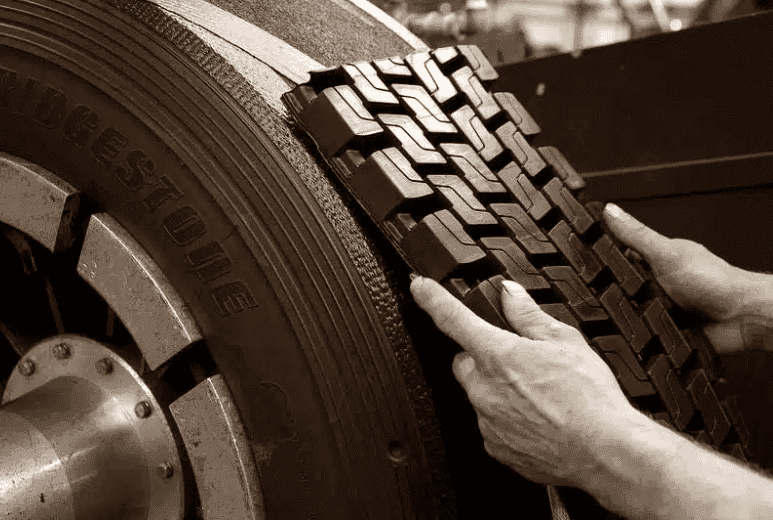
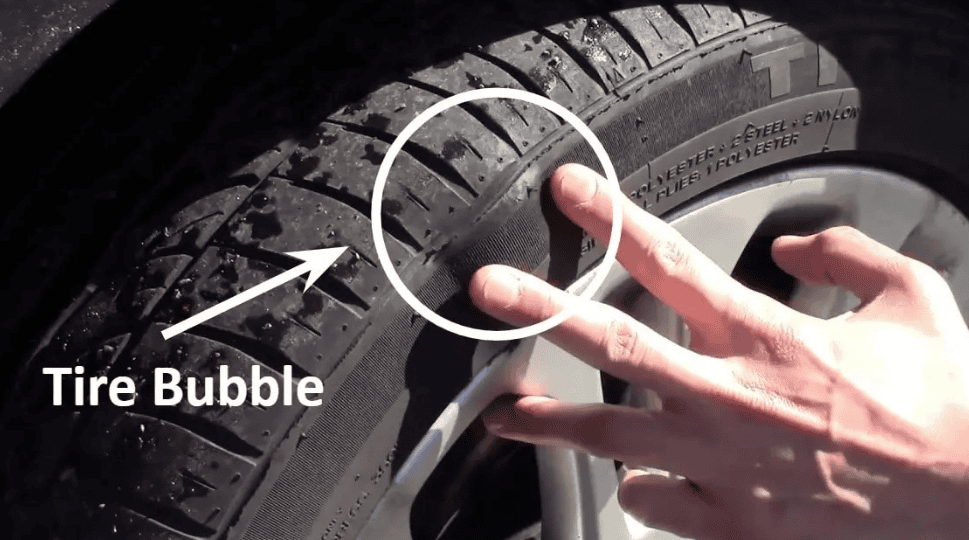
The condition of the tires also directly affects this. If a "Tyre Bubble" forms—meaning the internal cords of the tire are broken causing a bulge—the steering wheel can feel like it's wobbling side to side even at low speeds. Similarly, if the Tyre Pressure is uneven, the vehicle might pull to one side or shake. Therefore, always inspect the surface of your tires for uneven wear and bulges.
Worn Engine Mounts
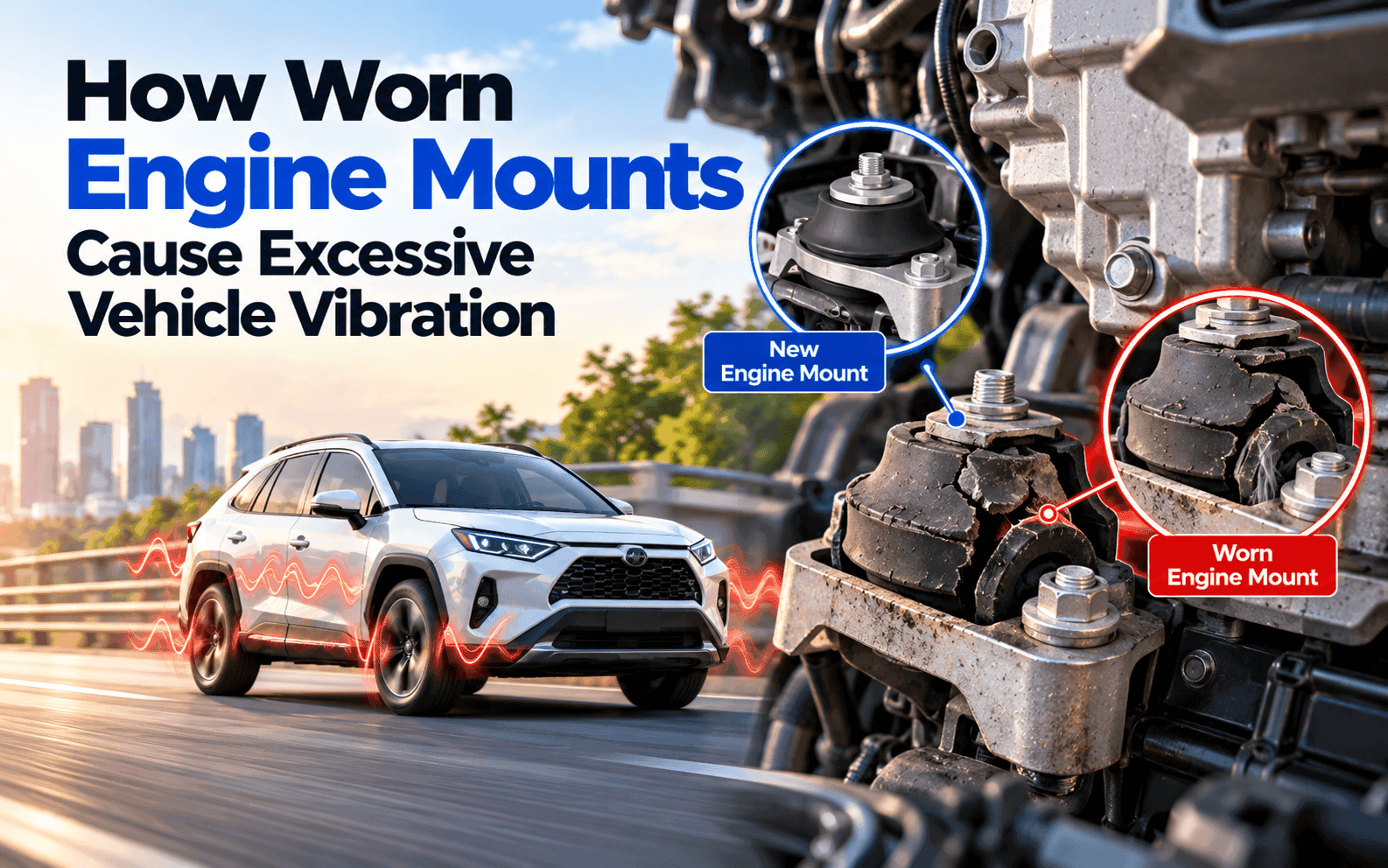
Another factor that many people don't consider is the wear and tear of engine mounts. When the rubber mounts that secure the engine to the vehicle's chassis are damaged, the engine's vibration transfers directly to the steering wheel. If the steering wheel shakes specifically when the vehicle is parked and the engine is running (Idling), there is a high chance it is an issue with the mounts.
Motor Guide Advice: The Cost of Ignoring
Ultimately, a steering wheel vibration is not something to "avoid," it is a problem that must be "solved." By ignoring this:
- Fuel costs increase: The engine has to work harder due to unbalanced wheels.
- Tires wear out quickly: Tires that cost hundreds of thousands of rupees can be ruined in just a few months.
- Maintenance costs skyrocket: Failing to replace a small bush or skipping wheel balancing can force you to repair the entire suspension system.
- Risk to life: Most importantly, the safety of you and your passengers on the road is severely compromised.
Therefore, if you feel an unusual shaking while driving, visit an experienced mechanic immediately and get your vehicle inspected. It is the best way to protect your time, your money, and your life.

Written by
Nisaga Sandaru
A versatile and highly experienced professional, currently an Automobile undergraduate at the University of Jaffna, with strong technical expertise grounded in hands-on work as a technician with SriLankan Airlines Ground Support Equipment (GSE). Holding an Automobile NVQ Level 3 qualification, along with specialized certifications in Vehicle ECU Programming and Diagnosis, and extensive experience in arc welding and vehicle body painting, and well equipped to handle complex automotive, diagnostic, and fabrication-related tasks with a high level of competence.