How Does a Catalytic Converter Work and What Happens If You Remove It?

Today at MotorGuide, we're going to discuss an important component of a vehicle's exhaust system that many drivers rarely think about until something goes wrong. We're talking about the catalytic converter, how it works, and what can happen if it is removed from a vehicle.
Many vehicle owners pay attention to components such as the engine, gearbox, air filter, and exhaust muffler. However, the catalytic converter is another important part of a modern vehicle, particularly when it comes to controlling harmful exhaust emissions.
Some drivers consider removing the catalytic converter because replacing a damaged unit can be expensive. Others believe that removing it will improve acceleration, increase engine power, or make the exhaust system perform better.
But does removing a catalytic converter actually improve performance? And what problems can it create for the vehicle, its occupants, and the environment?
Let's take a closer look at how catalytic converters work and why they are important.
What Is a Catalytic Converter?
A catalytic converter is an exhaust emission control device designed to reduce certain harmful pollutants produced by an internal combustion engine.
When a petrol or diesel engine operates, fuel and air are burned to produce the energy needed to move the vehicle.
However, combustion also produces exhaust gases containing substances that can affect human health and the environment.
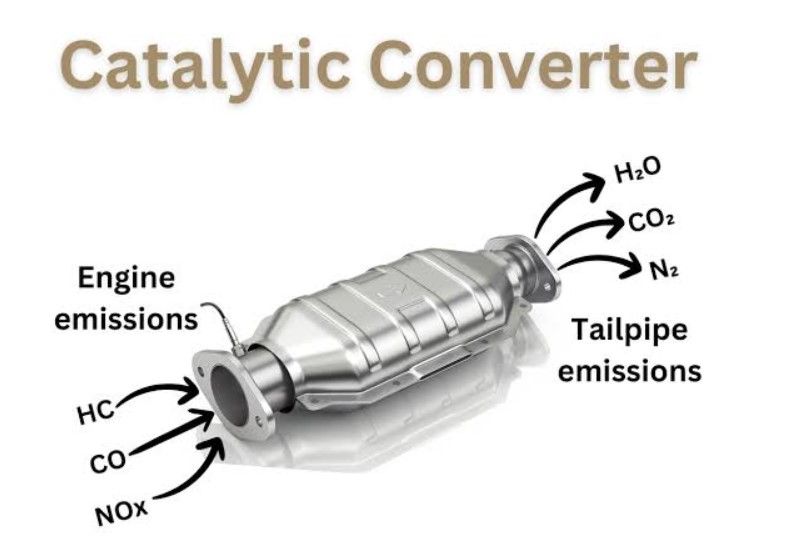
These pollutants may include carbon monoxide (CO), nitrogen oxides (NOx), and unburned hydrocarbons (HC).
Carbon monoxide is particularly dangerous because it is a poisonous gas that can interfere with the body's ability to transport oxygen.
Nitrogen oxides contribute to air pollution, while unburned hydrocarbons can participate in chemical reactions that form ground-level ozone.
The catalytic converter helps reduce these pollutants before the exhaust gases are released into the atmosphere.
How Does a Catalytic Converter Work?
In many vehicles, the catalytic converter is installed within the exhaust system, often relatively close to the engine or exhaust manifold.
Its exact position depends on the vehicle's engine design and emission control system.
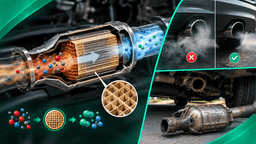
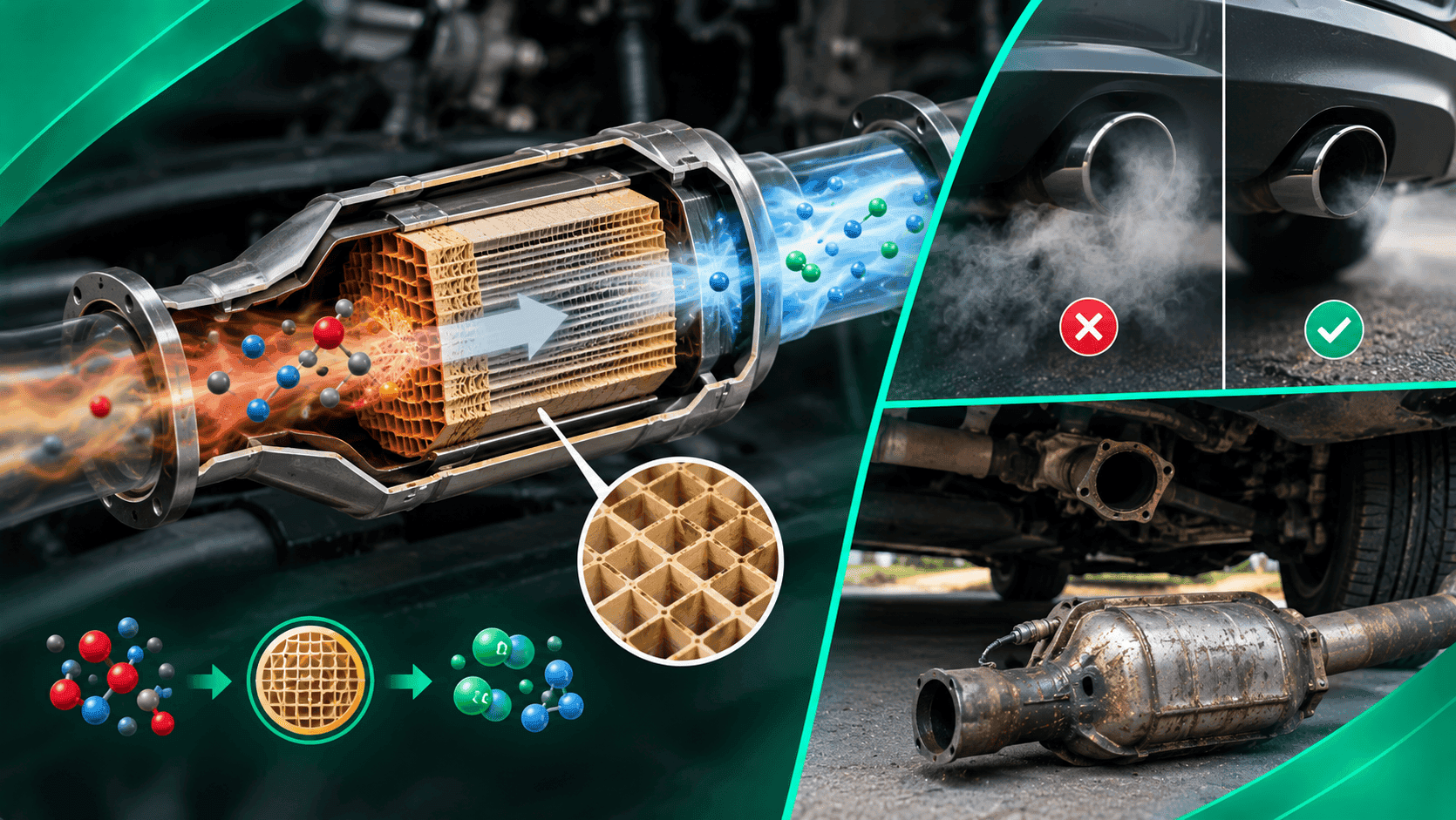
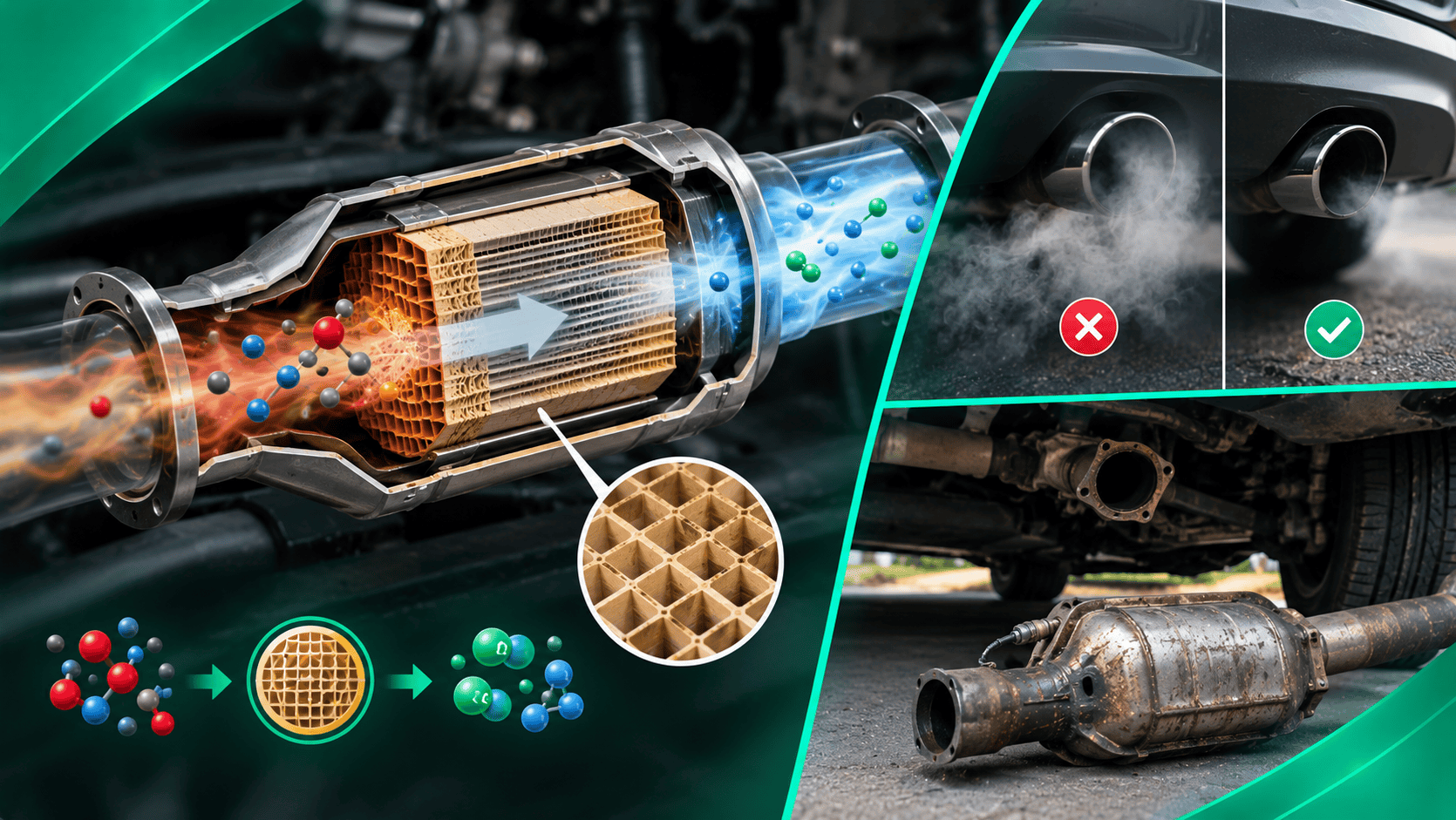
Inside the converter is a ceramic or metallic structure containing numerous small passages arranged in a honeycomb pattern.
This structure provides a large surface area for chemical reactions to take place as exhaust gases pass through it.
The surfaces are coated with catalytic materials that may contain precious metals such as platinum, palladium, and rhodium.
These metals help speed up specific chemical reactions without being consumed in the same way as ordinary fuel.
In a typical three-way catalytic converter used on many petrol vehicles, three important processes take place.
- Carbon monoxide conversion: Carbon monoxide is oxidised into carbon dioxide.
- Hydrocarbon conversion: Unburned hydrocarbons are oxidised into carbon dioxide and water.
- Nitrogen oxide reduction: Nitrogen oxides are converted primarily into nitrogen under suitable operating conditions.
These reactions reduce the concentration of certain harmful pollutants in the exhaust.
However, the catalytic converter does not make exhaust gases completely harmless. Carbon dioxide is still a greenhouse gas, and the converter does not eliminate every type of pollutant.
Its effectiveness also depends on operating temperature, engine condition, air-fuel mixture control, and the type of emission system fitted to the vehicle.
Diesel engines may use different combinations of oxidation catalysts, particulate filters, and selective catalytic reduction systems to control emissions.
Why Do Some Drivers Remove the Catalytic Converter?
There are several reasons why some vehicle owners consider removing a catalytic converter.
One common reason is replacement cost.
Because catalytic converters contain valuable materials and require specialised manufacturing, replacing a damaged or failed unit can be expensive.
Some drivers may also experience reduced engine performance when a converter becomes severely blocked or physically damaged.
Instead of identifying and repairing the problem correctly, they may consider removing the converter entirely.
Others believe that removing the converter will allow exhaust gases to escape more freely, increasing engine power and improving acceleration.
Catalytic converters are also targeted by thieves in some markets because of the precious metals contained inside them.
However, removing a functioning catalytic converter can create several disadvantages without providing the performance improvements that some drivers expect.
1. Check Engine Light and ECU Error Codes
One of the most common consequences of removing a catalytic converter from a modern petrol vehicle is the appearance of a Check Engine Light.
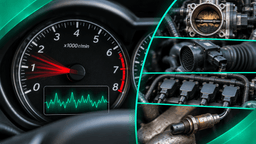
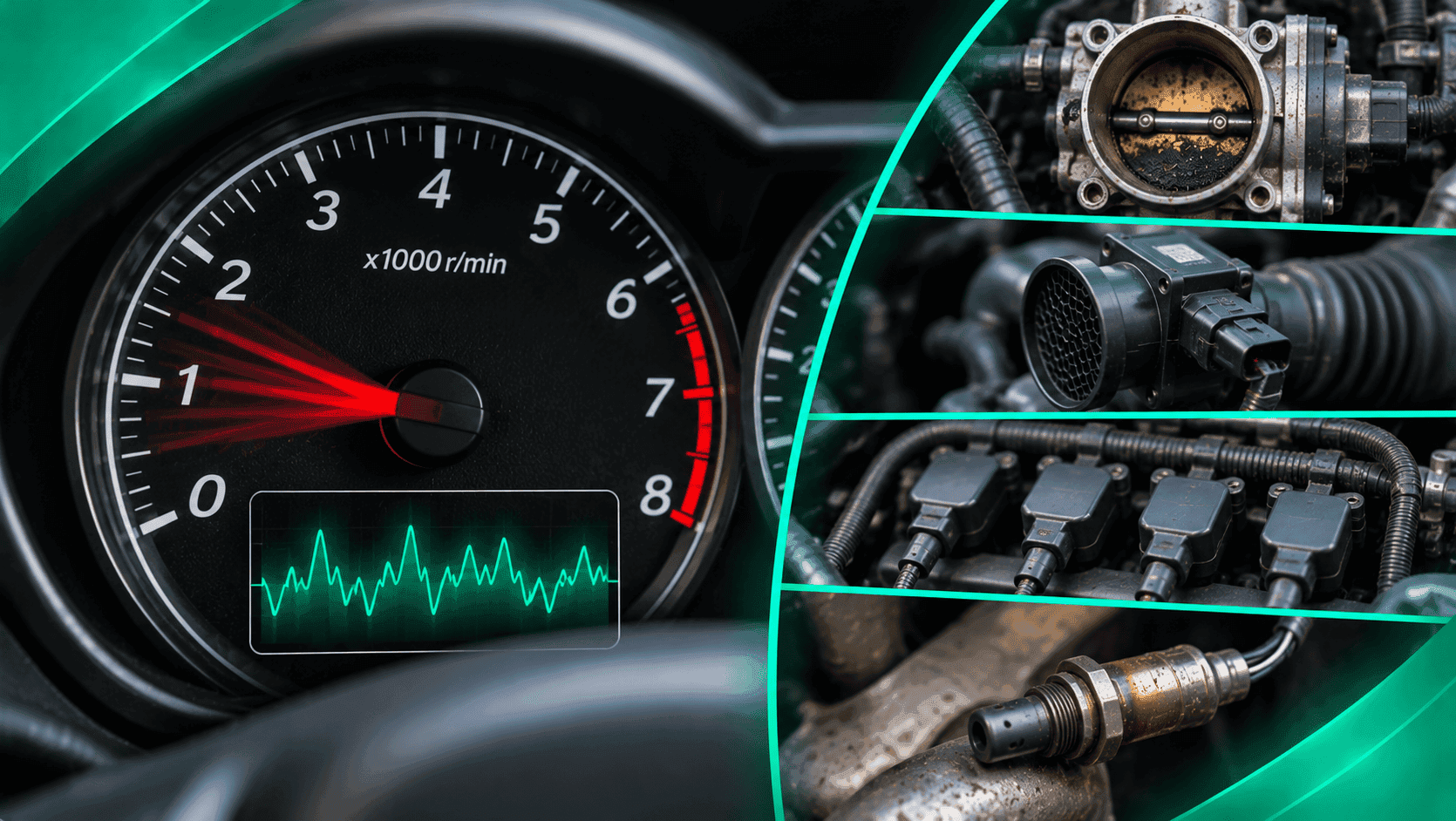
Many modern engine management systems use oxygen sensors positioned before and after the catalytic converter.
The upstream sensor helps the engine control unit monitor combustion conditions and adjust the air-fuel mixture.
The downstream sensor is commonly used to monitor catalytic converter performance and may also support other diagnostic or control functions, depending on the engine design.
When the catalytic converter is functioning correctly, it changes the composition of the exhaust gases passing through it.
The engine control unit can use signals from the oxygen sensors to assess whether the converter is operating as expected.
If the converter is removed, the downstream sensor may detect conditions inconsistent with normal catalytic converter operation.
As a result, the vehicle may register a diagnostic trouble code and illuminate the Check Engine Light.
One example is P0420, which generally relates to catalytic system efficiency below the expected threshold for Bank 1.
However, not every vehicle uses the same sensor arrangement, and removing a converter does not automatically produce the same fault code in every model.
It is also important to understand that a catalytic converter efficiency fault does not normally force every vehicle into limp mode.
Limp mode is more commonly associated with particular faults that the engine management system considers necessary to manage by limiting operation.
Therefore, any warning light should be investigated using appropriate diagnostic equipment rather than assuming that the converter is the only problem.
2. Can Removing a Catalytic Converter Increase Fuel Consumption?
Another common belief is that removing a catalytic converter will automatically increase engine power or improve fuel economy.
However, the actual effects depend on the vehicle's engine, exhaust system, and engine management strategy.
In a properly functioning modern vehicle, the catalytic converter is designed to work as part of the complete exhaust and emission control system.
Removing it does not automatically improve acceleration or reduce fuel consumption.
The upstream oxygen sensor generally plays the primary role in closed-loop air-fuel mixture control in many petrol engines.
Therefore, removing the converter does not necessarily cause the ECU to inject excessive fuel simply because the downstream oxygen sensor reports an abnormal condition.
Some vehicles may experience changes in engine behaviour, exhaust characteristics, or diagnostic monitoring, but a significant increase in fuel consumption is not guaranteed.
If a converter is severely blocked, it can restrict exhaust flow and reduce engine performance.
However, the appropriate solution is to diagnose the restriction, identify its underlying cause, and repair or replace the affected components.
Removing an otherwise healthy converter is not a reliable method of improving engine performance.
3. Changes in Exhaust Flow and Engine Performance
A vehicle's exhaust system is designed to manage exhaust gas flow, noise, emissions, and engine operating characteristics.
Removing the catalytic converter changes the exhaust system configuration and may affect its acoustic and flow characteristics.
However, the idea that an engine always needs a specific amount of exhaust backpressure to produce low-RPM torque is an oversimplification.
Engine performance is influenced by several factors, including exhaust gas velocity, pipe dimensions, pressure waves, exhaust manifold design, and engine calibration.
In some applications, modifying the exhaust system can alter these characteristics.
However, any performance change depends on the specific engine and exhaust design.
For ordinary road vehicles, removing a functioning catalytic converter is unlikely to provide a worthwhile improvement and may introduce additional problems.
4. Increased Exhaust Noise
Another possible effect of removing the catalytic converter is a change in exhaust noise.
Although the converter's primary purpose is emission control, its internal honeycomb structure can influence the sound travelling through the exhaust system.
Removing it may make the exhaust note louder, sharper, or more noticeable.
The actual change depends on the position of the converter, the exhaust pipe layout, and the design of the mufflers and resonators.
However, a catalytic converter is not the same as an exhaust muffler.
The muffler is specifically designed to reduce exhaust noise, while the catalytic converter is primarily designed to reduce pollutants.
Therefore, removing the converter does not necessarily make every vehicle dramatically louder.
Unwanted exhaust noise can also make the vehicle less comfortable during everyday driving.
5. Increased Harmful Exhaust Emissions
One of the most important consequences of removing a catalytic converter is the increase in certain harmful exhaust pollutants.
Without a functioning converter, pollutants such as carbon monoxide, nitrogen oxides, and unburned hydrocarbons may be released into the atmosphere at higher concentrations.
These pollutants contribute to air quality problems and can affect human health.
Carbon monoxide exposure is particularly dangerous because the gas is colourless and odourless.
If exhaust gases enter the passenger compartment because of an exhaust leak, damaged seals, or another fault, occupants may be exposed to hazardous gases.
This risk is especially concerning in poorly ventilated areas, enclosed garages, and other situations where exhaust gases can accumulate.
It is important to clarify that removing a catalytic converter does not automatically cause exhaust gases to enter the cabin through the air conditioning system.
However, a damaged or improperly modified exhaust system can increase the risk of leaks and unwanted exposure.
If you notice exhaust fumes inside your vehicle, stop using it until the source has been identified and repaired.
6. Vehicle Emission Testing and Legal Problems
Removing a catalytic converter can also create problems related to vehicle emission standards and roadworthiness requirements.
In Sri Lanka, vehicle emission testing forms part of the annual revenue licence process for vehicles subject to the testing requirement.
If a vehicle originally equipped with a catalytic converter no longer has a functioning emission control system, its exhaust emissions may exceed applicable limits.
This can cause difficulties during an emission test.
However, the exact test result depends on the vehicle, fuel type, inspection procedure, and pollutants being measured.
It would therefore be inaccurate to claim that every vehicle without a catalytic converter will automatically fail every type of emission test.
Removing or modifying emission control equipment may also create regulatory compliance problems, depending on the applicable rules.
Vehicle owners should confirm the current requirements before making any modification to the original emission control system.
7. What Causes a Catalytic Converter to Become Blocked or Damaged?
A catalytic converter can deteriorate or become damaged for several reasons.
One possible cause is persistent engine misfiring.
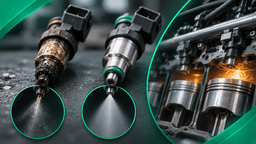
When a petrol engine misfires, unburned fuel can reach the exhaust system and may cause excessive heating inside the converter.
Other possible causes include an overly rich air-fuel mixture, certain ignition problems, internal oil consumption, coolant contamination, or physical damage to the converter.
Over time, these conditions may damage the catalytic coating or internal honeycomb structure.
In severe cases, the internal material may melt, break apart, or create an exhaust restriction.
A restricted converter can cause symptoms such as reduced acceleration, loss of power under load, and abnormal engine performance.
However, these symptoms can also have other causes.
Proper diagnosis is necessary before deciding that the catalytic converter is faulty.
8. Can a Blocked Catalytic Converter Be Cleaned?
Some vehicle owners consider using catalytic converter cleaning additives when they experience performance problems or a catalytic efficiency warning.
Certain products are marketed for reducing deposits within the fuel and exhaust systems.
However, these products cannot repair a converter with a melted honeycomb, broken internal structure, or permanently damaged catalytic material.
They also cannot correct engine misfires, oil burning, coolant leaks, or other mechanical faults that may have caused the converter to deteriorate.
If a converter is suspected to be blocked, a qualified technician should first investigate the cause.
Depending on the vehicle, the inspection may include diagnostic trouble code analysis, checking the engine's fuel control system, and appropriate exhaust restriction testing.
If the converter has suffered permanent internal damage, replacement with a correctly specified unit may be necessary.
Simply attempting to clean the converter without addressing the original engine fault may allow the problem to return.
9. How to Extend the Life of a Catalytic Converter
One of the best ways to protect the catalytic converter is to maintain the engine properly.
Because the converter operates using exhaust gases produced by the engine, faults affecting combustion can also affect the emission control system.
For petrol vehicles, keeping spark plugs and ignition components in good condition helps reduce the risk of persistent misfires.
Maintaining the fuel injection system and air intake components is also important for correct engine operation.
Engine oil should be changed using the grade and specification recommended by the manufacturer.
Any unusually high engine oil consumption or coolant loss should be investigated because certain contamination problems can damage catalytic converters.
Drivers should also avoid ignoring a flashing Check Engine Light, which may indicate a serious misfire on some vehicles.
Continuing to drive with a severe misfire can result in additional damage to the catalytic converter.
Regular maintenance can reduce the risk of premature converter failure, although it cannot guarantee that the component will last indefinitely.
MotorGuide's Advice: Don't Remove a Functioning Catalytic Converter
At MotorGuide, our advice is to avoid removing a functioning catalytic converter simply to change the exhaust sound or attempt to increase engine performance.
The converter plays an important role in reducing harmful emissions and is designed to operate as part of the vehicle's original exhaust and engine management systems.
Removing it can cause emission monitoring faults, changes in exhaust noise, increased harmful emissions, and possible inspection or compliance problems.
If your vehicle develops symptoms of a blocked converter or displays a catalytic efficiency fault code, have the problem diagnosed by a qualified mechanic.
Do not assume that the converter itself is responsible until related systems have been checked.
When replacement is necessary, use a catalytic converter suitable for the vehicle's engine and emission requirements.
Proper engine maintenance, timely repairs, and keeping the original emission control system in good condition can help protect the vehicle's reliability and reduce its environmental impact.
Stay connected with MotorGuide for more useful information about vehicle maintenance, exhaust systems, automotive technology, and practical advice for everyday drivers.

Written by
Nisaga Sandaru
A versatile and highly experienced professional, currently an Automobile undergraduate at the University of Jaffna, with strong technical expertise grounded in hands-on work as a technician with SriLankan Airlines Ground Support Equipment (GSE). Holding an Automobile NVQ Level 3 qualification, along with specialized certifications in Vehicle ECU Programming and Diagnosis, and extensive experience in arc welding and vehicle body painting, and well equipped to handle complex automotive, diagnostic, and fabrication-related tasks with a high level of competence.