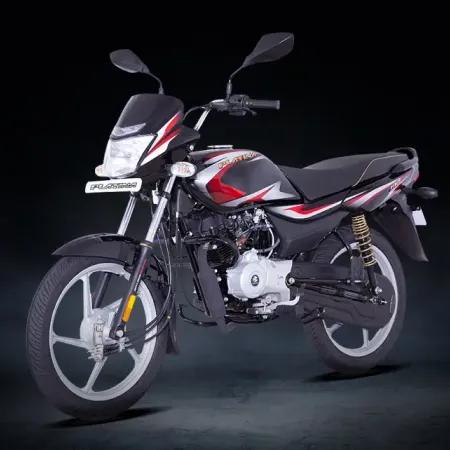
How Half-Clutch Driving Can Damage Your Vehicle's Clutch System

Today at MotorGuide, we're going to discuss a common driving habit that many manual car drivers and motorcycle riders practise without realising how much damage it can cause. We're talking about half-clutch driving and the problems it can create for your vehicle's clutch and transmission system.
When you're stuck in heavy traffic or trying to keep your vehicle stationary on a steep hill, it's tempting to use the clutch instead of the brakes. Some drivers keep the clutch pedal partially depressed while applying a little accelerator pressure to prevent the vehicle from moving backwards.
Others continue driving slowly through traffic without fully releasing the clutch pedal.
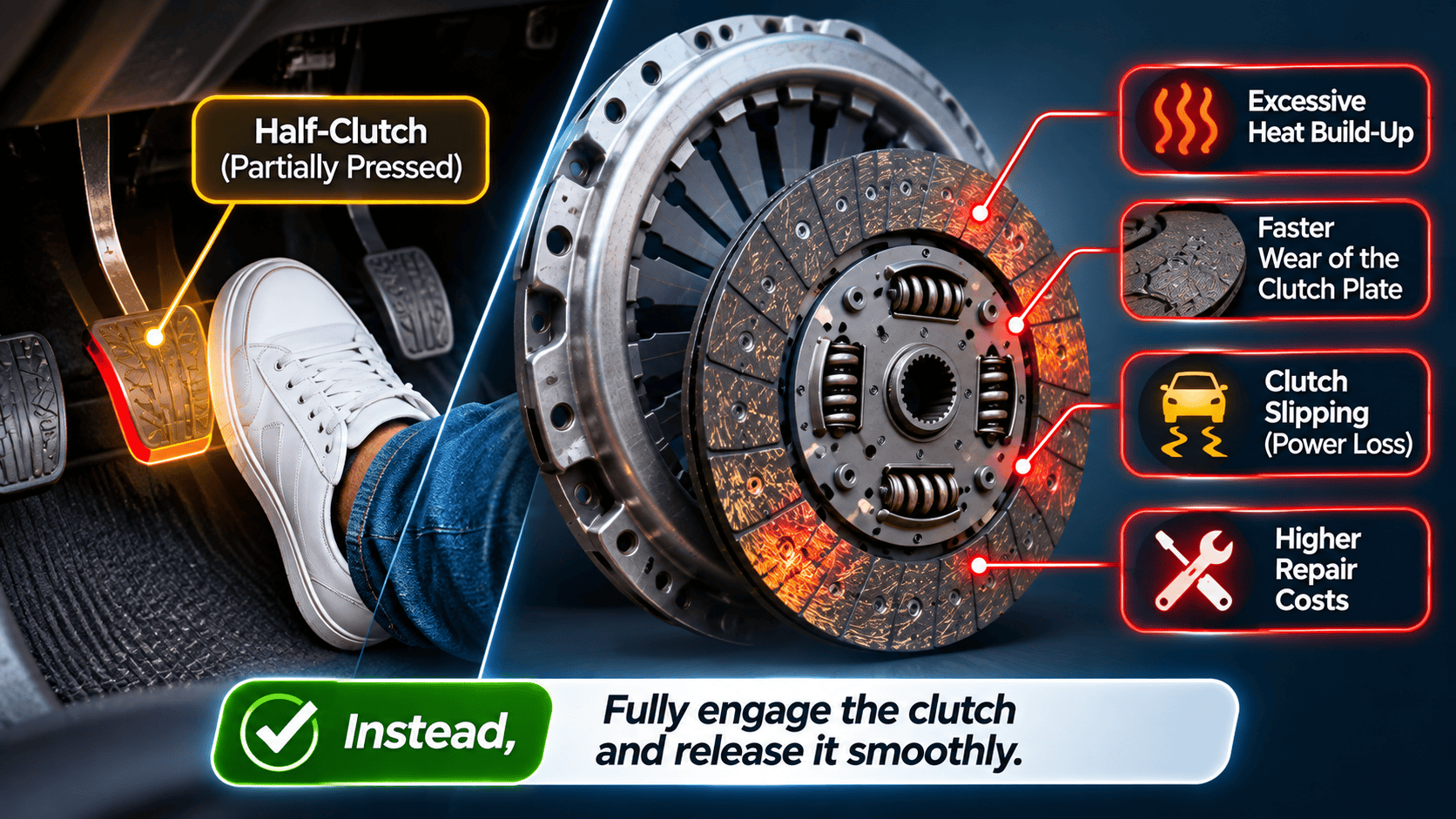
Although these habits might seem harmless, excessive half-clutch operation can generate significant heat and accelerate wear inside the clutch assembly.
But what actually happens when you drive using the half-clutch technique? How serious can the damage become, and what should you do to avoid expensive repairs? Let's take a closer look.
What Is Half-Clutch Driving?
In simple terms, half-clutch driving refers to operating a manual transmission vehicle while the clutch is only partially engaged.
When you fully release the clutch pedal in a conventional manual car, the pressure plate holds the clutch disc firmly against the engine's flywheel.
Under normal operating conditions, this allows the clutch disc and flywheel to rotate together, transferring engine torque to the transmission.
When you press the clutch pedal fully, the release mechanism reduces the clamping force so that the engine can be disengaged from the transmission for gear changes.
However, when the clutch pedal is held somewhere between these two positions, the clutch may be partially engaged.
During this stage, the flywheel and clutch disc can rotate at different speeds, causing their friction surfaces to slip against one another.
A certain amount of controlled clutch slipping is normal when moving away from a standstill or completing a smooth gear change.
The problem begins when this slipping continues unnecessarily for an extended period, particularly while the engine is producing significant torque.
This creates excessive friction, generates heat, and can shorten the service life of the clutch assembly.
1. Clutch Plate Overheating and Burning
One of the most common consequences of excessive half-clutch driving is overheating of the clutch friction disc.
When the clutch disc slips against the flywheel and pressure plate, some of the engine's energy is converted into heat instead of being transmitted to the wheels.
During normal clutch engagement, this slipping usually lasts for a relatively short period.
However, when a driver holds the clutch at its biting point for an extended time, the friction surfaces continue rubbing against one another.
This can create substantial heat inside the clutch assembly.
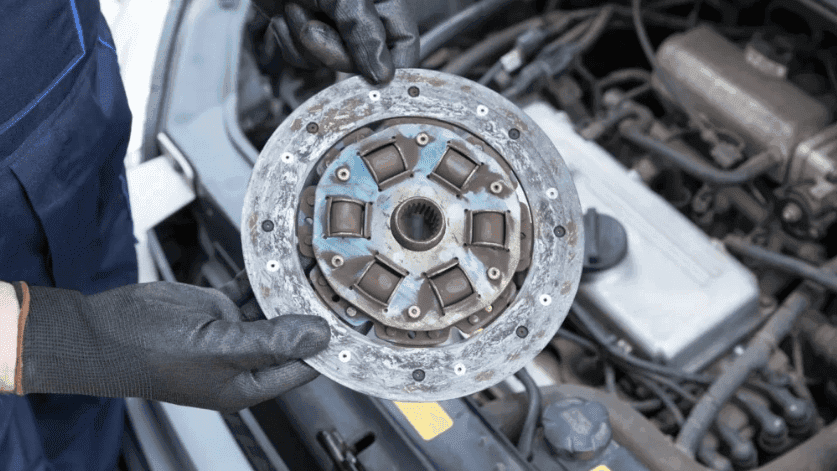
If the temperature becomes excessive, the friction material on the clutch disc can deteriorate, wear prematurely, or develop a condition known as glazing.
Glazing occurs when the friction surface becomes hardened or unusually smooth due to excessive heat and operating conditions.
When this happens, the clutch may struggle to maintain sufficient friction to transfer engine torque effectively.
As a result, the engine RPM may increase without a corresponding increase in vehicle speed.
This is commonly known as clutch slipping.
You may notice the problem more clearly when accelerating, climbing hills, or carrying additional passengers and luggage.
Another possible warning sign is a strong burning smell, particularly after repeated hill starts or prolonged stop-and-go driving.
Although a burning smell can have several causes, it may indicate that the clutch has been overheated.
Repeated overheating can eventually make clutch replacement necessary.
2. Flywheel Warping and Heat Spots
Excessive half-clutch operation can also affect the flywheel.
The flywheel is a metal component connected to the engine's crankshaft. In a conventional manual transmission vehicle, it provides a friction surface against which the clutch disc engages.
When the clutch disc slips excessively, heat is generated at the contact surfaces of the clutch disc, flywheel, and pressure plate.
If the assembly is exposed to unusually high temperatures, the flywheel may develop heat spots, surface damage, or distortion.
Heat spots are areas of the flywheel surface that have experienced concentrated heating.
These areas can sometimes appear as discoloured patches on the metal surface.
Severe or uneven heating may also affect the condition and flatness of the flywheel's friction surface.
When this happens, the clutch may no longer engage smoothly.
One possible symptom is clutch judder, which refers to noticeable shaking or vibration as the vehicle begins moving.
Drivers may feel this through the clutch pedal, vehicle body, or drivetrain during take-off.
If the flywheel is damaged, replacing the clutch disc alone may not fully resolve the problem.
Depending on the type and condition of the flywheel, a qualified technician may recommend resurfacing or replacement.
However, not all flywheels can be resurfaced, particularly certain dual-mass flywheel designs.
Because flywheel repair or replacement can involve additional parts and labour, avoiding unnecessary clutch overheating can help prevent expensive repairs.
3. Release Bearing and Pressure Plate Damage
Another possible consequence of repeatedly holding the clutch pedal partially depressed is additional wear on the clutch release mechanism.
In many manual transmission cars, pressing the clutch pedal causes the release bearing to apply force to the pressure plate's diaphragm spring.
This reduces the clamping force on the clutch disc and allows the driver to disengage the clutch.
When the driver keeps the clutch pedal partially depressed for an extended period, the release bearing may remain under load.
Depending on the clutch design, this can increase wear on the bearing and related release components.
Over time, a worn release bearing may produce unusual noises when the clutch pedal is pressed or released.
These noises may include whining, rattling, or grinding sounds.
In severe cases, bearing failure can affect the operation of the clutch release mechanism.
The pressure plate can also suffer damage from excessive heat and repeated improper clutch engagement.
For example, overheating may affect its friction surface, while faults in the release mechanism can place unwanted stress on the diaphragm spring.
However, it is important to understand that release bearings are designed to rotate and operate under load. They do not automatically fail simply because the clutch pedal is pressed for a few seconds.
The main concern is unnecessary or prolonged operation, particularly when combined with other clutch problems.
Why Is Half-Clutch Driving Especially Harmful on Hills?
Using the half-clutch technique to hold a vehicle stationary on an incline is one of the most demanding situations for a conventional dry clutch.
When a driver balances the accelerator and clutch to stop the vehicle from rolling backwards, the engine continues producing torque while the clutch slips.
The vehicle may remain stationary, but mechanical energy is still being converted into heat inside the clutch assembly.
The longer the driver maintains this position, the greater the risk of overheating.
This can accelerate clutch disc wear and potentially damage the flywheel or pressure plate.
Instead, the vehicle should be held using the foot brake or parking brake.
When ready to move, the driver can perform a controlled hill start by coordinating the clutch, accelerator, and brake release.
Vehicles equipped with Hill Start Assist may provide additional help by temporarily maintaining brake pressure to reduce rollback.
Using the appropriate braking system is generally much better than trying to hold the vehicle stationary through continuous clutch slipping.
How to Avoid Half-Clutch Damage in Heavy Traffic
Heavy traffic is another situation where clutch wear can increase.
When vehicles move forward only a short distance before stopping again, drivers often keep the clutch near its biting point to maintain very slow movement.
Although some controlled clutch slipping may be necessary during low-speed manoeuvres, prolonged slipping should be avoided whenever practical.
Instead of continuously creeping forward using the clutch, allow a suitable gap to develop between your vehicle and the one ahead when traffic conditions permit.
Then select first gear, move forward smoothly, and fully release the clutch once the vehicle is travelling at a suitable speed.
If you need to stop again, use the brake pedal rather than holding the vehicle with the clutch.
For longer stationary periods, selecting Neutral and releasing the clutch pedal can also reduce unnecessary loading of the release mechanism.
However, do not force the engine to operate at an excessively low RPM simply to keep the clutch fully engaged. If the vehicle is moving too slowly for first gear, use the clutch appropriately or stop until it is safe to move again.
Does Half-Clutch Driving Affect Motorcycles Too?
Motorcycle riders also need to understand the effects of prolonged clutch slipping.
However, motorcycle clutch systems can differ considerably from those used in manual cars.
Many motorcycles use wet multi-plate clutches, where the clutch components operate in an oil environment.
These systems are designed to tolerate a degree of controlled slipping during starts and certain low-speed manoeuvres.
For example, careful clutch control may be necessary when making tight turns or riding slowly through difficult conditions.
Nevertheless, holding a motorcycle clutch partially engaged for an unnecessarily long time under high engine load can still generate heat and accelerate wear.
Riders should follow the motorcycle manufacturer's instructions and avoid excessive engine revving while the clutch is slipping.
What Are the Warning Signs of Clutch Damage?
If your vehicle has been subjected to frequent half-clutch driving, there are several symptoms worth monitoring.
- Clutch slipping: The engine RPM increases, but the vehicle does not accelerate as expected.
- Burning smell: An unusual burning odour appears after difficult hill starts or repeated clutch slipping.
- Clutch judder: The vehicle shakes or vibrates when moving away from a standstill.
- Unusual noises: Whining, rattling, or grinding sounds occur when operating the clutch pedal.
- Difficulty changing gears: Gear selection becomes unusually difficult or rough.
- Changes in clutch engagement: The clutch biting point or pedal feel changes noticeably.
These symptoms can indicate clutch wear or other mechanical problems, but they do not always prove that the clutch friction disc has failed.
A qualified mechanic should inspect the clutch system and related components to identify the actual cause.
MotorGuide's Advice: Use the Clutch Correctly
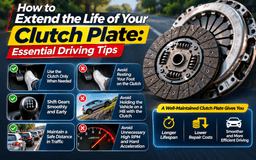
At MotorGuide, our advice is simple: never use the half-clutch technique to hold your vehicle stationary in traffic or on a hill.
Always use the foot brake or parking brake when stopping on an incline.
When driving slowly through traffic, avoid keeping the clutch partially engaged for longer than necessary.
Where safe, leave enough space to move forward smoothly in first gear and release the clutch fully once the vehicle reaches a suitable speed.
Remember that brief, controlled clutch slipping is a normal part of driving a manual vehicle. The objective is not to eliminate clutch slipping completely, but to avoid unnecessary slipping that produces excessive heat and wear.
Developing proper clutch control habits can help protect the friction disc, flywheel, pressure plate, and release mechanism while reducing the likelihood of costly repairs.
By using your vehicle correctly and addressing clutch problems early, you can enjoy smoother driving and better long-term reliability.
Stay connected with MotorGuide for more useful information about vehicle maintenance, driving tips, automotive technologies, and everything you need to know about the world of vehicles.

Written by
Nisaga Sandaru
A versatile and highly experienced professional, currently an Automobile undergraduate at the University of Jaffna, with strong technical expertise grounded in hands-on work as a technician with SriLankan Airlines Ground Support Equipment (GSE). Holding an Automobile NVQ Level 3 qualification, along with specialized certifications in Vehicle ECU Programming and Diagnosis, and extensive experience in arc welding and vehicle body painting, and well equipped to handle complex automotive, diagnostic, and fabrication-related tasks with a high level of competence.