Signs Your Car's Starter Motor Is Failing

Today at MotorGuide, we're going to talk about a common vehicle problem that can leave drivers stranded when they least expect it. We're talking about starter motor problems and the warning signs that can help you identify them before your vehicle refuses to start.
Imagine getting ready for work in the morning, getting into your car, and turning the key or pressing the Start Button, only to find that the engine won't start. It's a frustrating experience, especially when you're already running late.
When this happens, most drivers immediately suspect a weak or dead battery. While battery problems are certainly a common reason for starting difficulties, they aren't always the cause. Even with a fully charged and healthy battery, a faulty starter motor can prevent the engine from starting.
So, how can you tell whether your starter motor is developing a problem? What are the warning signs you should look out for? Let's take a closer look.
What Is a Starter Motor and How Does It Work?
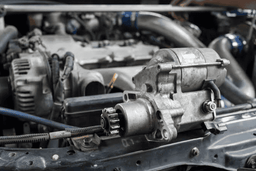
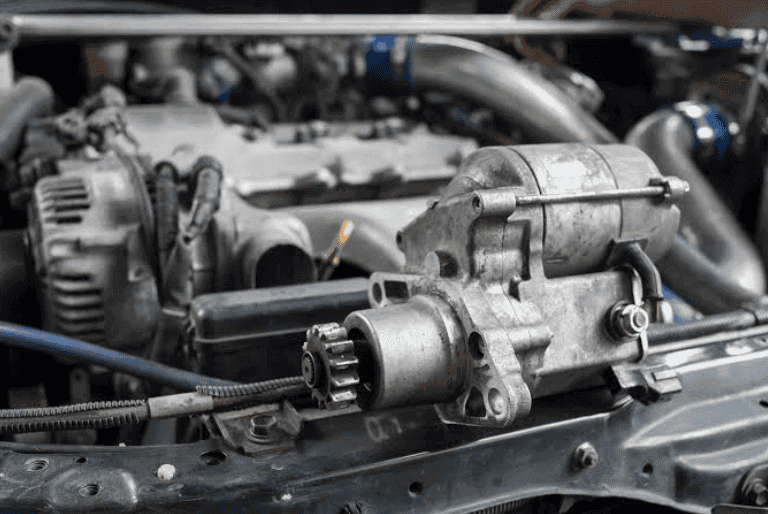
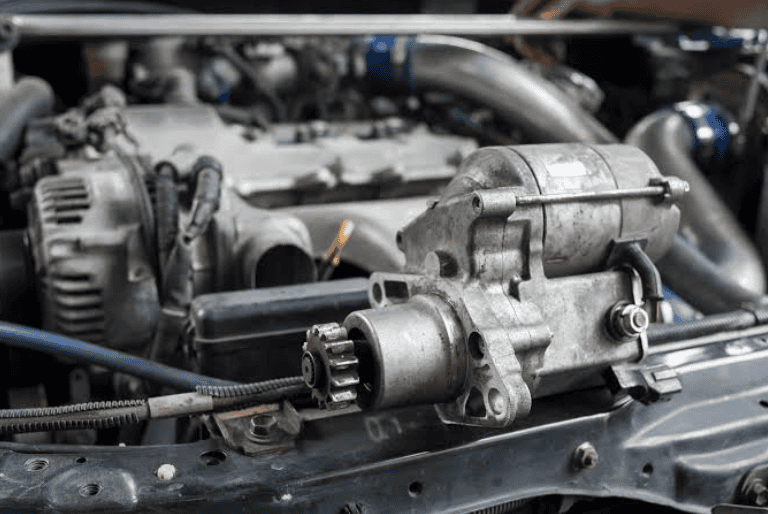
In simple terms, a starter motor is a powerful electric motor that uses energy from the vehicle's battery to turn the engine during the starting process.
When you turn the ignition key or press the Start Button, the starting system activates the starter motor. A small gear called the Pinion Gear engages with the engine's flywheel or flexplate ring gear.
The starter motor then rotates the engine until it can begin running on its own through the combustion process.
Although starter motors are designed to handle repeated starting cycles, their internal components can gradually wear out over time.
In some cases, starter motors fail suddenly without any obvious warning. However, they may also develop symptoms such as unusual noises, slow cranking, or inconsistent starting before they stop working completely.
Here are some of the most common signs that your vehicle's starter motor may be developing a problem.
1. Clicking Sound When Starting the Engine
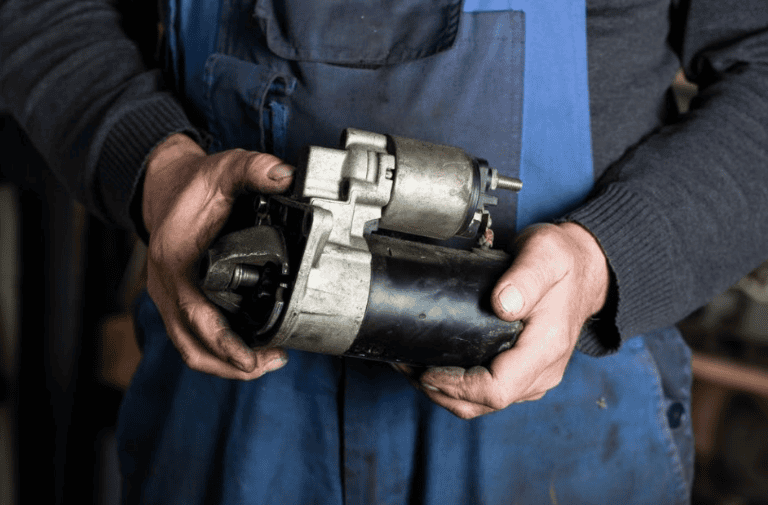
One of the most common warning signs is a clicking sound when you turn the ignition key or press the Start Button.
If you hear a clicking noise but the engine doesn't crank, there may be a problem with the starter motor, starter solenoid, or the electrical supply to the starting system.
The starter solenoid is responsible for helping engage the starter gear and allowing electrical current to reach the starter motor.
When the solenoid operates but the motor cannot turn properly, you may hear a clicking sound without the engine starting.
However, clicking noises can also occur because of a weak battery, corroded battery terminals, or poor electrical connections.
Therefore, it's important to check the battery and starting circuit before assuming that the starter motor itself has failed.
2. Grinding or Whining Noise During Starting
Another warning sign is an unusual grinding or whining noise when attempting to start the engine.
If you hear a harsh metallic grinding sound, similar to two metal components rubbing against each other, it may indicate that the starter motor's Pinion Gear is not engaging correctly with the engine's flywheel ring gear.
This can happen because of worn gear teeth, a faulty starter drive mechanism, or alignment problems.
Continuing to operate the starter under these conditions can damage the pinion gear or the flywheel ring gear, potentially leading to more expensive repairs.
A whining sound without the engine cranking may also indicate that the starter motor is spinning without properly engaging the engine.
If you notice either of these sounds, avoid repeatedly attempting to start the vehicle and have the starting system inspected by a qualified technician.
3. Slow Cranking
Have you noticed that your engine takes longer than usual to turn over when starting?
Instead of the normal quick cranking sound, the engine may rotate slowly and struggle before finally starting.
This condition is commonly known as Slow Cranking.
If the battery is in good condition and supplying sufficient power, slow cranking may indicate an internal problem with the starter motor.
Worn carbon brushes, damaged bushings, internal resistance, or other mechanical problems can reduce the starter motor's performance.
However, slow cranking can also result from a weak battery, poor electrical connections, charging system problems, or increased mechanical resistance within the engine.
A proper electrical inspection is needed to identify the actual cause.
4. Dashboard Lights Work, but the Engine Doesn't Crank
Another situation drivers sometimes experience is when the dashboard lights, horn, and other electrical accessories appear to work normally, but the engine remains completely silent when they try to start it.
This may indicate that the starter motor is not receiving the required electrical signal or power.
Possible causes include loose or damaged starter wiring, a faulty starter relay, a defective solenoid, or an internal starter motor failure.
However, working dashboard lights don't necessarily mean the battery is capable of supplying the high current required to crank the engine.
Some vehicles may also refuse to crank because of a faulty ignition switch, Park/Neutral safety switch, clutch switch, immobiliser, or another starting system component.
For this reason, the entire starting circuit should be checked before replacing the starter motor.
5. Intermittent Starting Problems
One particularly frustrating starter motor problem is Intermittent Starting.
This happens when the vehicle starts normally on some occasions but refuses to start at other times.
For example, the engine might start immediately in the morning but fail to crank later in the day. After several attempts, it may suddenly start working again.
One possible explanation is worn carbon brushes or an internal electrical contact problem inside the starter motor.
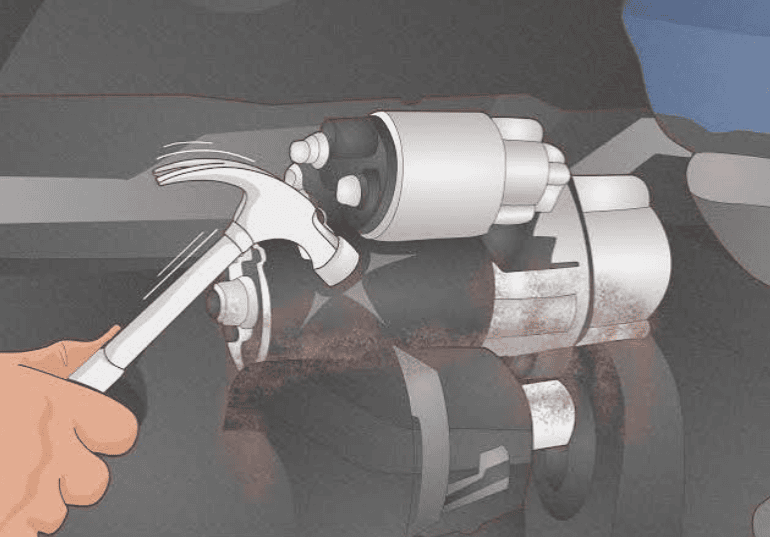
You may have heard that some mechanics lightly tap a starter motor to get it working temporarily.
Although this sometimes restores electrical contact in a failing starter, it doesn't confirm that worn carbon brushes are the exact cause, nor is it a reliable repair method.
Intermittent starting may also result from loose connections, a faulty relay, solenoid problems, or other electrical faults.
The safest option is to have the system professionally diagnosed rather than repeatedly trying to force the starter to operate.
6. Burning Smell or Smoke During Starting
Another serious warning sign is a burning smell or visible smoke when attempting to start the engine.
Starter motors require a large amount of electrical current to turn the engine. If a problem develops inside the motor or its wiring, excessive current flow, overheating, or an electrical short circuit may occur.
In some situations, this can produce a burning smell, smoke, or damage to electrical components.
Repeatedly attempting to start an engine that won't crank can also overheat the starter motor and its wiring.
If you notice smoke or a burning smell, stop attempting to start the vehicle immediately.
Switch off the ignition and arrange for the vehicle to be inspected by a qualified automotive electrician. Do not continue operating the starting system until the cause has been identified and repaired.
What Should You Do If Your Starter Motor Shows These Symptoms?
At MotorGuide, our advice is to take unusual starting noises and repeated starting difficulties seriously.
If your vehicle produces clicking sounds, grinding noises, slow cranking, or other unusual symptoms, don't assume that the battery is always responsible.
Have a qualified auto electrician inspect the battery, battery terminals, electrical connections, starter relay, solenoid, and starter motor.
Depending on the results, the technician may perform battery load testing, voltage-drop testing, or other electrical checks to identify the problem.
If the fault is traced to the starter motor, it may be possible to repair or replace certain internal components, such as carbon brushes, bushings, or the solenoid.
In some cases, repairing these components can be more affordable than replacing the complete starter motor. However, this depends on the starter's condition, design, and availability of replacement parts.
Ignoring early warning signs may eventually leave you with a vehicle that refuses to start, potentially requiring roadside assistance or towing.
Remember, a vehicle that starts normally today may still have a developing problem in its starting system. Identifying unusual symptoms early and arranging a proper inspection can help prevent unexpected breakdowns and unnecessary repair costs.
Stay connected with MotorGuide for more useful information about vehicle maintenance, common mechanical problems, modern automotive technologies, and everything you need to know about keeping your vehicle in good condition.

Written by
Nisaga Sandaru
A versatile and highly experienced professional, currently an Automobile undergraduate at the University of Jaffna, with strong technical expertise grounded in hands-on work as a technician with SriLankan Airlines Ground Support Equipment (GSE). Holding an Automobile NVQ Level 3 qualification, along with specialized certifications in Vehicle ECU Programming and Diagnosis, and extensive experience in arc welding and vehicle body painting, and well equipped to handle complex automotive, diagnostic, and fabrication-related tasks with a high level of competence.