How to Make Your Car Louder


Can you recognize a vehicle just by its sound without seeing it? Many who love and are passionate about vehicles have this ability. Also, different vehicles have their own unique sounds. But some people feel the original sound of their vehicle isn't enough. So they use various methods to increase the vehicle's sound. That's why MotorGuide thought of telling you a few ways to increase a car's sound.
Drill holes in exhaust pipes
Drilling exhaust holes allows more sound waves to escape. You can drill 6-8 small holes, about 0.38 inches (0.95 cm), in the exhaust between the muffler and catalytic converter. Use a cobalt-tipped drill for this. These holes can give your car a more aggressive sound.
Clean exhaust pipes
To get a louder sound from your car, you need to remove the carbon blocking the sound in your exhaust pipes. Because when carbon builds up in exhaust pipes, the engine's performance and sound decrease. You can remove dirt from exhaust pipes using soap and water. Then apply degreaser throughout the exhaust.
Add an exhaust tip
You can add an exhaust tip to the tailpipe to increase the engine's sound. Here, you can customize whether you want a smooth purr sound or an aggressive roar sound.
Get a new muffler
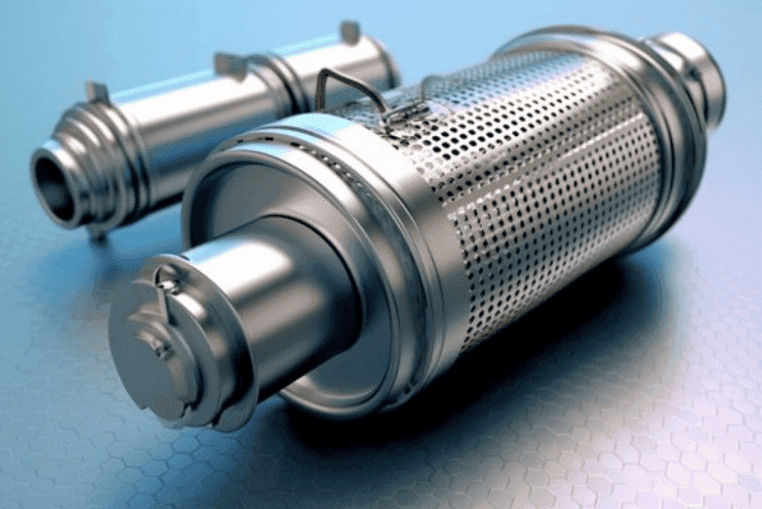
For maximum sound, choose a straight-through muffler. This type of muffler allows exhaust gases and sound waves to exit easily. Not only that, it also increases your vehicle's volume and efficiency. To get the sound you want, check out muffler placement. Most mufflers are located near the rear end of the vehicle. But for an even louder sound, move it closer to the engine (along the tailpipe).
Enlarge exhaust pipes
For a major roar, increase your vehicle's exhaust pipes by 0.5 inches (1.27 cm). The exhaust system includes exhaust pipes, muffler, and resonator that help with your vehicle's sound. Switch to slightly larger exhaust pipes to increase your vehicle's gas flow and allow more sound to easily escape from your vehicle.
Convert to a straight-pipe exhaust system
Replace the noise-suppressing exhaust with a loud straight-pipe. This modification removes the catalytic converter, resonator, and muffler, replacing them with a straight, single tube. The design of the tube allows sound to travel more easily, with some systems reaching over 120 decibels.
Switch to a cat-back exhaust
A dual exhaust cat-back system can increase torque and volume. This modification reduces the pressure on your vehicle's engine and increases air and sound. Dual exhausts create a more aggressive noise.
Upgrade the engine
For a robust, resonant sound, switch to a V6 or V8 engine. The more cylinders your vehicle's engine has, the more power and sound it produces. But V engines pack more cylinders into a smaller space than inline engines, so they are often found in high-performance sports cars.
So these are the easiest ways to increase a vehicle's sound. If you are also thinking of increasing your vehicle's sound, don't forget to consider what MotorGuide told you today.

Written by
Nipuna Marasinghe