How to Check if Your Car Battery's Life is Over

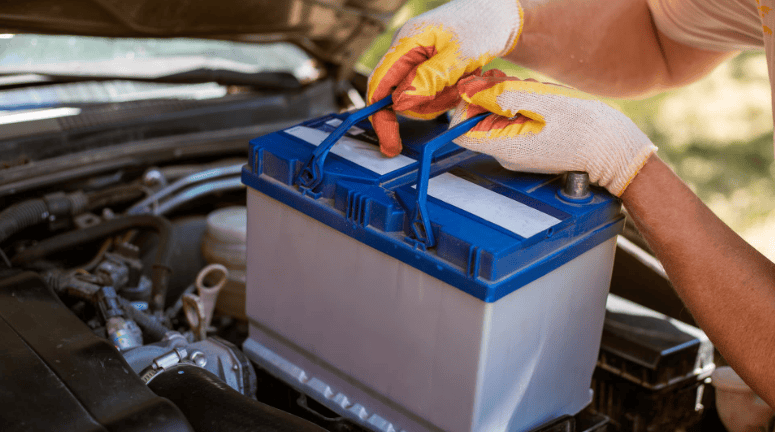
Today at Motor Guide, we are discussing the methods you can use to check for yourself whether your vehicle's standard battery is reaching the end of its lifespan. One of the biggest problems for anyone using a vehicle is the frustration of it refusing to start in the morning. Most of the time, before a battery completely fails, it shows us various warning signs. However, if we don't pay close attention to these symptoms, we will end up stranded on the side of the road or helpless when we are about to start a journey. Therefore, we first need to understand the primary symptoms that occur when a battery is failing.
Slow Engine Cranking
As a battery approaches the end of its life, the most common and prominent sign we can observe is an increase in the time it takes for the engine to start. Normally, as soon as you turn the key or press the start button, the engine should start instantly. But if the battery is weak, the engine cranks very heavily and slowly. It struggles and makes a whining noise before finally firing up. You will feel this sluggishness especially in the morning or when starting the vehicle after it has been parked for a few days. Experiencing a "slow crank" like this directly indicates that the battery's ability to hold its electrical charge has significantly decreased.
When talking about engine cranking time, many people assume it's a starter motor issue. However, when the battery is weak, it cannot provide the specific amperage required by the starter motor. That is exactly why the engine rotates so slowly. A vehicle with a good battery should fire up smoothly the moment the key is turned. If you notice that the vehicle is struggling to start not just in the morning, but even after being parked for a short while during the day, the internal chemical process of the battery has undoubtedly weakened.
Changes in the Electrical System
The next important factor is changes in the vehicle's electrical system. As professionals in this field, one thing we constantly notice is the headlights dimming when the battery is weak. If you turn on the headlights while the engine is off and they seem unusually dim, or if the vehicle's power windows roll up and down slower than usual, it could be due to a failing battery. Additionally, you might experience dashboard lights flickering or the battery warning light staying illuminated. Since modern vehicles are equipped with numerous sensors, a drop in battery voltage can trigger various random error lights on the dashboard.
Another issue is the breakdown of communication between the vehicle's alternator and the battery. As the battery's lifespan nears its end, it fails to hold the charge provided by the alternator. As a result, when driving at night, the headlights might suddenly dim. If the vehicle is at idle (parked with just the engine running) and turning on the AC or headlights causes the engine RPM to drop abnormally, it is due to insufficient support from the battery. When a battery is weak, even the sound system or a phone charging via the cigarette lighter plug can heavily impact it.
Visual Inspection of the Battery
We can also come to a strong conclusion simply by looking at the battery. Open the vehicle's hood and carefully inspect the area where the battery is housed. If the battery casing looks swollen or bulging, it means the internal plates have degraded due to excessive recharging or overheating, causing gas to build up inside. Continuing to use a bulging battery like this can be highly dangerous to both the vehicle and yourself. Furthermore, if you see a white or green powdery substance built up on the battery terminals, it indicates that acid vapor is leaking from the battery. This is also a clear sign that the battery's life is ending.
Inside a battery, a chemical reaction takes place involving lead plates and sulfuric acid. Over time, these plates begin to degrade. When this happens, excessive internal heating occurs, causing the outer plastic casing of the battery to swell outwards on the sides. If you open the hood and see the battery looking "bloated," do not continue using it under any circumstances. Such a battery could short circuit internally and even explode at any moment. Also, if you clean the white powdery corrosion around the positive and negative terminals with hot water, and it builds up again within a few days, it confirms that acid vapor is escaping from inside. This is a massive red flag indicating that the battery needs to be replaced.
Technical Testing Methods
Next, let's look at how to measure this technically. Many people know how to use a multimeter. If you check the battery voltage a few hours after turning off the engine, it should read around 12.6 or 12.7 Volts. A reading below 12.2 Volts means the battery charge is significantly low. However, the true test happens at the exact moment you start the vehicle. While someone else cranks the engine, you should watch the multimeter reading. If the voltage drops below 10 Volts (like 9 or 8 Volts) during that split second of cranking, the battery is too weak to be used reliably. Furthermore, garages have special battery testing tools that can measure the Cold Cranking Amps (CCA) value. If it shows a reading substantially lower than the CCA rating printed on the battery, its lifespan is completely over.
Another method is testing the battery with a Battery Load Tester. This applies a heavy electrical load to the battery to see if it can withstand it. You can easily get this test done by visiting a battery shop or garage.
For maintainable batteries (the ones where you need to top up acid/distilled water), a hydrometer can be used to measure the specific gravity and quality of the acid in each cell. The readings across all cells should be relatively equal; if even one cell shows a drastically low reading, you can deduce that the specific cell has shorted. For maintenance-free batteries, there is usually a small glass indicator known as a "Magic Eye." If it shows green, it's generally good; if it turns black or white, it gives a rough idea that it's time to replace the battery.
Average Lifespan
Another thing we must always remember is the average lifespan of a battery. In a country with a hot climate like Sri Lanka, a standard car battery typically functions well for about two years, or a maximum of three years. If it has been more than three years since you purchased the battery for your vehicle, it is at a stage where it could fail at any moment, even if it hasn't shown any symptoms yet. Therefore, keeping a record of the purchase date is very important. Exclusively driving short distances all the time can also rapidly decrease the battery's lifespan, as it doesn't get enough time to fully recharge.
Motor Guide's Final Advice
Our advice at Motor Guide is not to wait until the battery completely dies and leaves you stranded on the road. The moment you feel even a slight struggle when starting the vehicle in the morning, visit your nearest battery technician and get it checked. By keeping the battery terminals constantly clean and maintaining proper water levels in lead-acid batteries, you can maximize the battery's lifespan. If you have installed aftermarket electrical accessories in your vehicle, such as subwoofers or extra lights, you must be mindful of them, as they place a load on the battery that exceeds its intended capacity. By periodically checking the battery's condition and replacing it with a new one only when necessary, you can avoid both unnecessary expenses and severe inconveniences.
And don't forget to stay tuned with Motor Guide to learn more valuable information like this about modern vehicles and technologies!

Written by
Nisaga Sandaru
A versatile and highly experienced professional, currently an Automobile undergraduate at the University of Jaffna, with strong technical expertise grounded in hands-on work as a technician with SriLankan Airlines Ground Support Equipment (GSE). Holding an Automobile NVQ Level 3 qualification, along with specialized certifications in Vehicle ECU Programming and Diagnosis, and extensive experience in arc welding and vehicle body painting, and well equipped to handle complex automotive, diagnostic, and fabrication-related tasks with a high level of competence.