What Causes the "Knocking" Sound in a Vehicle's Engine?

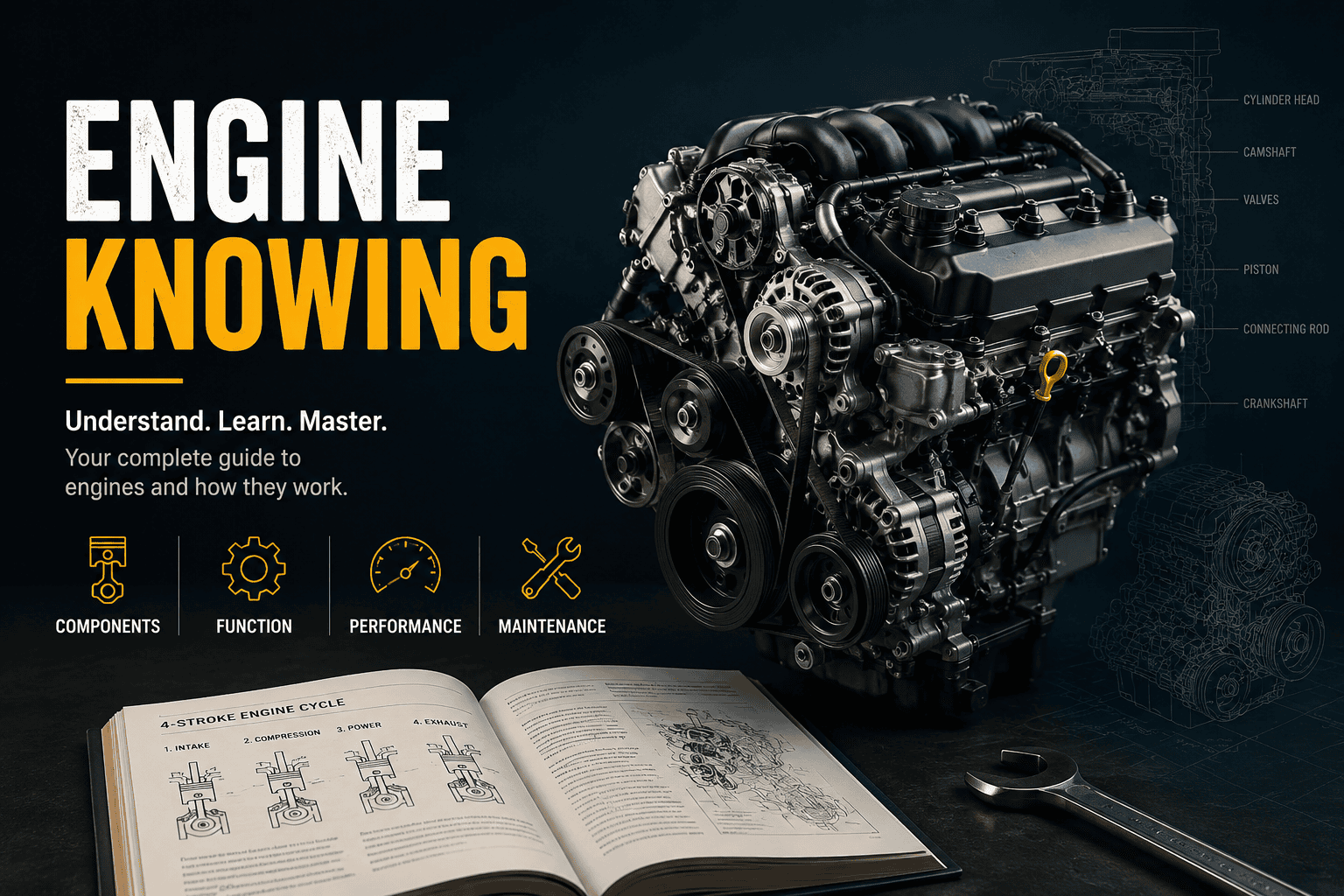
Today at Motor Guide, we are discussing a highly valuable and important topic that everyone who drives and loves vehicles must absolutely know about. That is, why does the sound known as "Knocking" or "Engine Knocking" occur in a vehicle's engine? Often when you are driving, especially when climbing a hill or trying to accelerate a bit aggressively, you might have heard a strange metallic "tick-tick" or rattling noise coming from inside the engine. We call this sound knocking. This can be considered a highly dangerous "disease" that an engine can catch. Because if this problem persists inside the engine, there is a chance the entire engine could be completely destroyed. Therefore, having accurate technical knowledge and understanding about this is very valuable for you in every way.
Flaws in the Combustion Process (Detonation / Pre-ignition)
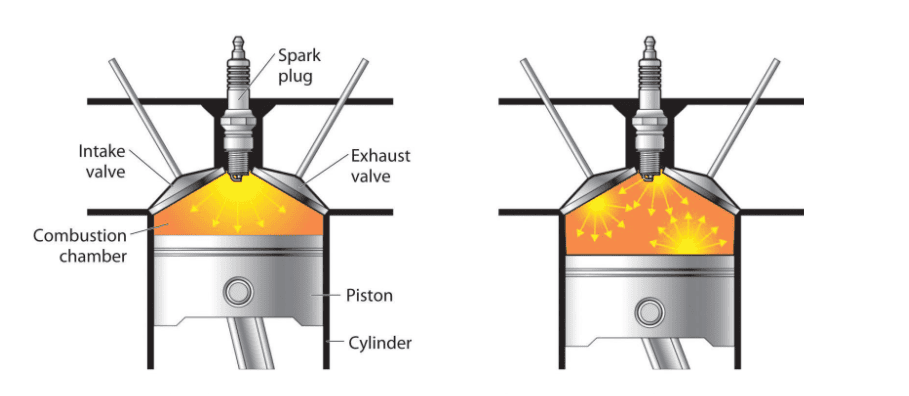
Normally, the process inside an engine happens in a highly controlled and systematic manner. The air and fuel mixture entering the cylinder is pushed upwards and compressed tightly by the piston. Then, at the exact right moment, a small spark from the spark plug ignites this mixture. This combustion happens as a flame front that gradually moves forward from one side. However, what happens if this process does not occur correctly, and several uncontrolled, spontaneous explosions happen in different spots inside the combustion chamber all at once? That is when this knocking condition occurs. As professionals in this field, we call this detonation or pre-ignition. When the intense pressure waves caused by this abnormal combustion collide with each other and hit the cylinder walls and the piston, we clearly hear that metallic "tick-tick" sound.
Using Low-Octane Fuel
Now let's look at the main reasons why something like this happens inside an engine. The first and primary reason is the low Octane Rating of the fuel used in the vehicle. Every vehicle has a specific octane rating recommended by the manufacturing company. Simply put, the octane rating dictates how much pressure the fuel can withstand before it spontaneously ignites. If the manufacturer recommends 95 Octane petrol for your vehicle and you put 92 Octane petrol in it, that lower-grade fuel cannot withstand the extreme pressure and temperature created when the piston compresses the mixture. Consequently, the fuel mixture spontaneously ignites even before the spark plug fires a spark. The pre-explosion caused by this makes the engine start knocking severely.
Incorrect Ignition Timing
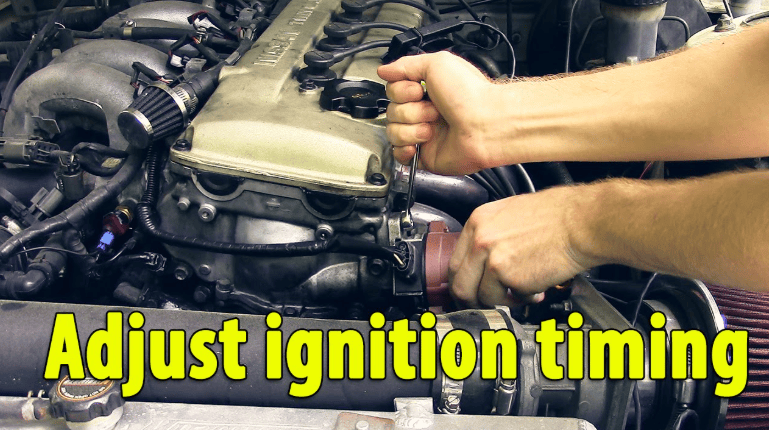
The next most important factor is incorrect Ignition Timing. This means the spark plug fires at the wrong time. Usually, the spark should be delivered a very brief moment before the piston reaches top dead center (TDC) of the cylinder. However, if this timing happens way too early than intended—meaning the timing is "advanced"—the massive pressure created by the explosion tries to push down while the piston is still trying to come up. Because these two opposing forces crash into each other hard, an unbearable stress is added to the engine components. While this could be fixed by rotating the distributor in older vehicles, in modern vehicles, this is controlled by the main computer, or ECU. But this timing can change if there are faults in the sensors.
Carbon Buildup
Carbon buildup inside the combustion chamber is another major reason for knocking. When a vehicle is driven for a long time, especially when only driven for short distances in heavy city traffic, the fuel inside the engine doesn't burn correctly. Because of this, layers of black carbon start accumulating at the top part of the cylinder and on top of the piston. Due to these carbon deposits, the internal volume of the combustion chamber decreases. As the volume decreases, the compression ratio automatically increases. Not only that, but while the engine is running, these chunks of carbon get superheated and remain inside the cylinder like glowing red-hot coals. Then, the fresh air and fuel mixture coming in hits that hot piece of carbon and ignites even before the spark plug fires. This directly contributes to knocking.
Incorrect Air-Fuel Ratio (Lean Mixture)
An incorrect ratio of the air and fuel mixture entering the engine also causes this. We call this a "Lean Air-Fuel Mixture." This means the amount of petrol has decreased, and the amount of air has increased. When this happens, although the burning speed is slower, the temperature it generates is extremely high. Due to this extreme temperature, pockets of fuel inside the cylinder tend to spontaneously ignite. Weaknesses in the fuel pump, clogged fuel filters, blockages in the injectors, or faults in the air measuring sensors (MAF/MAP sensors) can cause such a lean mixture. If this condition persists, the engine overheats, and the knocking sound begins.
Engine Overheating
The engine overheating directly contributes to this problem as well. If the vehicle's cooling system is not operating correctly—for example, if the radiator is blocked, the water pump is not working, or if the coolant fluid is low—the engine overheats. When the temperature inside the engine exceeds the normal limit, the petrol and air mixture entering the cylinder reaches its auto-ignition point very quickly. Because of this, the fuel ignites before the spark plug even fires. Additionally, if wrong spark plugs with an incompatible heat range are used for the vehicle, the tip of that plug can get superheated inside the cylinder, causing the fuel to ignite prematurely.
Severe Damage to the Engine
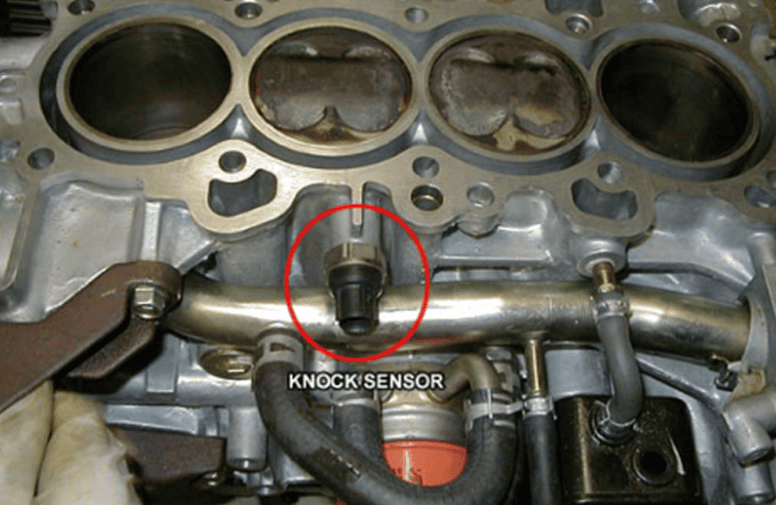
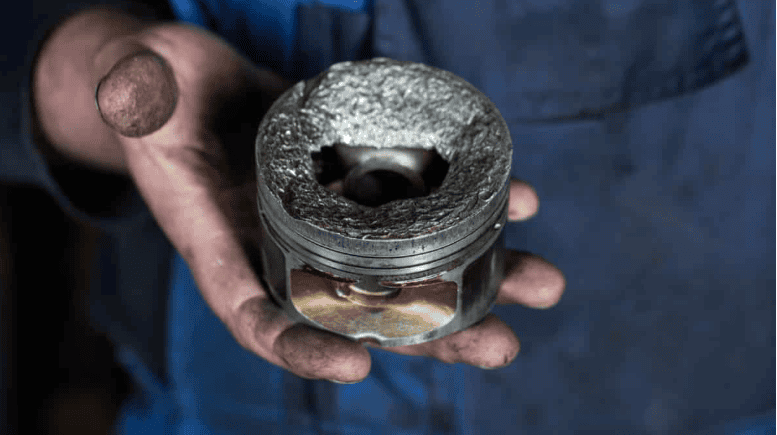
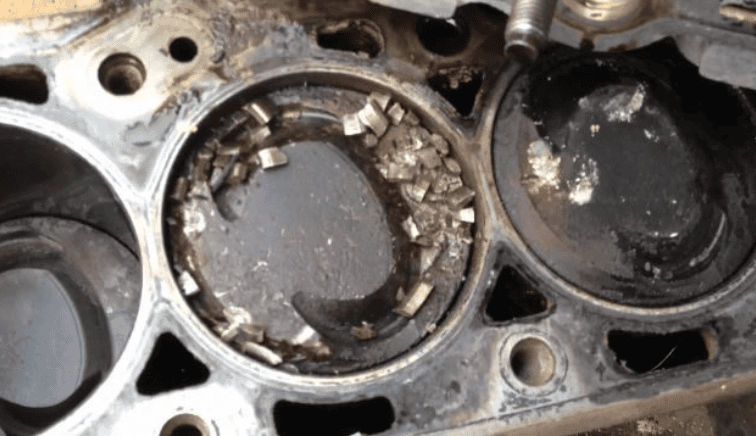
The damage caused to an engine by this knocking condition is not minor. The extreme pressure waves and vibrations caused by these abnormal explosions hit the piston and the connecting rod directly. Because of this, piston rings can shatter instantly. The extreme temperature can melt the top part of the piston and burn holes through it. Also, the cylinder head gasket can blow out. The most catastrophic outcome is the connecting rod twisting or breaking off and punching a hole right through the entire engine block. In modern vehicles, a "Knock Sensor" is installed to control this. The moment that sensor detects a knock, the ECU retards the ignition timing to temporarily save the engine. However, if there is a mechanical fault, the sensor alone cannot save the engine.
The Importance of Paying Attention
Therefore, if such a sound is coming from a vehicle, you must pay immediate attention to it. Many people think it's a normal sound and keep driving the vehicle. But doing so only wastes their money and destroys the vehicle's lifespan. This condition is felt strongly especially when climbing hills or carrying heavy loads, as more stress is placed on the engine. If you do not maintain the vehicle properly, you cannot avoid facing problems like this. Therefore, it is always mandatory to use standard spare parts and fuel as recommended by the manufacturer.
Motor Guide's Final Advice
Motor Guide's advice is, if your vehicle starts making a "tick-tick" knocking sound like this, never ignore it. First, check if the octane rating of the petrol you put in your vehicle is correct. Next, go to a good mechanic and get the condition of the spark plugs, engine timing, and sensor operations checked. Also, getting a periodic engine carbon clean is one of the best ways to prevent this "disease." Remember, if a small flaw is not fixed in time, later on, you might have to take the whole engine apart and do a complete rebuild at a massive cost. And don't forget to always stay tuned with Motor Guide to learn more valuable information like this about modern vehicles and technology!

Written by
Nisaga Sandaru
A versatile and highly experienced professional, currently an Automobile undergraduate at the University of Jaffna, with strong technical expertise grounded in hands-on work as a technician with SriLankan Airlines Ground Support Equipment (GSE). Holding an Automobile NVQ Level 3 qualification, along with specialized certifications in Vehicle ECU Programming and Diagnosis, and extensive experience in arc welding and vehicle body painting, and well equipped to handle complex automotive, diagnostic, and fabrication-related tasks with a high level of competence.