Is the Shark Fin Antenna Just for Looks?

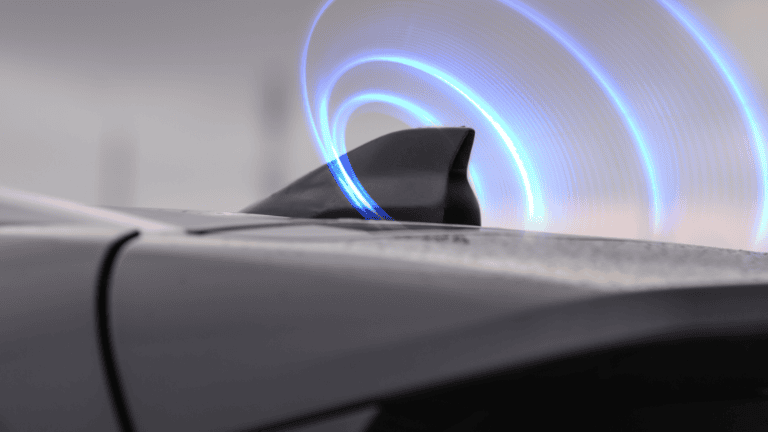
Today at Motor Guide, we are discussing a very important component that you constantly see on the road, but might not know the actual technology and internal workings of. As you all probably know, modern vehicles have a small fin-like structure attached to the roof, shaped much like the dorsal fin of a shark. In the automotive world, engineers and technicians call this the Shark Fin Antenna.
If you ask a standard pedestrian or a regular driver what that piece on the roof is, many will say it isn’t a big deal—just a small cosmetic modification added for looks, or just a plastic piece designed to cut through the wind. But if you ask an expert with deep knowledge in this field, or if you take this part off and look inside, you will see just how much massive, secret technology is hidden inside it. Today, this component has become an absolutely essential device for modern vehicles, directly affecting the vehicle's overall functionality and communication.
The Evolution of Car Antennas
Let's talk about this shark fin antenna clearly from the very beginning. In older cars, the only communication device present was the radio. So, to catch radio waves, vehicles were equipped with a separate, long antenna, or what we used to call an aerial. You might remember those aerials on older cars—they were essentially metal rods, usually placed on the side of the roof or above the driver's seat, that could be pulled up and extended. Some cars had a motorized system where the antenna would automatically go up when the radio was turned on, while others had them mounted near the front mudguard.
However, as time passed, the world moved forward, and technology advanced significantly. New vehicles weren't just equipped with radios; built-in GPS technology was added. Then, smart cellular connectivity operating from within the vehicle was introduced. Moving even further, vehicles got internet access, and some modern cars have even advanced to a self-driving state where they can navigate the road entirely without a driver.
The Aerodynamic Challenge
As vehicle technology advanced in this manner, the engineers designing them faced a massive problem: how to add the sensor systems and antennas required for all these new technological features to the vehicle? You can't just stick multiple antenna rods all over the roof—one for the radio, one for GPS, another for cellular communication, and yet another for the internet.
As professionals in this field, we know that if there are many various external components on the roof while a vehicle is traveling at high speeds, it directly disrupts the vehicle's aerodynamics. This causes the vehicle to vibrate unnecessarily, makes it difficult to control the speed, and creates annoying howling wind noises inside the cabin at high speeds. That is exactly why engineers figured out a way to put all these antennas and sensors into one single, small enclosure and mount it at the rear of the roof. That is how the "Shark Fin" component was born.
What is Actually Hidden Inside?
Now let's see what is truly hidden inside this small, shark-fin-shaped piece. It contains the standard FM radio antenna to catch regular radio waves, as well as a highly sophisticated and advanced built-in GPS antenna. But that’s not all. Special sensors that measure the vehicle's speed, sensor systems that monitor the road and surroundings ahead, and transceivers that receive incoming phone calls and internet signals are all systematically arranged within this tiny space.
Bringing all of these into one single location ensures that the vehicle's communication tasks can be carried out perfectly without any interference, and it causes absolutely no harm to the vehicle's speed or visual appeal. Furthermore, the shape of the shark fin immensely helps the wind flowing over the roof to glide smoothly without obstruction.
The Lifesaving SOS Feature
Another highly special fact is that today, in some developed countries, if a vehicle is involved in an emergency—meaning a severe accident where the airbags deploy—the communication system inside this shark fin instantly and automatically notifies the nearest hospital or police station. It has the capability to map the exact location of the vehicle via GPS and send that data, along with the nature of the accident, to the relevant emergency services without any delay. This can truly be described as an incredibly valuable safety feature that helps save human lives.
Why Do Basic Models Have Them?
Some of you might be thinking, "My car doesn't have all those GPS features or automatic crash notification systems, so why did the manufacturer put this on my roof?" The reason is that even if your vehicle currently lacks all those high-end features, the fin is installed to facilitate one or more of the basic functions we mentioned above, such as receiving standard radio or basic cellular signals.
Another important reason is future-proofing. If you ever want to add an extra technological feature to your vehicle in the future, manufacturers pre-install this so you can easily route wires through the shark fin without having to drill new holes in the roof. This is because the factory cuts the exact same roof shape for all vehicles of the same model line.
The Aftermarket Dummy Fins
Today, when we drive on the road, we see people buying aftermarket shark fin pieces from shops and sticking them onto older vehicles. It is true that it gives the vehicle a new look and aesthetic appeal. However, many of those external stick-on fins have no technological equipment inside them whatsoever; they are merely empty plastic shells. But the real story and the engineering behind a factory-original shark fin is exactly what we discussed. Therefore, even a small component like this on a vehicle is designed through extremely deep research and massive investment.
Motor Guide's Final Advice
Motor Guide's advice to you is to be very careful with this shark fin component on the roof when using your vehicle, and especially when washing it. Because it houses highly sensitive electronic circuits and antenna systems inside, never let it suffer heavy external blows. When washing the vehicle, do not direct high-pressure water streams directly at this component, because over time, the surrounding rubber seal can degrade and allow water to seep inside.
If water gets inside, the communication systems will short out and fail, and water could also leak through the roof into the cabin, ruining the interior headliner. Also, if you are installing an aftermarket fin like this onto your vehicle, ensure you choose a high-quality product that does not obstruct the vehicle's original signals. Especially if you are hiding the original aerial inside a dummy fin, make sure the wire connections are perfectly secured.
And don't forget to always stay tuned with Motor Guide to learn more valuable information like this about modern vehicles and technology!

Written by
Nisaga Sandaru
A versatile and highly experienced professional, currently an Automobile undergraduate at the University of Jaffna, with strong technical expertise grounded in hands-on work as a technician with SriLankan Airlines Ground Support Equipment (GSE). Holding an Automobile NVQ Level 3 qualification, along with specialized certifications in Vehicle ECU Programming and Diagnosis, and extensive experience in arc welding and vehicle body painting, and well equipped to handle complex automotive, diagnostic, and fabrication-related tasks with a high level of competence.