What is Adaptive High Beam?

Today at Motor Guide, we are discussing a superb, highly valuable technological feature in vehicles that many people are not entirely aware of. That is the headlight system known as Adaptive High Beam (AHB) or Adaptive Driving Beam (ADB). When driving a vehicle at night, one of the biggest challenges we face is using headlights to see the road clearly. When driving with the High Beam on, or what we commonly call the "double light," the road is clearly visible far ahead. However, this blinds the drivers of oncoming vehicles, causing them severe discomfort. The Adaptive High Beam technology was introduced to the world as the perfect technical solution to this problem.
How Does It Work?
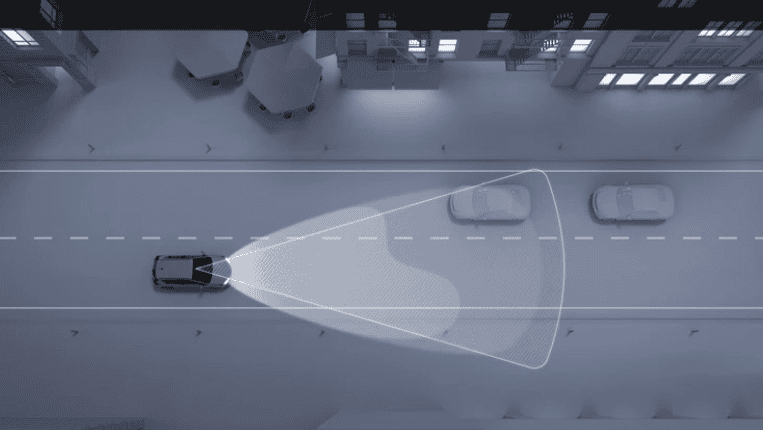
Let's look simply at how this works. Normally, what a standard Auto High Beam system in our vehicles does is completely switch the High Beam to Low Beam when a vehicle is approaching from the opposite direction or when following another vehicle. But this Adaptive High Beam is much different and a much more intelligent system.
As professionals in this field, we know that what happens here is the system turns off or dims only the specific section of the headlight beam so that the light does not hit the oncoming vehicle. That means, apart from the exact direction of the oncoming vehicle, everywhere else on the road remains clearly illuminated with the High Beam, just as before.
The Technical Mechanics
If we look at how this technology operates from a technical side, the primary components helping this are the camera system and sensors mounted on the vehicle's front windshield, usually near the rearview mirror. This camera constantly monitors the headlights of oncoming vehicles as well as the taillights of vehicles traveling ahead of us. That data is instantly analyzed by the vehicle's main computer, or ECU, which then controls the headlights.
For this purpose, modern vehicles predominantly use a headlight technology called Matrix LED. Inside a Matrix LED headlight, there is a large number of tiny LED bulbs. This system has the ability to independently turn off individual LED bulbs or increase/decrease their brightness.
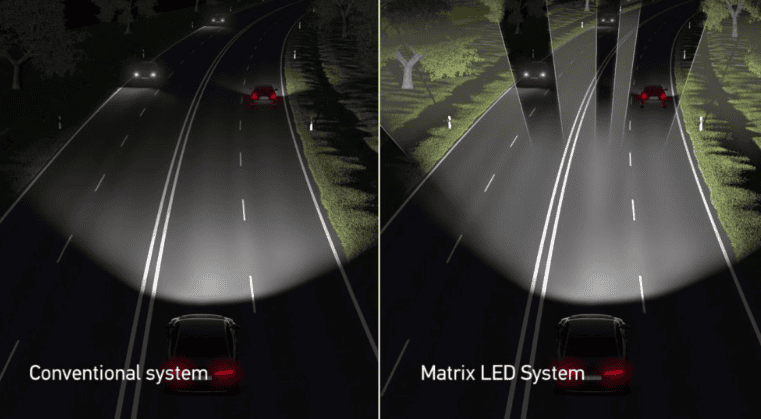
So, when a vehicle approaches from the front, only the LED bulbs projecting towards that vehicle turn off. Once that vehicle passes, those bulbs turn back on. Similarly, if another vehicle is traveling in the same direction ahead of us, this system manages to create a shadow-like area where light doesn't hit only the rear of that vehicle, while continuing to illuminate the road on both sides of the vehicle. This is truly incredible technology.
The Real-World Benefits
When driving on a desolate road at night, the relief this provides is indescribable. Normally, when driving at night, having the High Beam on is mandatory to spot pedestrians, cyclists, and parked vehicles on the sides of the road early on. But when vehicles come from the opposite direction, we have to switch to the Low Beam. At that moment, the visibility of the sides of the road drops significantly. Because of this Adaptive High Beam system, oncoming vehicles are not disturbed, and since both sides of the road remain well-lit, the tendency for accidents is greatly reduced. This is a brilliant technology that brings equal safety to the driver as well as others on the road.
Calibration and Maintenance
As professionals in this field, one thing we frequently see is the lack of knowledge drivers have about such complex technological systems. For this system to work perfectly, the camera and sensors on the vehicle must be properly calibrated. For example, if the front windshield is broken and replaced, or if the front bumper is hit and repaired, these cameras and sensors must absolutely be recalibrated.
If this is not done, the system might gather incorrect data and end up blinding oncoming vehicles, or the lights might turn off unnecessarily. Therefore, when maintaining a vehicle with such technology, it is highly important to get the work done only by a qualified technician.
Different Names, Same Goal
Another thing is that various vehicle manufacturers call this Adaptive High Beam technology by different names. While Audi calls it Matrix LED, BMW calls it Selective Beam. In Mercedes-Benz vehicles, this is seen as Multibeam LED.
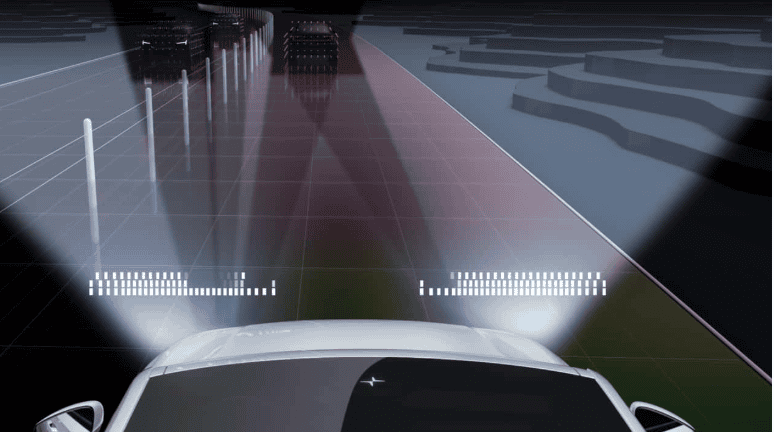
Regardless of the name, the fundamental objective and process of all these are the same. In some older models, instead of turning off individual LED bulbs, small motors inside the headlight pivoted the light beam side-to-side or up and down. But modern vehicles feature fully electronically controlled LED systems.
Because of this technology, the fatigue a driver feels at night is greatly reduced. Since the road is clearly visible, there is no need to strain the eyes, and there is no need to constantly operate the stalk to switch between high and low beams. Everything happens automatically.
Intelligent Environment Adaptation
This system also makes decisions based on the lighting conditions of the road. For example, when the vehicle enters a well-lit urban road, the system recognizes the light from the streetlamps and automatically deactivates the High Beam, switching to the Low Beam. Because a High Beam is not needed in urban areas. Furthermore, some advanced Adaptive High Beam systems can alter the distance and width of the light beam according to the vehicle's speed. When driving fast on an expressway, it narrows the light beam and projects it much further to see the distance easily, whereas when driving at lower speeds on a normal road, it widens the beam so the sides are clearly visible.
Another special feature is that this system can recognize the light reflecting off signboards and traffic signs on the side of the road. When driving with a standard High Beam, the light reflecting off these boards can blind the driver. However, this intelligent system slightly dims the light projecting towards those boards, providing comfort to the driver. All of this happens within a very short time, like a hundredth of a second. The vehicle's computer makes all these decisions without us even noticing.
Limitations and Warnings
But there is another fact we must remember. During heavy rain or thick fog, it can be difficult for these camera systems to gather data accurately. In such instances, the system might automatically deactivate and revert to being a standard lighting system. Also, some people apply various tint films or other stickers to headlights to change the look of their vehicles. As professionals in this field, we always advise never to make any such modifications to the headlights of a vehicle with Adaptive High Beam. Because doing so alters the direction and nature of the emitted light beam, which can mess up the entire system.
Motor Guide's Final Advice
Motor Guide's advice is that if you are using a vehicle with Adaptive High Beam technology, get the maximum benefit out of it while also paying attention to the system's safety. Especially at night, ensure that the area on the windshield where the camera is located is kept clean. If the camera is covered by dirt, dust, or fog, this system might not work correctly.
Furthermore, if there is a fault showing in the vehicle's lighting system, do not go to a standard electrician. Take the vehicle only to a service center that has good experience in this and possesses modern scanning equipment. Because these are highly sensitive and expensive technological devices, proper maintenance is essential.
And don't forget to always stay tuned with Motor Guide to learn more valuable information like this about modern vehicles and technology!

Written by
Nisaga Sandaru
A versatile and highly experienced professional, currently an Automobile undergraduate at the University of Jaffna, with strong technical expertise grounded in hands-on work as a technician with SriLankan Airlines Ground Support Equipment (GSE). Holding an Automobile NVQ Level 3 qualification, along with specialized certifications in Vehicle ECU Programming and Diagnosis, and extensive experience in arc welding and vehicle body painting, and well equipped to handle complex automotive, diagnostic, and fabrication-related tasks with a high level of competence.