Auto High Beam: The Feature in Almost Every Modern Vehicle

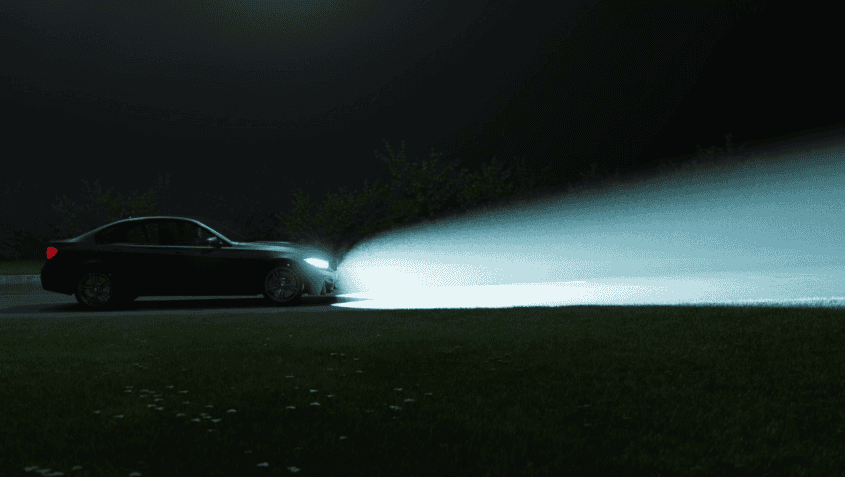
Today at Motor Guide, we are discussing a brilliant technology found in many modern vehicles today, but one that can become a nuisance if used without proper understanding. That is the 'Auto High Beam' (AHB) or 'High Beam Assist' system. While this was designed to be a massive convenience for the driver, knowing exactly how it works and its limitations is highly crucial for your safety and the safety of others on the road.
What Does Auto High Beam Do?
First, let's look at what this actually does. Simply put, when you are driving at night and there are no oncoming vehicles or vehicles traveling directly in front of you, the vehicle's headlights automatically switch to High Beam. Likewise, the moment it spots the light of another vehicle ahead, it switches back to Low Beam within seconds. The primary goal here is to help maintain the driver's field of vision at a maximum, safe level. Often, we hesitate to use high beams thinking we might forget to switch them back, or simply because it feels like too much of a hassle. Through this system, the vehicle itself takes over that responsibility.
How the Technology Works
Looking at how this technology operates, the main task is carried out by a camera system mounted at the top center of the vehicle's windshield.
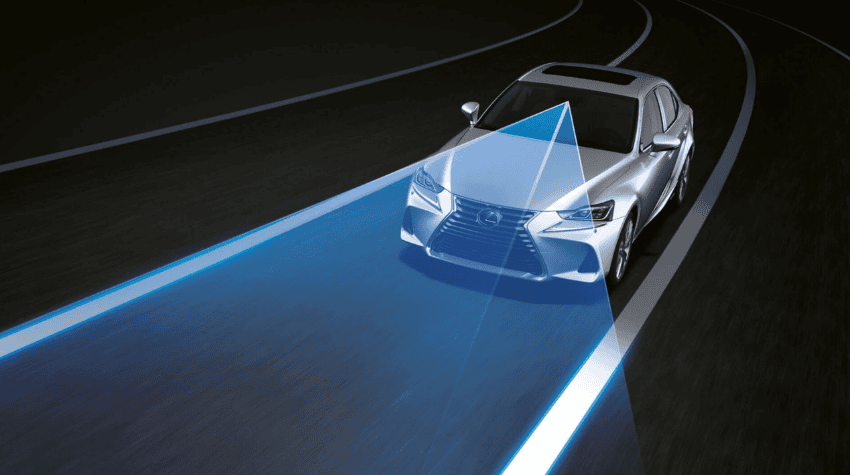
This is designed to recognize visible ambient light as well as the 'Tail lights' and 'Headlights' of other vehicles. As you drive, this camera constantly analyzes incoming light streams. If the ambient light on the road drops below a certain level and there are no vehicles ahead, the computer sends a signal to activate the high beams.
System Limitations and Risks
However, do not assume this will work 100% accurately all the time. As professionals in this field, we know there are many external factors affecting this system. For example, during heavy rain, thick fog, or when light aggressively reflects off large roadside signboards, the camera can receive false signals. Sometimes, if an oncoming vehicle has dim lights or is a much older model, the camera might be late to detect it. In such cases, the oncoming driver gets dazzled and inconvenienced. Therefore, even with Auto High Beam engaged, staying alert is incredibly important.
Speed and Environmental Constraints
Another thing to note is that this system doesn't operate at all speeds. Generally, it activates only when the vehicle is traveling above 30-40 km/h. Furthermore, it does not engage in urban areas where street lighting is strong, as the system understands there is already sufficient light on the road. This naturally prevents unnecessarily blinding others.
So, while this is a highly intelligent system, you have to be somewhat careful using it in a country like Sri Lanka, which has many winding roads. When a vehicle emerges from a sharp bend, your high beam might hit and blind that driver a split second before your camera can even detect their vehicle.
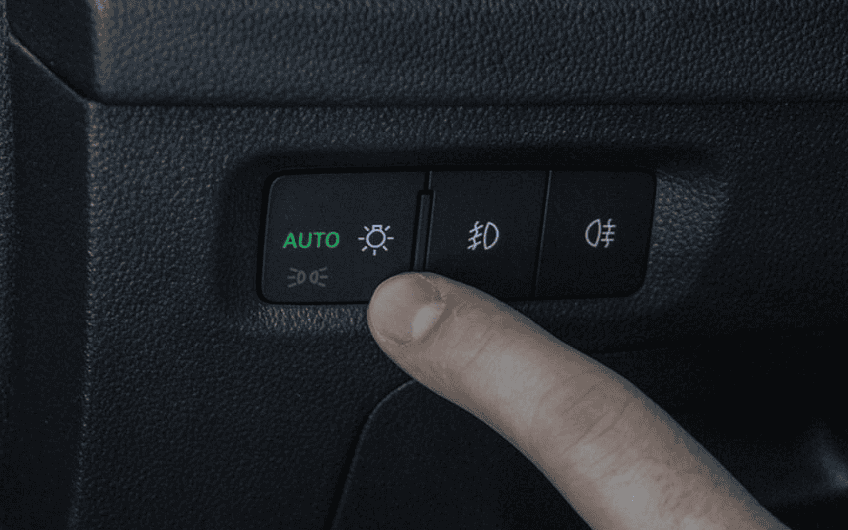
If the vehicle we use has a standard Auto High Beam feature, we need to have a solid understanding of this operational process.
The Importance of a Clean Windshield
Another issue we see as automotive experts is a dirty windshield. If the area around the camera is covered in mud or mist, this system will not work, or it will operate incorrectly. Therefore, keeping the windshield meticulously clean is essential for safety features like this to function properly. Also, the 'Leveling' of the vehicle's headlights must be perfectly adjusted. If the lights are aimed too high, they can bother oncoming drivers even when dipped in low beam mode.
Motor Guide's Final Advice
Motor Guide's advice is this: modern technology is there for our convenience, not to completely replace our attention. 'Auto High Beam' is merely a Driver Assist system. Therefore, when driving at night, you must always be ready to switch to manual control when the system struggles. Think twice about relying solely on it, especially on narrow and winding roads. Using technology correctly contributes to your safety and the safety of everyone else on the road. And don't forget to always stay tuned with Motor Guide to learn more valuable information like this about modern vehicles and technology!

Written by
Nisaga Sandaru
A versatile and highly experienced professional, currently an Automobile undergraduate at the University of Jaffna, with strong technical expertise grounded in hands-on work as a technician with SriLankan Airlines Ground Support Equipment (GSE). Holding an Automobile NVQ Level 3 qualification, along with specialized certifications in Vehicle ECU Programming and Diagnosis, and extensive experience in arc welding and vehicle body painting, and well equipped to handle complex automotive, diagnostic, and fabrication-related tasks with a high level of competence.