Understanding Engine Torque and Horsepower


A topic that anyone interested in vehicles frequently asks about, yet often confuses, is Engine Torque and Horsepower. Simply put, although both are measurements of an engine's strength, they perform entirely different tasks. When you drive a vehicle, its overall performance is determined by the combination of these two factors. We at Motor Guide decided to discuss this deeply, yet in easy-to-understand language.
What is Engine Torque?
First, let's talk about torque. Torque is the "twisting force" generated by an engine. Imagine trying to loosen a tight bolt using a spanner. The pushing force you apply at that exact moment is torque. Inside an engine, as the piston is pushed down, it turns the crankshaft. The "push" or rotational force given to that rotation is what is known as torque.
To move a vehicle forward from a standstill, torque is what you need first. Heavy vehicles, like trucks and buses, have very high torque because pulling such massive weight requires a massive twisting force from the engine.
What is Horsepower?
The next important factor is Horsepower. This measures how fast the engine can do work. Simply put, horsepower is what helps maintain the vehicle's "speed". After torque pushes the vehicle forward and builds momentum, the energy needed to keep it moving continuously at a higher speed is horsepower.
For horsepower to increase, the number of times the engine rotates per minute—the RPM (Revolutions Per Minute)—must increase. Race cars have extremely high horsepower because they need to reach top speeds in a matter of seconds.
The "Rock Rolling" Analogy
Let me give a practical example to further clarify the difference between the two. Imagine you need to roll a massive rock. The huge initial force you apply to push and get that rock moving is the torque. However, the ability to keep that rock rolling continuously at a fast pace after it has moved is horsepower.
In other words, torque is like the "sledgehammer blow" of an engine. Horsepower is how fast those blows hit. This is exactly why diesel engines have higher torque and relatively lower horsepower. Even though petrol engines have lower torque, they can rev to much higher RPMs, resulting in higher horsepower.
How Do You Feel This Practically?
Let's look at how a driver experiences this in the real world. When you are climbing a steep hill or carrying a heavy load, your vehicle needs torque. Under those conditions, even if the vehicle isn't going very fast, it can keep pulling forward without stalling. However, if you are overtaking a vehicle on the highway, what you need is horsepower, because in that scenario, your vehicle requires a sudden burst of speed.
The Mathematical Connection
Usually, maximum torque is delivered when the engine's RPM is at a lower level. However, maximum horsepower is achieved when the RPM climbs much higher. There is an actual mathematical relationship between these two. Horsepower is calculated by multiplying torque by RPM and dividing that by the number 5252.
What this proves is that you cannot have horsepower without torque. Torque is the foundation, and horsepower is built upon that foundation. Therefore, when choosing a vehicle, looking only at the horsepower (HP) figure is useless; depending on the tasks the vehicle will be used for, you must pay equal attention to the torque.
Choosing the Right Engine
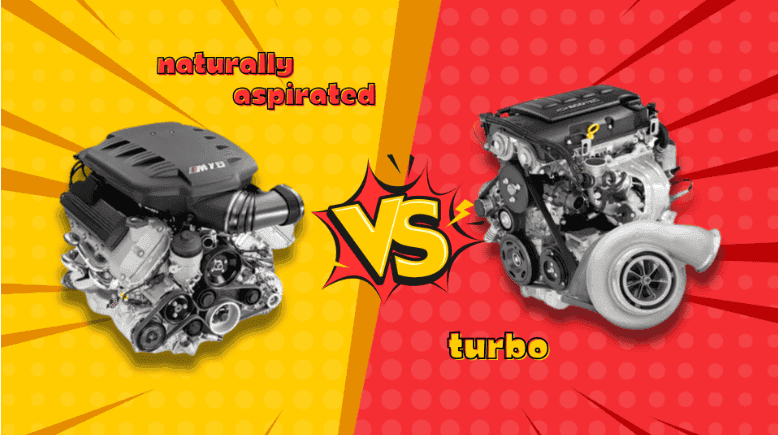
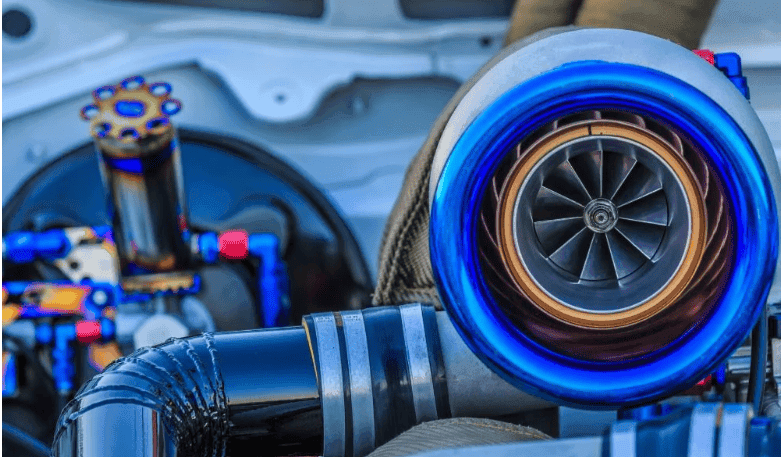
If you are someone who goes off-roading or regularly tows heavy loads, an engine that delivers high torque at lower RPMs is the ideal choice. On the other hand, if you love driving fast, you should choose an engine with higher horsepower. Modern turbocharged engines often balance both of these excellently. When a turbocharger is present, the engine receives a larger volume of forced air, increasing the pressure exerted on the pistons, which in turn boosts both torque and horsepower.
Motor Guide's Final Advice
Finally, remember this simple rule: Torque is the vehicle's "ability to do work," and Horsepower is "how fast it does that work." When these two are perfectly matched, a vehicle achieves excellent driving performance.
Furthermore, an engine's lifespan and efficiency depend heavily on utilizing this torque and horsepower properly. If you unnecessarily redline the RPM to extract horsepower, the engine will wear out quickly. Likewise, if you put a massive load on the vehicle at a very low RPM and force it to use maximum torque (lugging the engine), it can cause severe internal damage. Therefore, having a clear understanding of the power limits of the vehicle you drive is incredibly important.

Written by
Nisaga Sandaru
A versatile and highly experienced professional, currently an Automobile undergraduate at the University of Jaffna, with strong technical expertise grounded in hands-on work as a technician with SriLankan Airlines Ground Support Equipment (GSE). Holding an Automobile NVQ Level 3 qualification, along with specialized certifications in Vehicle ECU Programming and Diagnosis, and extensive experience in arc welding and vehicle body painting, and well equipped to handle complex automotive, diagnostic, and fabrication-related tasks with a high level of competence.