This Is How the AC in Your Car Works


On hot sunny days, all we think about is how to stay cool — whether by turning on a fan, sipping a cold drink, or enjoying air conditioning. When you're in a vehicle, you only have two real options: open the windows or turn on the car's AC. But opening the windows lets in dust and pollution, which is why most of us prefer air conditioning. However, very few drivers actually know how the car's AC system works. Today, MotorGuide explains how the air conditioning in your car keeps you cool and comfortable.
What Happens When You Turn On the AC?
The air conditioner in your vehicle doesn't just cool the cabin — it can also regulate temperature and humidity for comfort. It removes warm air from inside the car, cools it, and circulates it back as dry, chilled air. To function properly, the system needs the correct level of refrigerant (coolant), which plays a key role in heat transfer. If the refrigerant level is low, the AC won't perform efficiently.
How Does a Car AC Work?
The vehicle's air conditioning system works by continuously converting the refrigerant between liquid and gas states. When it changes from liquid to gas, it absorbs heat and moisture from the cabin. Then, as it returns to a liquid state, it releases that heat outside the vehicle. This process happens through a series of pressure and temperature changes, similar to how a household refrigerator operates.
The Science Behind It – Temperature and Pressure
To understand how AC systems work, you should know that temperature and pressure are proportional — when pressure increases, temperature also increases. The AC system uses this principle to manage the refrigerant. The refrigerant absorbs heat inside the car, moves through various components under changing pressure levels, and finally releases that heat outside, leaving the cabin cool and comfortable.
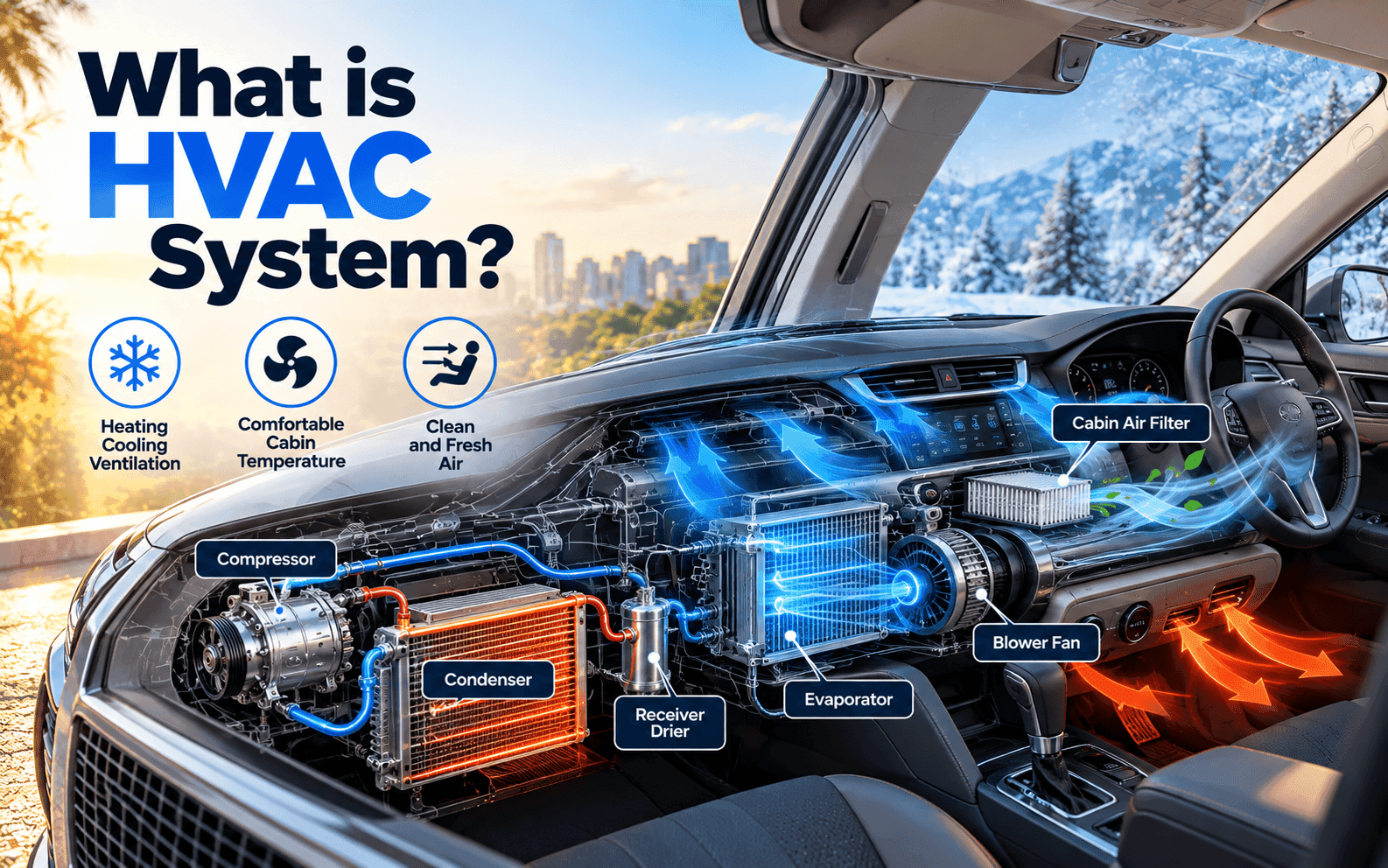
Main Components of a Car's AC System
- Compressor
- Condenser
- Dryer
- Expansion Valve
- Evaporator (Cold Coils)
- Hot Coils
- Coolant / Refrigerant
How Each Part Works
Compressor
The compressor is the heart of the AC system. It takes in low-pressure gas and compresses it into high-temperature, high-pressure gas. This component is powered by a belt connected to the engine, helping circulate the refrigerant throughout the system.
Condenser
The condenser cools down the high-pressure gas from the compressor and converts it into a liquid form. This process happens under high pressure using forced air — just like how a radiator cools the engine. It's usually installed behind the vehicle's front grill.
Dryer
The dryer (or receiver-drier) removes moisture and impurities from the refrigerant to prevent damage to the AC system. It's located on the high-pressure side, between the condenser and expansion valve.
Expansion Valve
The expansion valve controls the flow of refrigerant into the evaporator. When the high-pressure liquid passes through the valve, it expands and turns into a low-pressure mist. This drop in pressure causes the temperature to decrease, creating the cooling effect we feel.
Evaporator
The evaporator (also called cold coil) is located inside the dashboard. As the refrigerant evaporates, it absorbs heat from the cabin air blown over it. This air becomes cool and dry before being circulated back into the cabin through the vents.
How the Coolant Works
The coolant (refrigerant) is the chemical substance responsible for transferring heat. When the outside temperature is around 30°C and you set your car's AC to 20°C, the system lowers the cabin temperature by roughly 10°C using this refrigerant. The coolant constantly cycles through gas and liquid phases to absorb and release heat efficiently.
Summary
In simple terms, your car's air conditioning system absorbs heat from inside the cabin and releases it outside through a series of pressure changes. The compressor, condenser, expansion valve, and evaporator all work together in this process. By maintaining the correct coolant level and keeping your AC system serviced regularly, you can ensure it keeps performing efficiently — keeping you cool no matter how hot it gets outside.
Now you know exactly how your car's AC works. Many drivers only think about switching it on but rarely understand the process behind it. With this knowledge from MotorGuide, you can appreciate the technology that keeps your drive comfortable — and maintain your system properly to enjoy fresh, cool air every time you hit the road.

Written by
Nipuna Marasinghe