How Solar Power and Electric Vehicles Can Reduce Electricity and Transport Costs in Sri Lanka

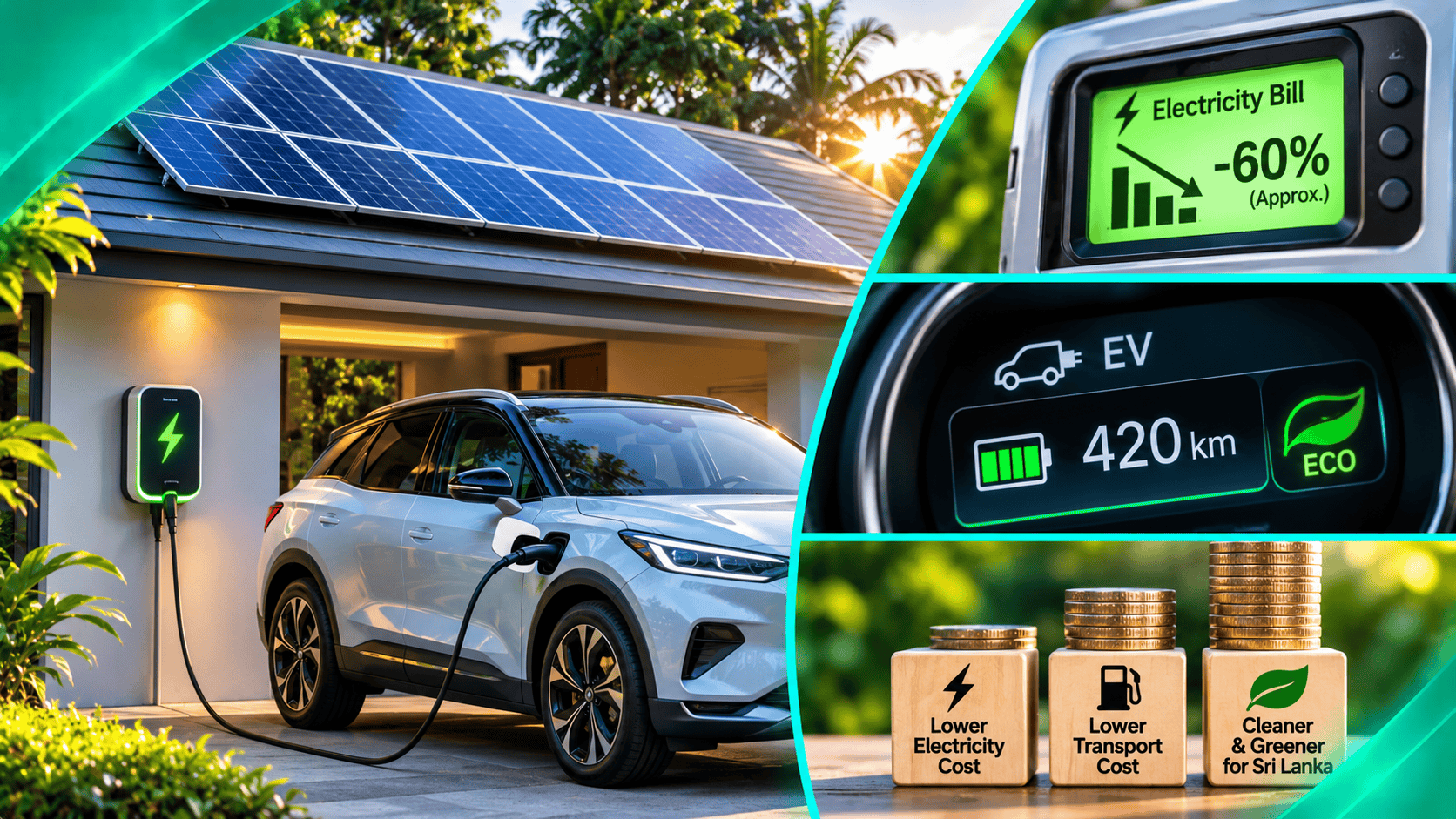
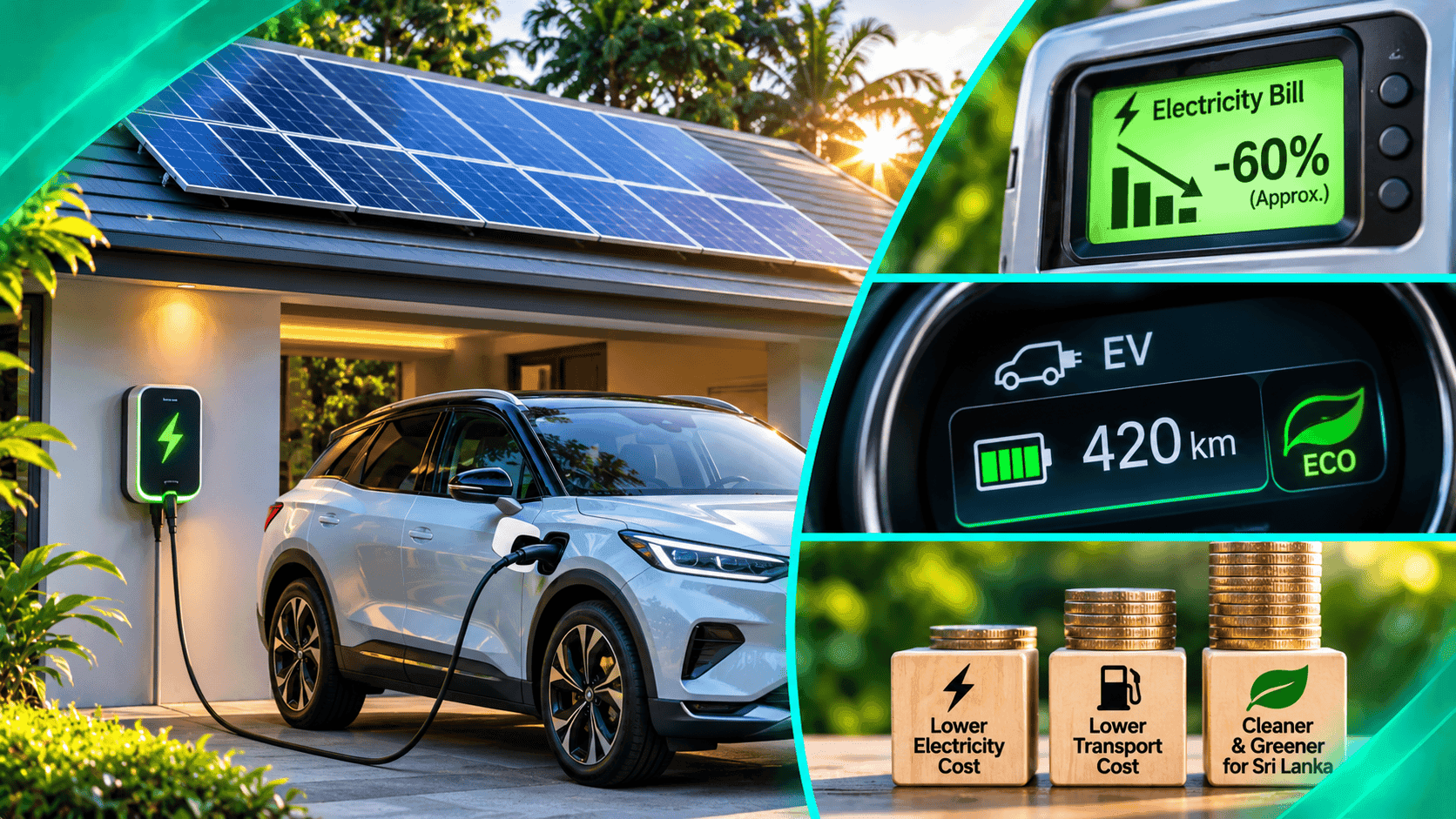
Today at MotorGuide, we're going to discuss a concept that is attracting increasing interest among Sri Lankan homeowners and vehicle owners. We're talking about combining rooftop solar power with an electric vehicle, commonly referred to as the Solar + EV concept.
With household electricity expenses and transportation costs affecting everyday budgets, many people are looking for ways to manage their energy consumption more efficiently.
Electric vehicles can reduce dependence on petrol and diesel, while rooftop solar systems can generate electricity using sunlight.
When these two technologies are planned together, homeowners may be able to reduce their overall energy expenses and improve how they use electricity.
However, purchasing an electric car and installing solar panels does not automatically eliminate electricity bills or make vehicle charging completely free.
The financial benefits depend on electricity tariffs, solar generation, charging arrangements, driving distance, installation costs, and the applicable rooftop solar agreement.
So, how does the Solar + EV concept work in Sri Lanka, what are the available charging options, and what should you consider before investing in these technologies? Let's take a closer look.
1. What Is the Solar + EV Concept?
The basic idea behind Solar + EV is to use solar electricity to support the energy requirements of an electric vehicle.
Rooftop solar panels convert sunlight into electrical energy through photovoltaic cells.
That electricity is processed through an inverter so it can be used in a suitable electrical system or supplied to the national grid under an approved connection arrangement.
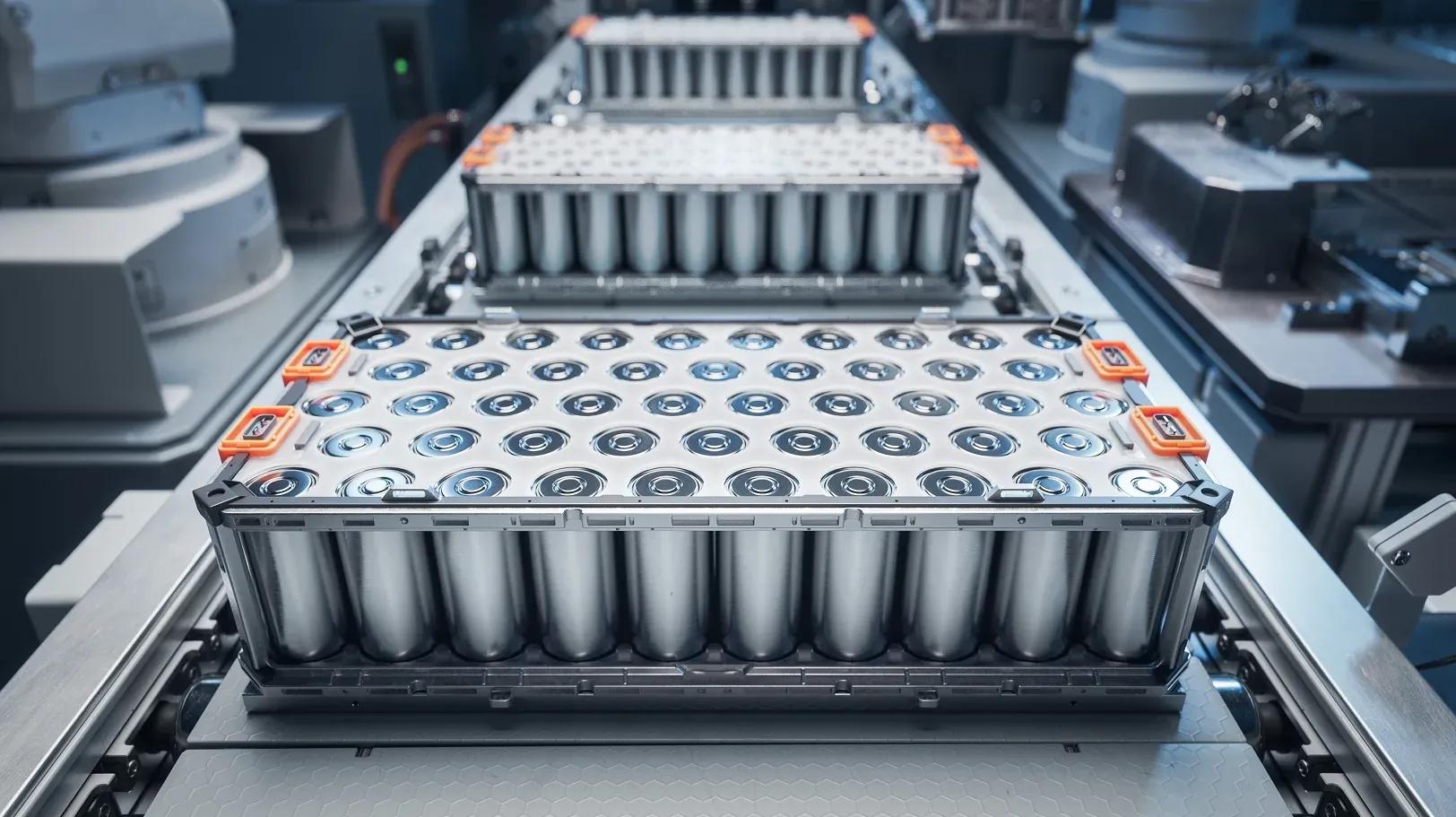
An electric vehicle, meanwhile, stores electrical energy in a rechargeable traction battery.
Instead of relying on petrol or diesel, a battery electric vehicle uses electricity to power its motor.
When solar generation and electric vehicle charging are coordinated, homeowners may be able to reduce the electricity purchased from the grid or earn revenue from solar electricity exported under an approved arrangement.
For example, a homeowner may charge an EV directly from solar generation during the daytime when the electrical installation and applicable connection scheme permit this.
Alternatively, electricity produced by a rooftop solar system may be exported to the grid, generating revenue that helps offset the cost of charging the vehicle at another time.
The exact arrangement depends on the solar connection agreement and the household's electricity infrastructure.
2. How Much Electricity Does an EV Need?
Before deciding how much solar capacity is required, it's useful to understand an electric vehicle's energy consumption.
EV energy efficiency is commonly expressed in kilowatt-hours per 100 kilometres, or kWh/100 km.
For example, suppose an electric vehicle consumes approximately 18 kWh for every 100 kilometres under the owner's normal driving conditions.
If the vehicle travels 1,500 kilometres per month, the energy used for driving would be approximately 270 kWh.
However, the electricity drawn from the wall charger will generally be higher because charging involves energy losses.
For illustration, if charging efficiency is approximately 90%, the electricity required from the supply would be around 300 kWh for that month.
This is a useful example, but not every EV consumes the same amount of electricity.
A smaller electric hatchback may consume less energy, while a larger electric SUV may require substantially more.
Driving speed, air conditioning, terrain, traffic conditions, vehicle weight, and charging equipment also affect the total electricity required.
Before selecting a solar system, estimate your monthly driving distance and check the real-world energy consumption of your particular EV.
3. How Does Rooftop Solar Work in Sri Lanka?
Rooftop solar systems generate electricity during daylight hours, with output depending on sunlight, weather conditions, panel orientation, shading, and system performance.
In Sri Lanka, grid-connected rooftop solar installations have operated under several commercial arrangements, including Net Metering, Net Accounting, and Net Plus.
Although these arrangements all involve solar electricity and the national grid, they do not treat electricity generation and consumption in the same way.
Understanding the differences is important because the financial return from a solar installation depends heavily on the applicable scheme.
4. Net Metering, Net Accounting and Net Plus Explained
Under a traditional Net Metering arrangement, eligible solar generation exported to the grid is accounted for against electricity imported from the grid according to the applicable agreement.
Net Accounting provides a different settlement arrangement that can involve compensation for eligible surplus electricity exported to the grid.
Under a conventional Net Plus arrangement, solar generation is measured separately from household electricity consumption.
The electricity generated by the approved solar installation is supplied to the grid and compensated at the applicable feed-in tariff.
Meanwhile, electricity consumed by the household, including EV charging, is billed separately under the relevant consumer tariff.
This difference is particularly important for prospective EV owners.
If the solar system operates under a full-export Net Plus arrangement, installing solar panels does not necessarily mean that the same electricity can be directly consumed by the EV through the ordinary household connection.
Instead, solar revenue and the household electricity bill are calculated separately.
Any financial benefit depends on the electricity exported, the approved purchase rate, and the electricity imported for household and vehicle use.
5. Sri Lanka's 2026 Rooftop Solar Policy Changes
Sri Lanka introduced important rooftop solar policy changes during 2026.
The National Electricity Policy included a provision supporting Net Plus-based arrangements for new on-grid rooftop solar agreements and extensions.
During September 2026, the energy authorities directed the electricity distribution operator to discontinue new Net Metering and Net Accounting connections in favour of Net Plus arrangements.
However, the Public Utilities Commission of Sri Lanka issued a clarification explaining that separate measurement of imported and exported electricity should not automatically require the discontinuation of existing commercial settlement arrangements.
PUCSL's position supported the continuation of Net Metering, Net Accounting, and Net Plus under an appropriate two-meter arrangement.
Consequently, homeowners should not assume that every rooftop solar application will necessarily receive identical treatment.
Before investing in a new installation, confirm the currently applicable scheme, connection approval process, feed-in tariff, agreement duration, and settlement conditions with the relevant electricity distributor.
The exact commercial arrangement should be confirmed in writing before purchasing equipment.
6. Can Solar Income Pay for EV Charging?
Under a Net Plus arrangement, solar electricity exported to the grid can generate income based on the approved feed-in tariff.
For example, consider a solar system that exports 500 kWh during a particular month.
If the applicable purchase rate were Rs. 20 per kWh, the gross electricity revenue would be Rs. 10,000 for that month.
This is an illustrative rate rather than a statement of the current approved rooftop solar tariff.
Now suppose an EV requires 300 kWh of electricity from the grid during the same month.
If the applicable charging energy rate were Rs. 33 per kWh, that electricity would have an energy charge of Rs. 9,900 before considering fixed charges or other applicable billing items.
In this simplified example, the solar income would approximately offset the EV charging energy charge.
However, a real household must also account for electricity used by appliances, tariff differences, fixed charges, solar installation costs, maintenance, and the timing of payments.
Therefore, the solar export payment may help reduce net energy expenditure without necessarily eliminating all electricity-related expenses.
7. Domestic Electricity Tariffs and EV Charging
One concern among Sri Lankan EV buyers is that regularly charging an electric vehicle at home can increase monthly household electricity consumption.
Under a standard domestic electricity tariff, higher consumption can move the household into more expensive billing categories.
For example, the domestic tariff published with effect from 11 May 2026 includes a higher consumption category for households using more than 180 kWh per month.
Therefore, a household already using substantial electricity may face a noticeable increase in its bill after adding regular EV charging.
However, the correct cost depends on the complete tariff calculation, including consumption blocks, fixed charges, and any applicable adjustments.
EV owners should compare the cost of ordinary domestic billing with the optional Time-of-Use arrangement before choosing a charging strategy.
8. What Is the Domestic Time-of-Use Tariff?
The Domestic Time-of-Use tariff, commonly known as D-TOU, applies different electricity rates depending on the time of day.
This structure can encourage households to shift some electricity consumption away from periods of high demand.
Under the domestic Time-of-Use tariff published with effect from 11 May 2026, the energy charges are:
- Daytime, 5:30 AM to 6:30 PM: Rs. 47 per kWh.
- Peak, 6:30 PM to 10:30 PM: Rs. 106 per kWh.
- Off-peak, 10:30 PM to 5:30 AM: Rs. 33 per kWh.
The published monthly fixed charge for this domestic Time-of-Use category is Rs. 2,500.
These figures describe the tariff effective from 11 May 2026. Electricity rates can be revised, so homeowners should check the latest approved schedule before making financial decisions.
Because the off-peak energy rate is lower than the daytime and peak rates, overnight EV charging may be beneficial for some households.
However, switching to D-TOU means that electricity used during peak hours is charged at a significantly higher rate.
Therefore, households should compare their complete daily consumption patterns, not just their EV charging requirements.
9. Is There a Separate EV Charging Tariff?
Sri Lanka also introduced a separate electricity tariff category for electric vehicle charging stations during 2026.
However, the charging station tariff should not be confused with the optional domestic Time-of-Use tariff.
They apply to different categories of electricity supply and have different charging structures.
For example, the published EV charging station tariff includes separate day, peak, and off-peak electricity rates, as well as relevant fixed charges and supply conditions.
A homeowner should not assume that purchasing an electric car automatically provides eligibility for a dedicated commercial EV charging station tariff or a new domestic connection under the same conditions.
Before requesting a separate meter, contact the relevant electricity distributor to confirm the correct connection category, eligibility requirements, installation charges, and approved tariff.
10. Why Charging at Night Can Be Useful
For households using an eligible domestic Time-of-Use tariff, scheduling EV charging during off-peak hours can reduce the applicable energy charge compared with charging during peak hours.
For example, suppose an EV requires 300 kWh of electricity from the supply during one month.
At an illustrative off-peak energy rate of Rs. 33 per kWh, the energy charge would be Rs. 9,900.
However, this does not represent the complete household electricity bill.
Other electricity consumption, the monthly fixed charge, and the applicable billing structure must also be considered.
Many home EV chargers and modern electric vehicles allow owners to schedule charging sessions automatically.
This makes it possible to connect the vehicle when arriving home while delaying the charging process until the selected off-peak period.
Before using this feature, ensure that the vehicle's charging requirements, household electrical supply, and available charging time are compatible.
11. Can You Charge an EV Directly from Solar Panels?
Direct daytime solar charging can be possible when the electrical installation and applicable connection agreement support it.
In such an arrangement, electricity generated by the rooftop solar system can help supply the EV charger while sunlight is available.
Some solar-compatible charging systems can adjust charging power according to the surplus solar generation available.
For example, when the household's solar system is generating more electricity than its other appliances require, a compatible charger may increase the power delivered to the vehicle.
When solar generation decreases because of clouds or changing sunlight, the charger may reduce its output.
However, a conventional full-export Net Plus system is not necessarily configured for direct household self-consumption.
Homeowners should confirm the permitted electrical arrangement with their installer and electricity distributor before purchasing solar-aware EV charging equipment.
Also, a hybrid solar inverter is not automatically required for every form of solar-assisted charging.
The appropriate inverter and charging configuration depend on whether the system is grid-connected, hybrid, battery-backed, or designed for another approved operating arrangement.
12. What Happens When Solar Generation Is Insufficient?
Solar electricity generation changes throughout the day.
On cloudy days, during heavy rain, or after sunset, rooftop solar panels may produce significantly less energy than during clear daytime conditions.
If a grid-connected system supports household self-consumption, electricity from the grid may be needed when solar generation is insufficient.
If the installation includes a suitable stationary battery storage system, stored energy may also support certain loads.
However, battery storage introduces additional purchase costs, conversion losses, maintenance considerations, and technical requirements.
For this reason, homeowners should avoid assuming that a rooftop solar system can provide unlimited EV charging regardless of weather conditions or time of day.
13. How Does Vehicle-to-Load Technology Work?
Some modern electric vehicles include Vehicle-to-Load technology, commonly known as V2L.
This feature allows the vehicle's traction battery to supply electricity to compatible external appliances through approved equipment.
Depending on the vehicle, V2L may be useful for operating selected devices such as lights, laptops, fans, or other equipment within the manufacturer's power limits.
It can also provide useful temporary power during certain electricity interruptions.
However, not every EV supports V2L.
Also, V2L should not be confused with Vehicle-to-Home technology, or V2H, which is designed to support a home's electrical installation using specialised equipment.
Connecting a V2L output directly to household wiring without an approved transfer or isolation arrangement can create serious electrical hazards.
Never attempt to backfeed a home's electrical system through an ordinary socket.
Only use manufacturer-approved equipment and consult qualified electrical professionals when considering household backup applications.
14. How Much Rooftop Solar Capacity Do You Need?
Choosing an appropriate rooftop solar system requires more than estimating how many kilometres an EV travels each month.
The homeowner should also consider existing household electricity consumption, solar generation potential, roof space, shading, and the commercial agreement under which electricity will be exported or used.
For example, a household travelling 1,500 to 2,000 kilometres per month in an EV may require several hundred kilowatt-hours of charging electricity.
However, the correct solar system size depends on the vehicle's energy consumption and charging losses.
A 5 kW or 8 kW rooftop solar system may be suitable for certain households, but neither capacity is universally optimal.
Solar system capacity is measured in kilowatts, while actual energy generation is measured in kilowatt-hours.
The electricity produced by a solar installation depends on weather, location, panel orientation, system losses, and seasonal conditions.
Under a Net Plus arrangement, the financial return is also influenced by the feed-in tariff and separately billed electricity consumption.
Before purchasing a system, ask a qualified solar provider for a site-specific generation forecast and a financial comparison of the available options.
15. Why a Proper Home EV Charger Matters
Charging an electric vehicle at home requires a safe electrical installation.
Many EV owners prefer a dedicated AC wall charger because it can provide convenient, controlled charging when properly installed.
A 7 kW wall charger is one common option for certain residential installations.
However, it is not a universal requirement for every EV or household.
The suitable charger depends on the vehicle's onboard charging capacity, available electrical supply, household load, and installation conditions.
Some vehicles support slower AC charging rates, while others may accommodate higher charging power.
A qualified electrician should assess the property before installation.
Important considerations include cable sizing, circuit protection, earthing, appropriate residual-current protection, surge protection where required, and the manufacturer's installation instructions.
Depending on the equipment and installation, a dedicated miniature circuit breaker, protective devices, and suitable isolation arrangements may be necessary.
Do not assume that a standard household socket can safely supply high charging loads for long periods without a proper assessment.
A correctly designed installation can help reduce electrical safety risks and support more reliable charging.
16. Is Solar + EV Really a Cost-Saving Investment?
The combination of rooftop solar and an electric vehicle can offer financial advantages, particularly for households with suitable electricity consumption patterns and reliable charging arrangements.
However, actual savings depend on several factors.
These include the purchase price of the EV, the cost of the solar installation, electricity tariffs, solar export payments, battery efficiency, insurance, maintenance, and long-term equipment performance.
For example, a household with relatively high petrol expenses may see substantial transport energy savings after switching to an EV.
However, those savings must be considered alongside the vehicle's purchase cost and the electricity needed for charging.
Similarly, a rooftop solar system may generate meaningful long-term revenue, but its financial performance depends on the approved export rate, installation cost, operating expenses, and agreement conditions.
Therefore, the most useful measure is the total cost of ownership rather than the electricity price alone.
Homeowners should calculate realistic monthly costs and compare different scenarios before making a large investment.
17. Solar + EV Checklist for Sri Lankan Homeowners
Before combining rooftop solar with an electric vehicle, consider the following points.
- Monthly driving distance: Calculate approximately how many kilometres the vehicle travels each month.
- EV energy consumption: Estimate the electricity required for driving and allow for charging losses.
- Current household electricity use: Review several recent electricity bills.
- Applicable tariff: Compare standard domestic billing with the optional Time-of-Use tariff where available.
- Solar connection scheme: Confirm whether the installation will operate under Net Metering, Net Accounting, Net Plus, or another approved arrangement.
- Solar generation forecast: Obtain an estimate based on roof area, location, orientation, and shading.
- Charging arrangements: Decide whether charging will mainly take place at home, work, or public stations.
- Charger compatibility: Check the vehicle's AC charging capability and the electrical supply available.
- Electrical safety: Use appropriately installed charging equipment and protective devices.
- Financial comparison: Include installation costs, fixed charges, electricity tariffs, feed-in payments, and long-term maintenance.
MotorGuide's Advice: Plan Your Solar and EV Setup Together
At MotorGuide, our advice is to evaluate rooftop solar and electric vehicle ownership as parts of a single household energy plan.
Start by calculating your monthly driving distance and estimating the electricity required to charge the vehicle.
Next, review your current household electricity consumption and check which tariff arrangements are available.
If you plan to install rooftop solar, confirm the applicable connection scheme, export tariff, and agreement conditions before making a financial commitment.
Remember that a Net Plus system and a direct solar self-consumption system may have different financial and technical arrangements.
If you intend to charge the EV overnight, compare the complete household bill under the standard domestic tariff and the optional Time-of-Use tariff.
For daytime charging, check whether a compatible solar-aware charging system can be installed legally and safely.
Also make sure that a qualified electrician evaluates the household electrical system before installing a dedicated EV charger.
Combining solar power with an EV can reduce reliance on conventional fuels and may lower total energy expenditure, but the result depends on the installation, driving habits, tariffs, and costs involved.
With careful planning, Solar + EV can become a practical part of a more efficient household energy strategy in Sri Lanka.
Stay connected with MotorGuide for more useful information about electric vehicles, solar charging, vehicle technology, energy efficiency, and practical automotive advice for Sri Lankan motorists.

Written by
Nisaga Sandaru
A versatile and highly experienced professional, currently an Automobile undergraduate at the University of Jaffna, with strong technical expertise grounded in hands-on work as a technician with SriLankan Airlines Ground Support Equipment (GSE). Holding an Automobile NVQ Level 3 qualification, along with specialized certifications in Vehicle ECU Programming and Diagnosis, and extensive experience in arc welding and vehicle body painting, and well equipped to handle complex automotive, diagnostic, and fabrication-related tasks with a high level of competence.