Crankshaft, camshaft are you getting confused? let's breakdown

Ever had those moments where everything seems to get tangled up because it sounds the same? Well, in the automotive world, there's a pair of terms that often cause confusion, crankshaft and camshaft. Despite sounding quite similar, these two are crucial components of an engine, each playing distinct and important roles. At MotorGuide, we decided to clear up the confusion and talk about crankshaft and camshaft in a way that makes perfect sense.
What is a Camshaft?
The camshaft is like the conductor in the orchestra that is your engine, located up at the top, near the cylinder head. It's a critical part of the valvetrain, which is responsible for opening and closing the intake and exhaust valves. Simply put, this is what allows air and fuel to get into the combustion chamber (the space above the piston) and lets the exhaust gasses escape after combustion.
In a modern internal combustion engine, each cylinder might have up to four valves operated by a single or dual camshaft setup, with two intake and two exhaust valves. In some simpler engines, however, the setup might be less complex with fewer valves.
How Does a Camshaft Work?
The camshaft is driven by the crankshaft, and it plays its role by converting rotational motion into the opening and closing actions of the valves. The cams or lobes on the camshaft have specific shapes and sizes, which control how much a valve opens. If you're after more power, the more cams, the merrier! With configurations like the four-camshaft setup, there's more room for air to come in and exhaust to go out, thus boosting the engine's efficiency and power.
What is a Crankshaft?
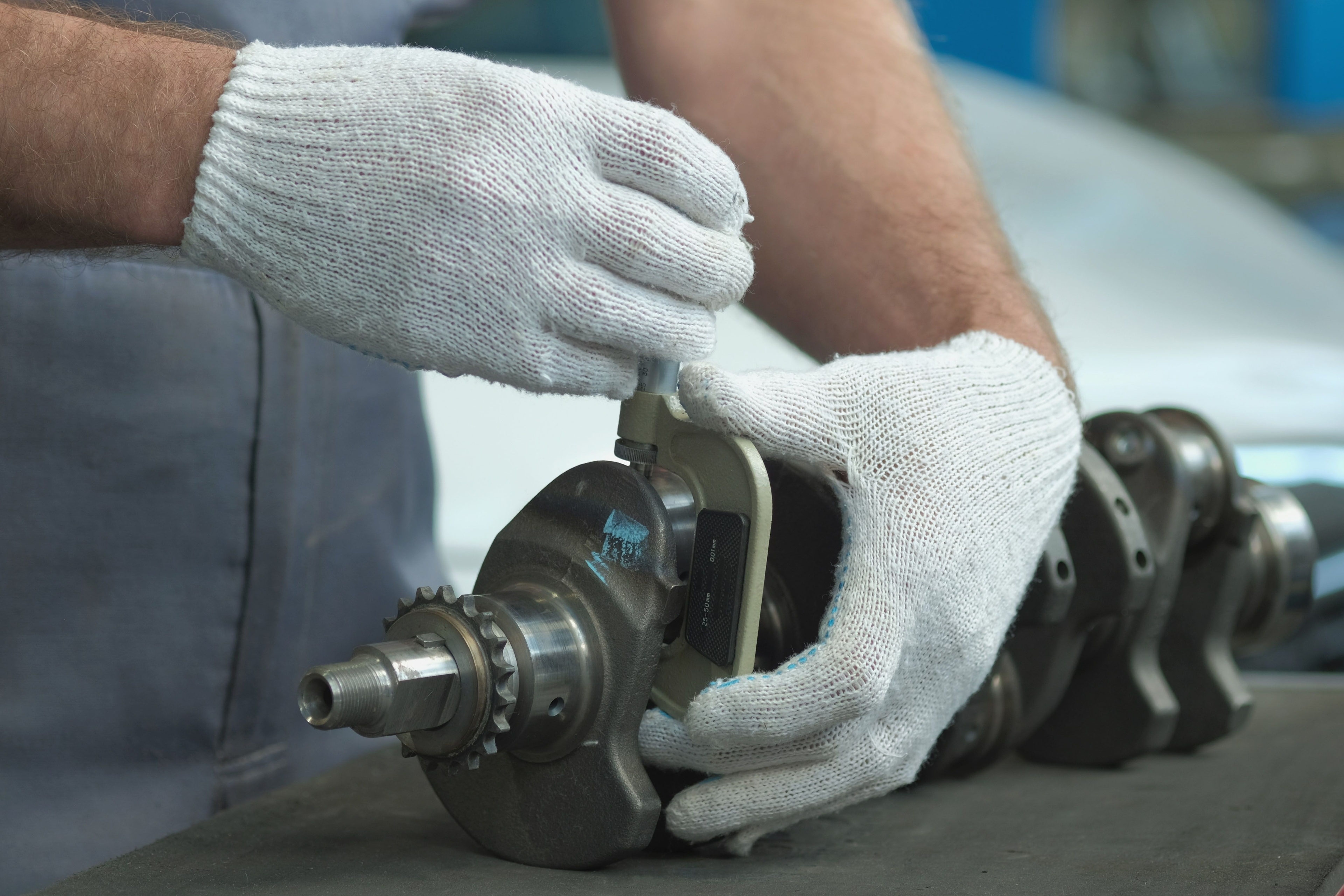
Now, let's get to the crankshaft, think of it as the backbone of the engine. The crankshaft is located at the bottom of the engine and is responsible for converting the up-and-down motion of the pistons into the rotational motion that ultimately turns the wheels of your car. It's the beating heart that keeps the engine's cycle going.
How Does a Crankshaft Work?
Connecting rods attach the pistons to the crankshaft. When the air-fuel mixture ignites, it creates a pressure that pushes the pistons down. This motion is transferred to the crankshaft, causing it to rotate. This rotation is what provides the power that propels the car. The crankshaft is designed to maintain rotational momentum, ensuring the engine keeps running smoothly.
How Do the Camshaft and Crankshaft Work Together?
The camshaft and crankshaft are like dance partners, linked by a timing belt or chain, often found at the front of the engine. They have to be in perfect sync to ensure that the engine's combustion process is well-timed, a concept known as valve timing. This synchronization ensures the valves open and close at the right moments for the engine to run efficiently.
In a four-stroke engine cycle, the crankshaft makes two full rotations for each cycle, which includes intake, compression, power, and exhaust strokes. Each piston moves up and down twice, while the camshaft completes one rotation. This means each valve only opens once for every two revolutions of the crankshaft. During the intake stroke, only the intake valves open, while during compression and combustion, both valves remain closed. In the exhaust stroke, the exhaust valves open to let out the burnt gasses.
Wrapping Up
So there you have it, the story of the crankshaft and camshaft. While they may have similar-sounding names, they perform different but equally vital tasks in keeping your engine running smoothly. We hope this article has helped you understand these components better. Don't forget to share this newfound knowledge with your friends who might still be tangled up in the confusion of these engine parts!

Written by
Nipuna Marasinghe