Let's Learn About the CVT Gearbox

There are varying opinions among people in Sri Lanka about the CVT (Continuously Variable Transmission) system found in many vehicles coming from Japan these days (like Toyota Vitz, Axio, Honda Fit). Some say it's fantastic, while others say it's a "heap of trouble." Today, let's discuss the true situation and simply how it works.
What is CVT?
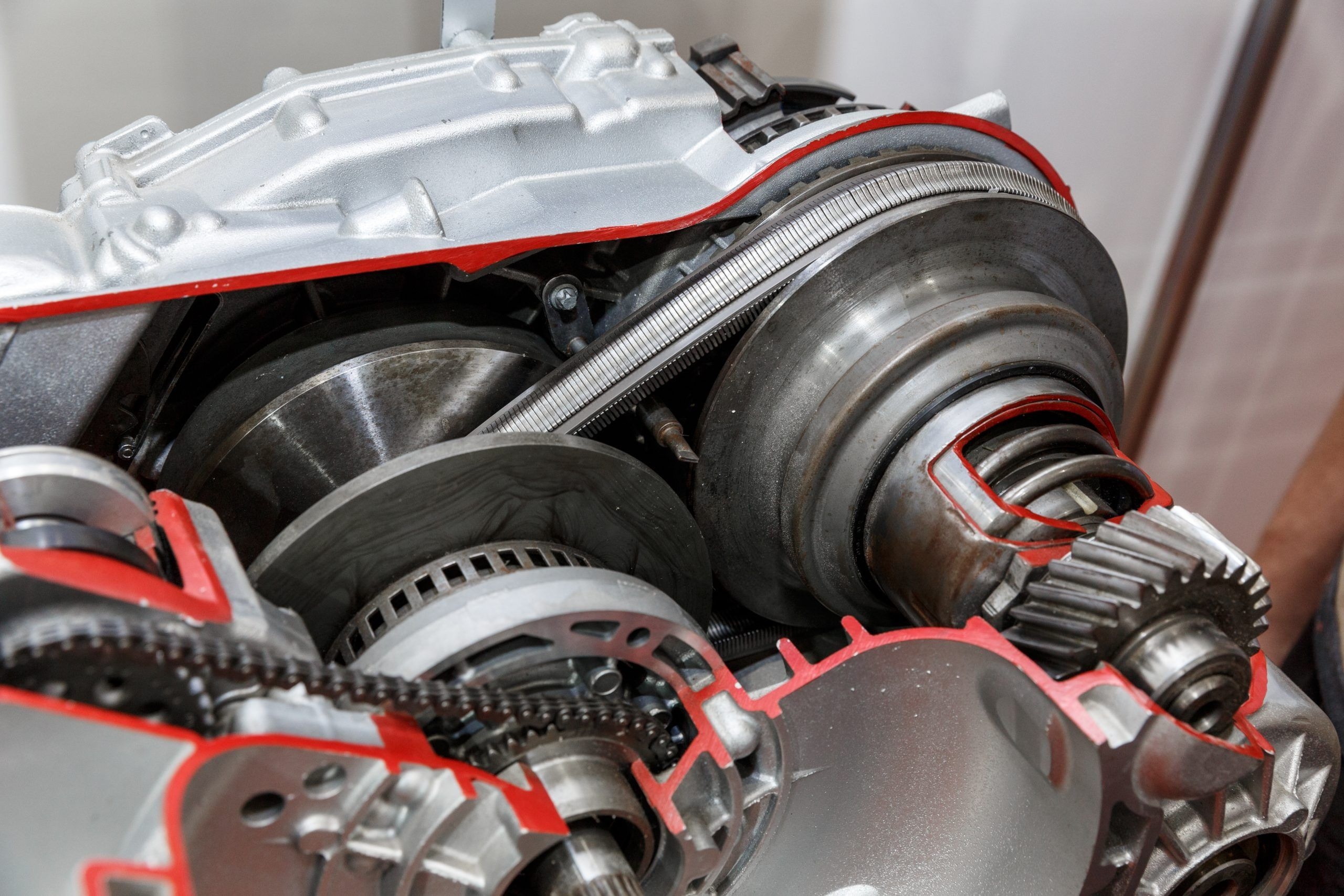
In a standard automatic vehicle, you feel a small jerk when gears shift from 1, 2, to 3, right? But a CVT doesn't have such gears. Instead, it has two Pulleys that can change size and a Steel Belt connecting them. The size of these pulleys changes constantly according to the vehicle's speed. Because of this, you don't feel gear shifts in a CVT. It's an experience like pulling smoothly in one continuous motion.
When talking about the operation of a CVT gear system, it is completely different from a standard gear system. As we mentioned earlier, instead of gear wheels, there are two adjustable pulleys and a steel belt connecting them.
Let's understand what actually happens inside with a simple example.
The Pulley System
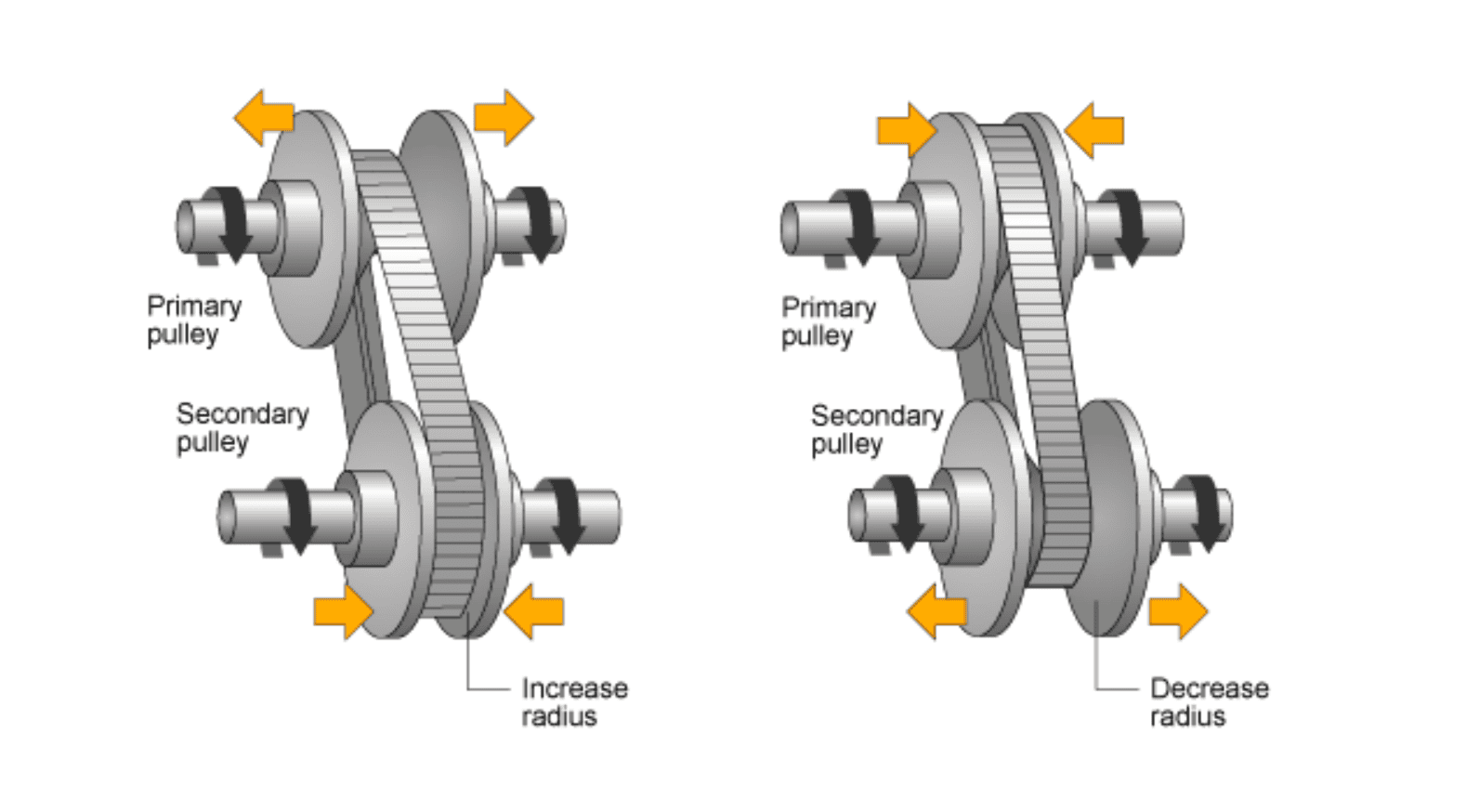
A CVT has two main pulleys:
- Drive Pulley: Connected to the engine (receives power from the engine).
- Driven Pulley: Connected to the wheels (provides power to turn the wheels).
Each of these pulleys is made of two cone-shaped discs facing each other. The distance between these two discs can be increased or decreased.
- When the two discs come closer, the belt running between them is pushed to the outer edge of the pulley (meaning the pulley's diameter becomes larger).
- When the two discs move apart, the belt sinks into the pulley (meaning the pulley's diameter becomes smaller).
How is Speed Controlled?
What a standard vehicle does by shifting gears from 1 to 5, the CVT does by changing the Diameter of these two pulleys inversely to each other.
- When starting the vehicle (Low Gear): The pulley connected to the engine becomes small, and the pulley connected to the wheels becomes large. Here, the engine gets a large amount of Torque to pull the vehicle forward.
- When the vehicle is moving fast (High Gear): The pulley connected to the engine becomes large, and the pulley connected to the wheels becomes small. Here, while the engine spins at lower revolutions, the wheels spin at higher revolutions. This increases fuel efficiency.
The "Invisible" Gear Shift (Infinite Gear Ratios)
A standard gearbox has only a few fixed gear ratios (e.g., 5 gears). However, because the sizes of the two pulleys in a CVT can be changed very precisely, it has an Infinite number of gear ratios.
When you increase speed, the vehicle feels "now I need to increase the gear a bit more." Then the two pulleys slowly change their sizes. Because this happens so precisely, we don't feel the gears shifting.
The Steel Belt and Oil Pressure
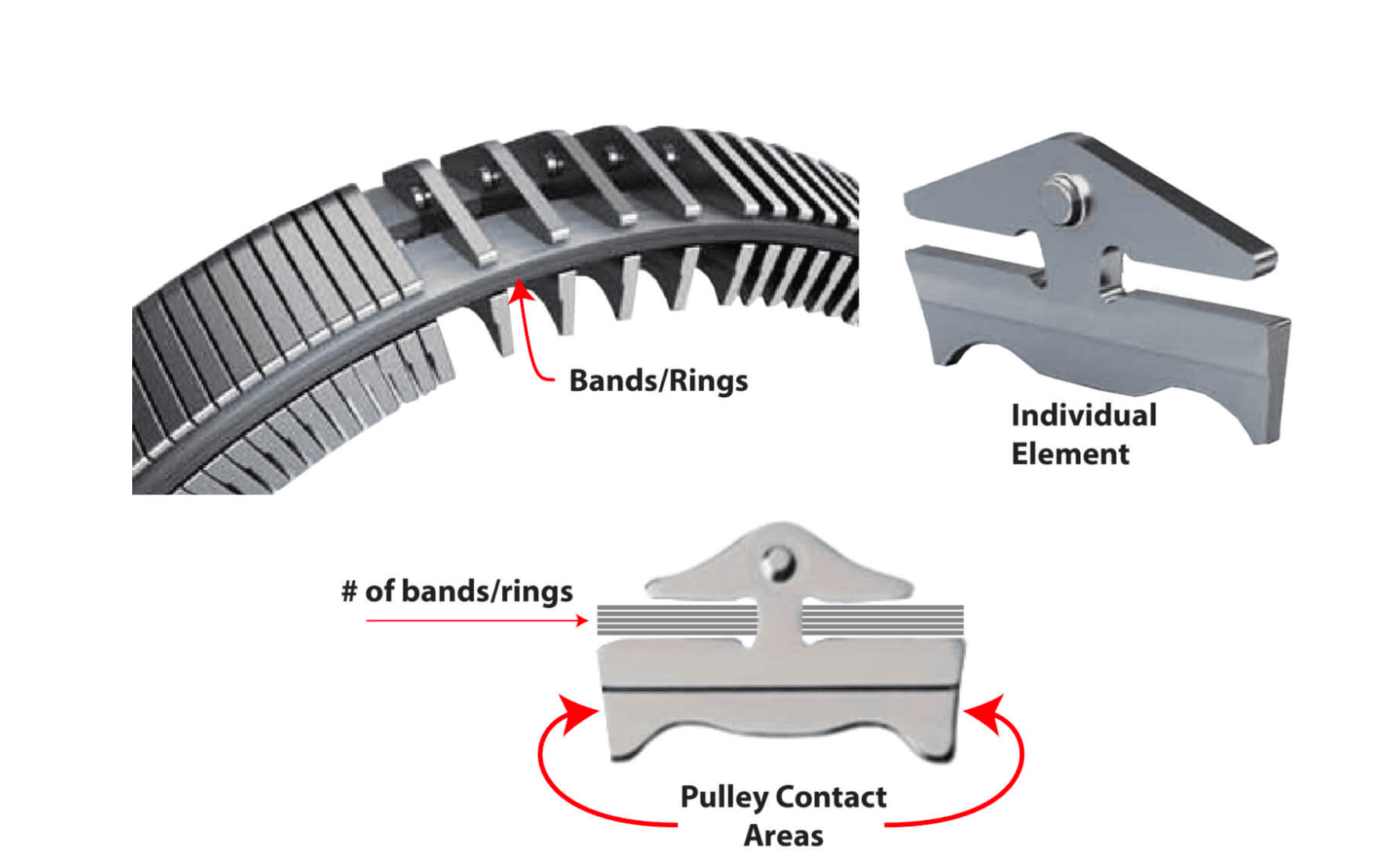
Hydraulic Pressure is used to grip these two pulleys tightly and keep the belt from slipping. This pressure is controlled by the vehicle's computer (ECU/TCU).
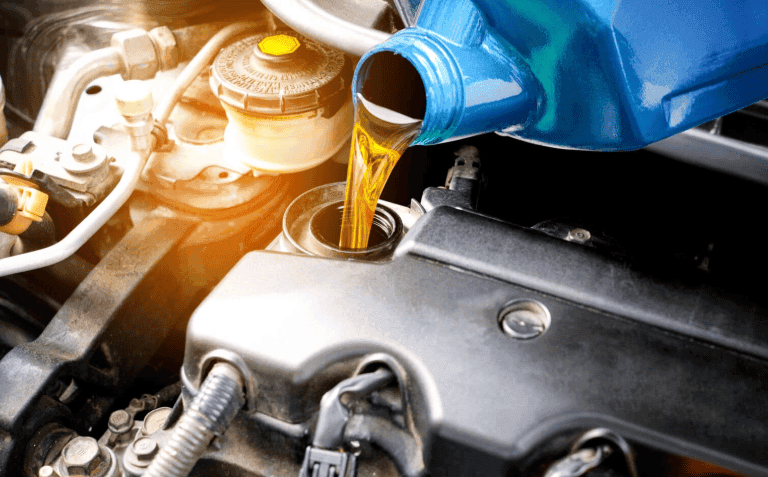
That is why I mentioned earlier that CVT Fluid is extremely important. Because that specific type of oil is essential to maintain this oil pressure correctly and to control the high Friction between the pulleys and the belt.
Advantages of CVT
CVT technology was introduced primarily targeting two factors:
- Fuel Efficiency: It saves petrol very well because it provides the exact gear ratio required for the speed without putting unnecessary strain on the engine.
- Driving Comfort: Since there is no jerking felt when shifting gears, you get a very Smooth driving experience. This is a big relief, especially when driving in traffic like in Colombo.
Reasons Why CVT Becomes "Sick" in Sri Lanka
Many people in Sri Lanka grew to dislike CVT not because of a fault in the gearbox, but because of the way we maintain it.
- Using Wrong Gear Oil: You must put only the CVT Fluid specific to it into a CVT. If you put ATF oil meant for standard auto gearboxes into a CVT, the gearbox can be completely destroyed in a few months.
- Not Changing Oil on Time: Due to traffic congestion and heat on Sri Lankan roads, CVT oil expires quickly. Generally, under Sri Lankan conditions, it is mandatory to change gear oil every 20,000 - 30,000 km.
- Driving Style: CVT is not a system built for racing. Sudden acceleration puts excessive pressure on the steel belt inside. Therefore, such actions can also damage it.
Things You Should Know as a CVT User
- Rubber Band Effect: When you increase speed, you might feel like the vehicle takes a small moment to speed up even though the engine noise increases. This is a nature of CVT, not a fault.
- Temperature: A CVT heats up quickly. Therefore, frequently overloading the vehicle or pulling up hills can reduce the gearbox's lifespan.
- Gear Lever: When shifting to 'N' or 'P' while the vehicle is stopped, do it only after coming to a complete stop.
In short, CVT is a comfortable technology that saves your money if used correctly. All it needs is the correct oil type and timely maintenance.

Written by
Nisaga Sandaru
A versatile and highly experienced professional, currently an Automobile undergraduate at the University of Jaffna, with strong technical expertise grounded in hands-on work as a technician with SriLankan Airlines Ground Support Equipment (GSE). Holding an Automobile NVQ Level 3 qualification, along with specialized certifications in Vehicle ECU Programming and Diagnosis, and extensive experience in arc welding and vehicle body painting, and well equipped to handle complex automotive, diagnostic, and fabrication-related tasks with a high level of competence.