How to Correctly Remove Air Locks from a Motorbike Brake System

The braking system of a bike is the main factor determining your safety. Sometimes, when you squeeze the brake lever, if you feel no resistance and experience a "spongy" sensation, it means air has entered the brake system. In technical terms, we call this an "Air Lock." Unlike brake fluid, air is a gas that can be compressed. Therefore, when you squeeze the lever, that pressure dissolves into compressing the air inside instead of traveling directly to the brake caliper. Today, Motor Guide will teach you the safe method for motorcycle brake air lock removal.
Preparation Before Starting
Before you begin removing air from the brake system, you need to have the necessary tools nearby. Mainly, you will need the specific brake fluid recommended by the bike manufacturer (usually DOT 3 or DOT 4), an 8mm or 10mm Ring Spanner, and a piece of clean transparent tube.
Remember specifically: brake fluid is extremely harmful to your bike's paint. Therefore, if a drop of oil accidentally touches the paint, wash it off with water immediately. Before starting the work, straighten the handle and keep the brake oil cup (Master Cylinder Reservoir) at a level position.
Master Cylinder and Filling Oil
First, remove the lid of the brake oil cup and carefully remove the rubber seal inside. Now, fill it with new brake fluid up to the "Max level." During the process of bleeding bike brakes, the oil level in the cup will drop. If it empties completely, air will enter the system again. Therefore, it is extremely important to keep an eye on whether there is oil in the cup throughout the entire task.
The Brake Bleeding Steps
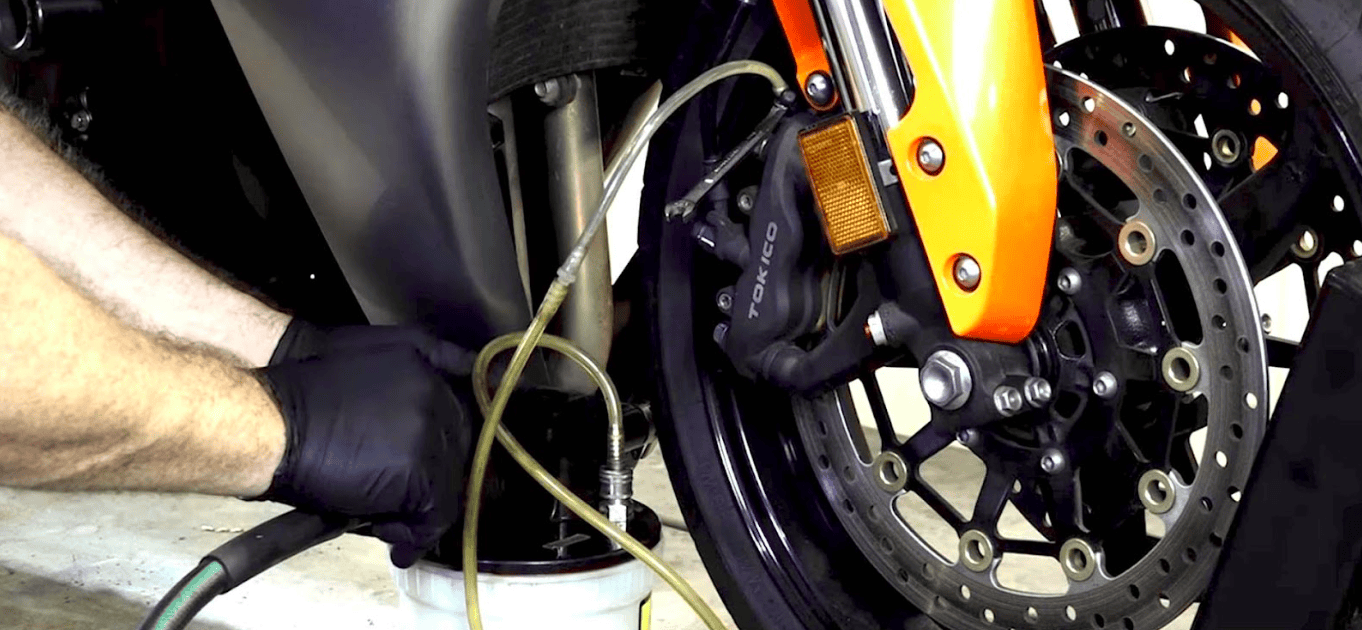
Now, locate the "Bleed Nipple" on the brake caliper near the bike's wheel. Remove the rubber cap on it and attach the transparent tube I mentioned earlier. Submerge the other end of the tube in a bottle containing a little brake fluid.
Now, squeeze the brake lever rapidly four or five times and hold it in the squeezed position on the last pump. While holding the lever tight, use the ring spanner to loosen the bleed nipple. You will see oil and air bubbles escaping down the tube. This is the core solution to the soft brake lever problem.
Stabilizing System Pressure
When the nipple is loosened, the brake lever will go all the way in. Do not release the lever at that moment. While still holding the lever tight, tighten the nipple again. Now, "pump" the lever again and hold it tight. You need to continue this process until no air bubbles are visible in the oil coming down the tube. When the air bubbles stop coming, tighten the nipple well and remove the tube.
Final Check and Safety
Once the job is done, fill the brake cup with the necessary amount of oil and tighten the lid. Now, when you squeeze the brake lever, it should have a good "grip" or firmness. Before taking the bike onto the road, ride at a slow speed and check if the brakes are working several times. Remember, completely changing brake fluid at least every two years is as important as changing engine oil. This is because, as it gets old, brake fluid absorbs moisture from the air, reducing its ability to maintain pressure.
Motor Guide Advice: If it is difficult to do this job alone, get someone's help. While one person pumps the lever, it is easier for the other person to loosen the nipple. Do not play with brakes and put your life and the lives of others in danger.

Written by
Nisaga Sandaru
A versatile and highly experienced professional, currently an Automobile undergraduate at the University of Jaffna, with strong technical expertise grounded in hands-on work as a technician with SriLankan Airlines Ground Support Equipment (GSE). Holding an Automobile NVQ Level 3 qualification, along with specialized certifications in Vehicle ECU Programming and Diagnosis, and extensive experience in arc welding and vehicle body painting, and well equipped to handle complex automotive, diagnostic, and fabrication-related tasks with a high level of competence.