How Can Uncleaned Battery Terminals Cause Starting Problems?


Keeping battery terminals clean is something many people overlook during vehicle maintenance. However, this small act of negligence can leave your vehicle stranded on the road at any given moment. Let's take a detailed look at how dirt buildup, or "corrosion," on battery terminals hinders your vehicle from starting.
What is the White Powder on Battery Terminals?
There is a continuous chemical process happening inside a battery. The hydrogen gas released from the sulfuric acid inside the battery reacts with the metal on the terminals to form a white or light-blue powder-like substance. We call this Lead Sulfate. Because of this buildup, the connection between the battery terminal and the battery cable clamp is compromised. It is essentially like trying to tie two wires together with a piece of wood in the middle. As a result, a massive resistance to the flow of electricity is created.
The Problem During Starting
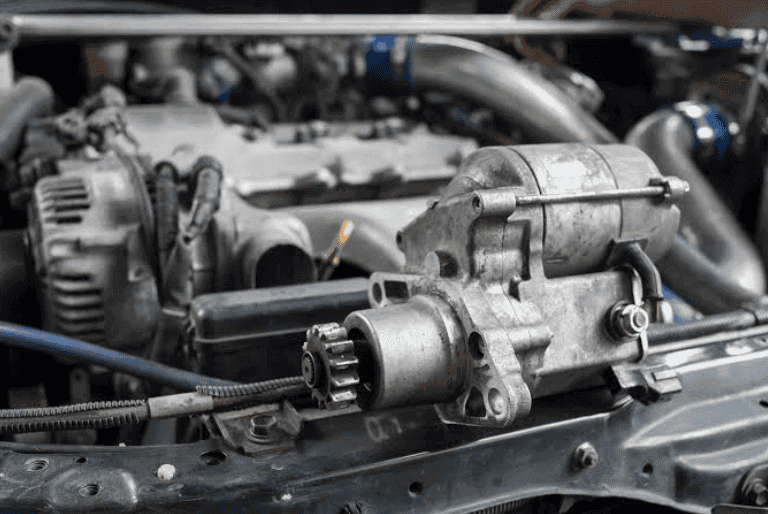
Starting a vehicle is the hardest job a battery has to do. To turn the starter motor, an extremely high electrical current (High Amperage) is required. When the terminals are covered in corrosion, that layer of dirt prevents the current from the battery from flowing freely to the starter motor. Consequently, when you try to start the car, you might only hear a rapid "tick-tick" sound, or the starter motor will struggle to turn. Even if the battery is fully charged, because the current cannot pass through the terminal, you might mistakenly think the battery is dead.
Impact on the Alternator and Charging System
There is another side to this. When battery terminals are dirty, it doesn't just stop electricity from coming out of the battery; it also prevents the charge from the Alternator from going in. When you are driving, the electrical current generated by the Alternator is blocked by the layer of corrosion on the terminals. Because the battery does not charge properly, the next time you turn off the vehicle and try to start it, the battery might be completely low. This is exactly like a blocked water pipe failing to fill up a water tank.
Overheating and Damage to the Wiring System
When a terminal is loose or dirty, the electrical resistance increases. According to the principles of electricity, high resistance generates heat. Sometimes, you might notice that the battery terminal becomes too hot to even touch. If this continues, the insulation on the wires connected to the terminal can melt, potentially causing a short circuit. Furthermore, this extreme heat can melt the plastic casing of the battery, completely destroying it.
Impact on Smart Sensors and Electronic Devices
Modern vehicles are packed with sensors and computer systems (ECU). These devices operate strictly on a stable voltage. When battery terminals are dirty, the electrical supply fluctuates, causing Voltage Spikes. Because of this, the Engine Check Light on your dashboard might illuminate, the engine might start misfiring, or you might experience jerky gear shifts. Many people assume this is a gearbox issue, but the real culprit is often just a dirty battery terminal.
How to Clean Them Properly
Now let's see how to solve this problem easily at home.
- First, disconnect the negative (-) battery cable, and then disconnect the positive (+) cable.
- Dissolve about two teaspoons of baking soda in a cup of warm water, and pour that water over the terminals. The white powder will foam up and dissolve.
- Take a wire brush or some sandpaper and clean the terminal and the inside of the clamp until the bare metal shines.
- When reconnecting, attach the positive (+) cable first, followed by the negative (-) cable, and tighten them securely.
- Finally, apply a little Petroleum Jelly (Vaseline) over the terminals. This prevents oxidation from happening again.
While maintaining battery terminals is a very simple task, the benefits you gain from it are massive. If you take a look at your battery and do this cleaning at least once every three months, you won't have to face the hassle of getting stranded with a car that won't start. Always remember, tightly secured and clean terminals are the secret to a vehicle's healthy electrical system.

Written by
Nisaga Sandaru
A versatile and highly experienced professional, currently an Automobile undergraduate at the University of Jaffna, with strong technical expertise grounded in hands-on work as a technician with SriLankan Airlines Ground Support Equipment (GSE). Holding an Automobile NVQ Level 3 qualification, along with specialized certifications in Vehicle ECU Programming and Diagnosis, and extensive experience in arc welding and vehicle body painting, and well equipped to handle complex automotive, diagnostic, and fabrication-related tasks with a high level of competence.