Things You Can Check at Home Using an OBD Scanner

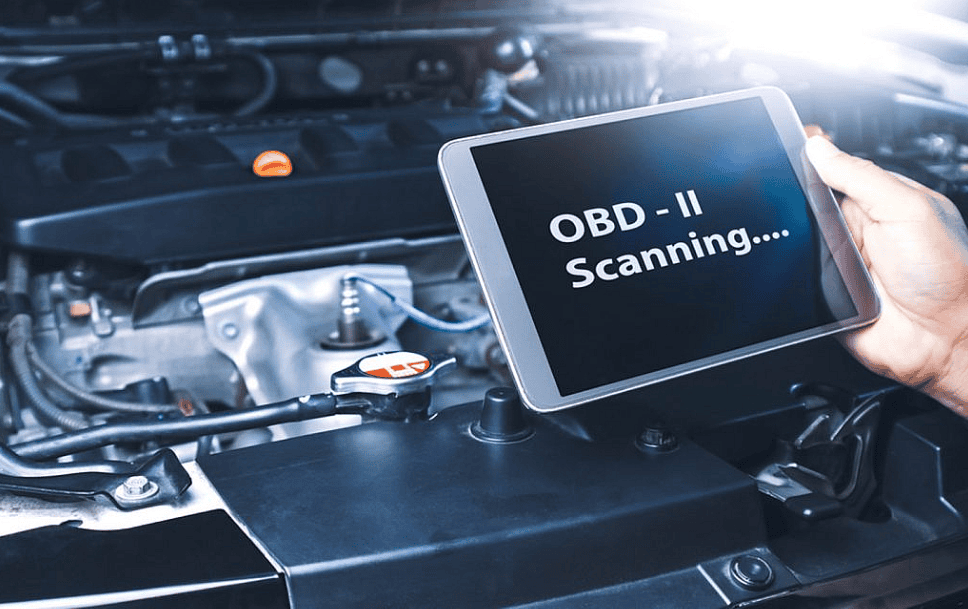
You don't always have to run to a garage every time your vehicle gets a fault. With today's technology, an OBD (On-Board Diagnostics) scanner is a must-have tool for any vehicle owner. (You can use your mobile phone for this, and you can buy these small devices at very low prices.) It's like a magic device that can read the secrets hidden inside your vehicle's "heart." However, to get the most out of it, you need to have a proper understanding of what it can actually do. Let's look at what kinds of things you can check on your vehicle right at home using this small device.
What exactly is an OBD Scanner?
First, let's see what this does. A vehicle's ECU (Engine Control Unit) monitors almost every part of the vehicle. If a fault occurs, it remembers it as an "Error Code." What an OBD scanner does is read that code and display it in a language we can understand. Generally, any vehicle manufactured after 1996 has this OBD-II port. This is usually located under the steering wheel on the driver's side.
Identifying Engine Faults (Check Engine Light)
Many people panic when the 'Check Engine' light illuminates on their vehicle's dashboard. But if you have a scanner, you can find out why it turned on in just a few seconds. It could be something as simple as a loose Fuel Cap, or it could be a major fault in an engine sensor. By Googling a code like P0420 or P0300 that you get from the scanner, you can easily understand what has happened. Also, once the fault is fixed, you can use the scanner to 'Reset' and turn off that light.
Live Data Stream Inspection
This is the most valuable feature of an OBD scanner. While the vehicle is running, you can see what is happening inside the engine in real-time. For example:
- Engine Coolant Temperature: You can check if the engine temperature is at the correct level. You can identify cooling issues before the engine overheats.
- RPM and Speed: You can verify if the vehicle's speed and the engine's RPM are being displayed accurately.
- Oxygen Sensor Readings: You can read these sensor data to check whether fuel combustion is happening correctly in the vehicle.
Status of the Fuel System and Combustion
When an issue with poor fuel economy arises, many people just start replacing parts. But if you look at the 'Fuel Trim' data with a scanner, you can tell exactly whether the vehicle is getting too much fuel (Rich) or not enough fuel (Lean). Similarly, if there is a 'Misfire'—meaning combustion isn't happening properly in a cylinder—the scanner will show you exactly which cylinder is causing the problem. Then you won't have to waste money unnecessarily changing every single spark plug.
Battery and Charging System (Battery & Alternator)
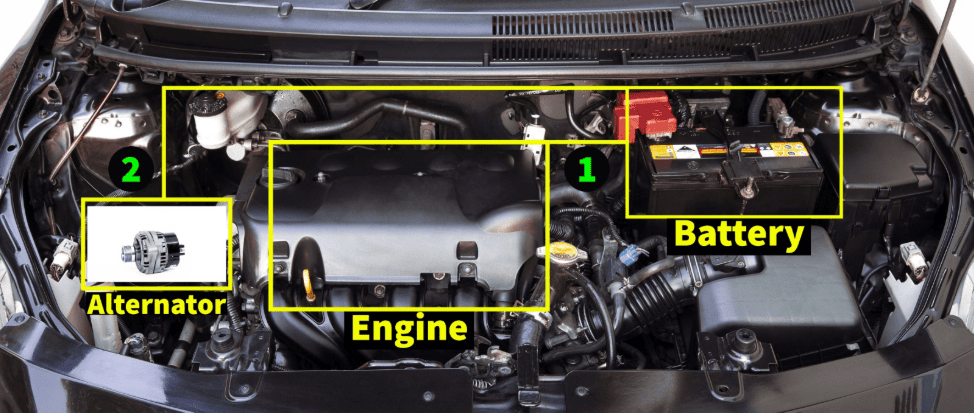
Many modern OBD scanners have the facility to check battery voltage. You can easily see what the battery voltage is before starting, how much it drops during starting (Cranking Voltage), and whether the alternator is properly charging the battery. This is a huge help in knowing when it's time to replace the battery before getting stranded on the road.
Preparation for Emission Testing (I/M Readiness)
In Sri Lanka, we all have to get an emission certificate once a year. Often, we only find out the vehicle has a fault when we fail the emission test. However, through the 'I/M Readiness' section on the OBD scanner, you can check if all the sensors in the vehicle's emission system are functioning properly. Checking this before you go can save you from wasting time and failing the test.
Pre-Purchase Inspection
If you are going to buy a used vehicle, taking an OBD scanner with you is mandatory. Some sellers might temporarily clear warning lights on the dashboard. But when you plug in a scanner, those faults will show up as 'Permanent Codes' or 'Pending Codes'. Furthermore, on some vehicles, you can even verify the true driven mileage (odometer reading) using the scanner.
Things to Keep in Mind
Even though you can do many things with this device, there is something you must remember. The scanner only points out the location of the fault. To repair it accurately, some technical knowledge is required. For example, if it says "Oxygen Sensor Fault," it could be a sick sensor, or it could simply be a wiring issue. Therefore, use both the scanner's data and your experience. If not, seek a mechanic's assistance.
If you have a standard vehicle, you can buy a Bluetooth OBD2 scanner for between 3000-5000 LKR, install an app like 'Torque' or 'Car Scanner' on your phone, and get all these tasks done very easily.

Written by
Nisaga Sandaru
A versatile and highly experienced professional, currently an Automobile undergraduate at the University of Jaffna, with strong technical expertise grounded in hands-on work as a technician with SriLankan Airlines Ground Support Equipment (GSE). Holding an Automobile NVQ Level 3 qualification, along with specialized certifications in Vehicle ECU Programming and Diagnosis, and extensive experience in arc welding and vehicle body painting, and well equipped to handle complex automotive, diagnostic, and fabrication-related tasks with a high level of competence.