Types of Car Transmissions

Do you have a manual car or an automatic car? Whatever car you have, you know how to drive it correctly, what not to do, and the differences between manual and automatic transmissions. But do you know what types of transmissions exist in motor vehicles? That's what you need to know next. That's why MotorGuide thought we'd tell you about car transmission types today.
What is a Transmission?
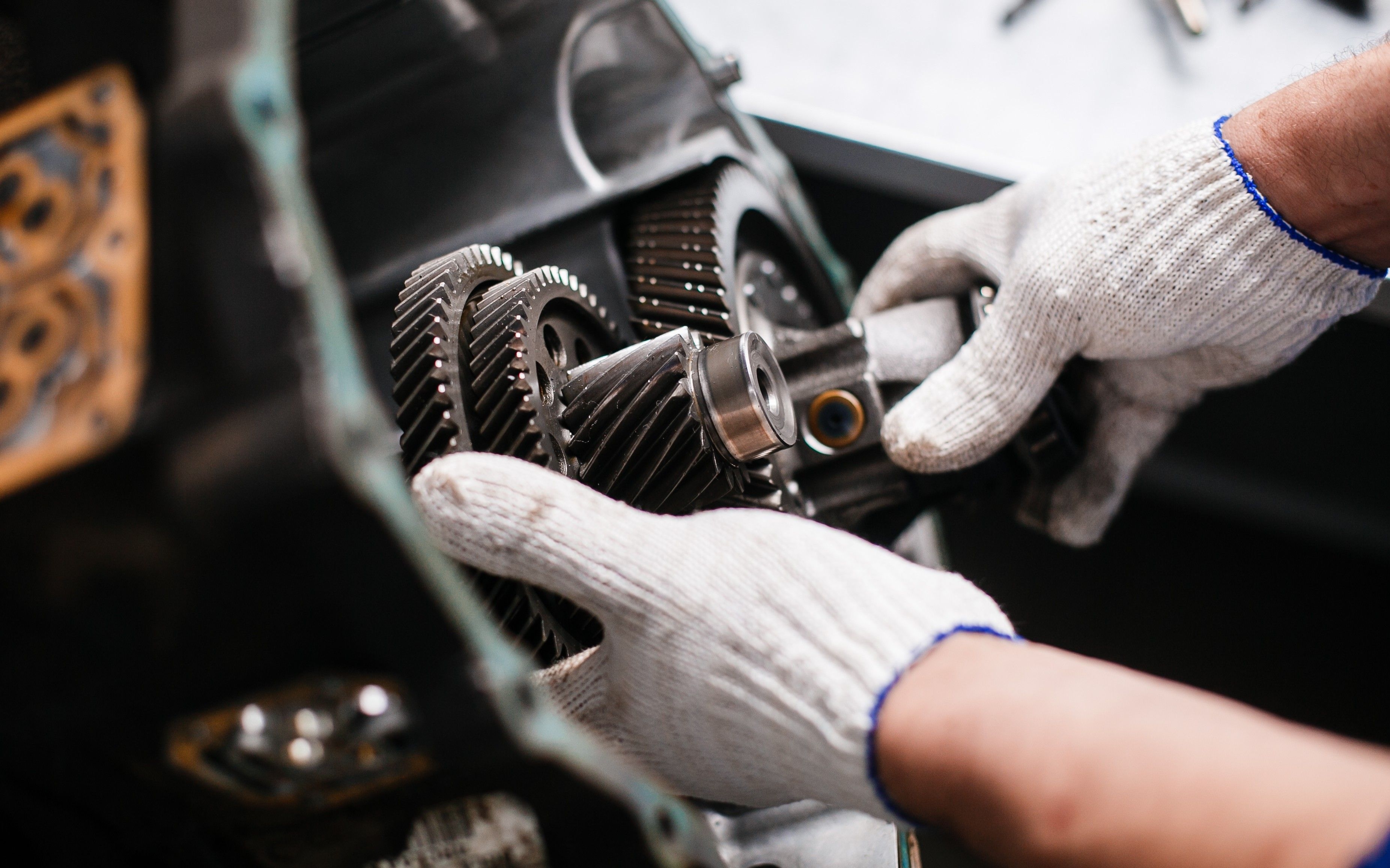
In motor vehicles, the transmission, or gearbox, acts as a medium to transmit the power generated by the engine to the wheels through a mechanical system of gears and gear trains. A transmission allows the driver to apply power to the vehicle with control; otherwise, the motor vehicle would not move efficiently. Lower gears provide the necessary torque for acceleration. Higher gears help achieve high speeds by utilizing the engine's power more effectively.
So, there are different types of transmissions that help transmit power into motion. Let's now look at what these transmission types are and what they do.
Manual Transmission
If you want to feel more connected to your car, a manual transmission is the best way. In a manual transmission car, you use the clutch pedal and the gear stick located on the floor between the front seats or on the center console to engage the right gear.
Driving a manual transmission is a skill that requires understanding, learning, and practice to get the maximum efficiency, power, and acceleration from the motor vehicle. Among transmission types, manual transmissions have the highest fuel efficiency.
However, this depends on your driving style. The reason for this is that aggressive gear usage will give you the lowest mileage. So, this is what happens with a manual transmission.
Automatic Transmission
An automatic transmission is a type of transmission that changes gears automatically. Therefore, the driver does not need to shift gears manually. This automatic transmission uses sensors to monitor the vehicle's speed and engine RPM. It also changes the gear ratio with the help of an electronic control unit (ECU). We can see various types of automatic transmissions. Let's look at what they are now.
Torque Converter Transmission
Torque converter transmissions are also known as torque converter automatics. They use advanced fluid coupling to amplify the torque produced by the engine and transmit power to the wheels. The torque converter transmission is the oldest automatic transmission found in motor vehicles.
A motor vehicle with a torque converter transmission does not have a clutch pedal. This transmission system operates through two turbines. One turbine is connected to the engine, and the other to the transmission. The hydraulic fluid between both turbines transfers power from the engine-side turbine to the transmission-side turbine, thereby creating vehicular movement. Motor vehicles with automatic converter transmissions are much easier to drive. They provide sufficient torque for smooth acceleration. Although these torque converters are fuel-efficient, their engineering complexity makes them more expensive than manual transmissions.
Continuously Variable Transmission
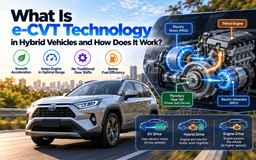
A CVT transmission system operates through a pulley system. Each pulley has two cones connected via a chain belt. Here, these cones can move to increase or decrease the belt diameter to change gear ratios. This feature of CVT allows for infinite gear ratios, enabling the transmission to shift quickly based on the motor vehicle's requirements.
The main advantage of a CVT transmission is that it can continuously maintain the engine's revolutions per minute, regardless of the vehicle's speed. This increases fuel economy and provides a smooth driving experience. A CVT automatic transmission is an affordable automatic gearbox. However, repairing a CVT gearbox can incur a high cost.
Semi-Automatic Transmission
A semi-automatic transmission combines the convenience of an automatic transmission with the connected elements of a manual car. Semi-automatic transmissions include Automated Manual Transmissions (AMT) and clutchless manuals like Hyundai's iMT. While a semi-automatic transmission lacks a clutch pedal, it still has a gear stick. This transmission uses an actuator to engage the clutch based on engine speed, allowing for smooth gear changes.
A semi-automatic transmission is more budget-friendly than torque converters and CVTs. However, due to the complexity of its clutch system, this automatic transmission is not as inexpensive as a manual transmission.
Dual-Clutch Transmission
A dual-clutch transmission is an automatic transmission type that uses two clutches to shift gears. In a DCT transmission, there are two gear sets, categorized as odd and even. For example, gears 1-3-5 and 2-4-6. One clutch is connected to the odd group, and the other clutch is connected to the even group. This arrangement engages gears quickly and smoothly because one gear is already engaged in the dual clutches, and the previous gear is ready to deploy once it approaches its gear range. For this reason, DCT transmissions are fuel-efficient. However, they are significantly more expensive than the other transmissions we discussed. The high cost is due to their highly complex build and operation, which is why this transmission is primarily used in high-end cars.
Tiptronic Transmission
Tiptronic transmission is also known as "Sportmatic" or "Steptronic." A Tiptronic transmission is a type of automatic transmission that features a manual gear-shifting mode. This means the driver can choose to shift gears manually when desired. In motor vehicles with Tiptronic transmission, you'll find a gear lever behind the steering wheel, a second gear panel to the right of the original gear stick plate, or paddle shifters. The Tiptronic transmission differs from a semi-automatic transmission because it uses a torque converter instead of a clutch for gear changes.
This Tiptronic option appears differently in various motor vehicles. However, the standard form has "+" and "-" symbols at both ends of the Tiptronic lever's column. "+" means upshift, and "-" means downshift. To upshift, you need to push the lever forward. To downshift, you need to pull the lever backward. This can also be done via paddle shifters. In Tiptronic mode, gear changes must occur according to the gear order. This means the driver cannot shift to any gear outside that sequence. Many motor vehicles with Tiptronic transmission automatically shift gears to protect the engine.
Today, we discussed several types of car transmissions. While you may be most familiar with manual and automatic transmissions, this article also informed you about the types of transmissions under automatic transmission. When discussing vehicles, you should know this part. So, don't forget to share this with those you know.

Written by
Nipuna Marasinghe