The Difference Between NVQ and IVQ in the Automotive Sector


Today at Motor Guide, we are discussing one of the biggest questions and confusions among those hoping to newly enter the automotive sector in Sri Lanka, or those already enrolled in a Technical College studying this subject. That is, what is the actual difference between the NVQ and IVQ course systems that we constantly hear about when studying automotive mechanics? Since modern vehicle technology is a rapidly changing field, if you want to progress in this sector, it is highly important to clearly know what vocational education certificate you are choosing and what value it holds for your future.
What is NVQ?
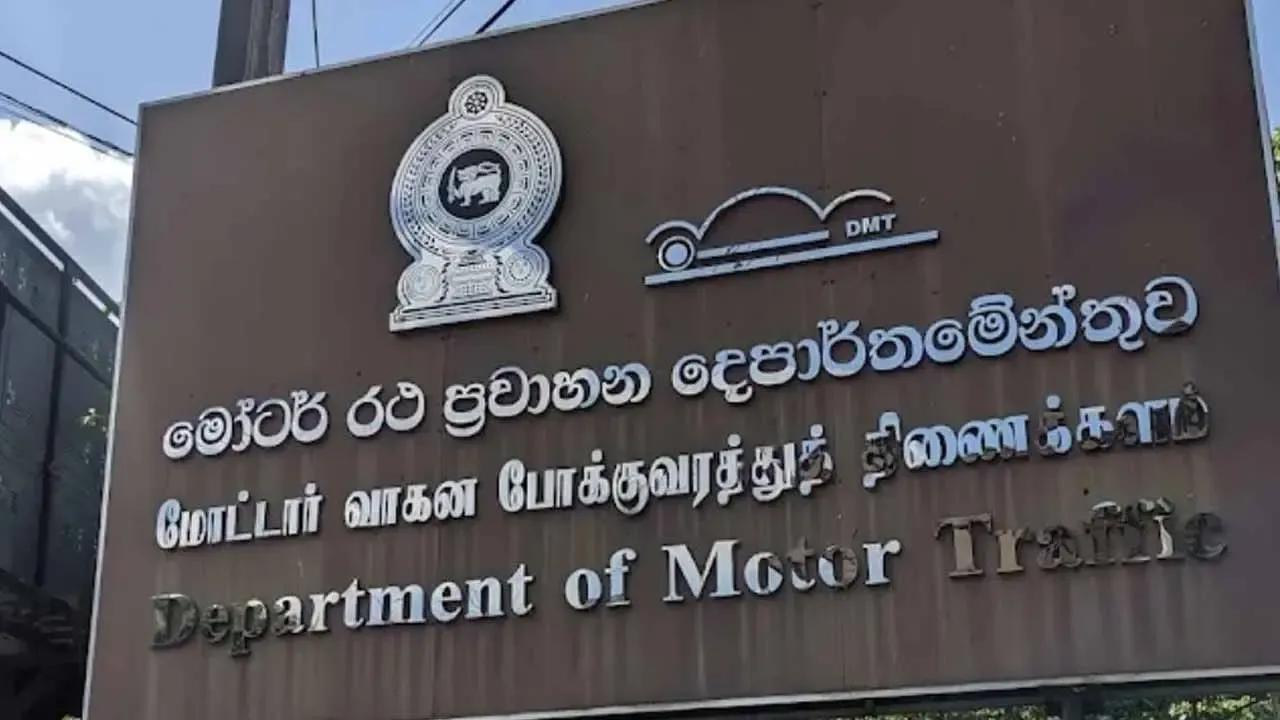
First, let's look at the NVQ system in detail. The acronym NVQ stands for National Vocational Qualification. The entire system is monitored and certificates are issued by the Tertiary and Vocational Education Commission (TVEC) of Sri Lanka. Government Technical Colleges spread across Sri Lanka, the German Tech Institute (CGTTI), the Vocational Training Authority (VTA), and NAITA are the primary government vocational training centers that teach these NVQ certificate courses.
Within this system, there are levels ranging from Level 1 to Level 7. Generally, a person studying to become an auto mechanic starts their journey at Level 3 or Level 4. From there, Levels 5 and 6 represent Diploma and Higher Diploma levels, while Level 7 is a university-level vocational degree. For someone hoping to work within Sri Lanka, this NVQ certificate receives highly recognized acceptance in both the government and private sectors. Also, one of its biggest advantages is that you can obtain this education through government institutions at a very minimal cost, or sometimes completely free of charge.
What is IVQ?
Now let's look at what IVQ is. The simple meaning of IVQ is International Vocational Qualification. Some Technical Colleges and private educational institutes in Sri Lanka conduct these courses in affiliation with external international organizations. The best and most popular example of this in Sri Lanka is the Automotive Technology Certificate courses conducted by the City & Guilds institute in the UK. Because this certificate is formulated directly according to international standards, it is equally recognized in a vast number of countries around the world.
However, its primary characteristic is that the examination fees and registration fees for these courses must be paid in foreign currency, meaning in currencies like Sterling Pounds. Therefore, compared to NVQ courses, completing an IVQ course requires spending a considerably large amount of money.
Curriculum and Practical Differences
As professionals in this field, one thing we constantly see and experience are the practical differences between the syllabuses and teaching styles of these two courses. In the NVQ system, the primary focus is given to practical training suited for the automotive industry and local market in Sri Lanka. This means there is a strong focus on the engine systems, gear systems, and practical workshop maintenance procedures of Japanese and Indian vehicles that are most commonly used in Sri Lanka. Furthermore, because on-the-job factory training is mandatory through institutions like NAITA, students gain abundant real-world experience in the field.
However, a different international standard is observed in an IVQ course. There, the latest global vehicle technologies, modern hybrid and electric vehicle systems, computerized troubleshooting methods, and international safety protocols are taught very deeply, both theoretically and practically. Because of this, IVQ provides a foundation for the student to work fearlessly with even the most modern vehicles anywhere in the world.
Language and Examination Methods
Another clear difference is the language of instruction and the examination method. NVQ courses can be studied in any language in Sri Lanka—Sinhala, Tamil, or English. Moreover, its evaluations are based on practical marks awarded by examiners who observe how you work in the workshop. Therefore, even a person with lower reading and writing skills but excellent practical abilities can easily pass an NVQ.
But with IVQ, teaching and examination activities are mostly conducted entirely in English. Even the exam papers arrive from the foreign parent institution, and they are marked and results are issued by them. Because of this, someone doing an IVQ must absolutely have a good command of the English language and the ability to handle technical terminology, in addition to automotive technology.
Job Market Demand
Looking from the perspective of the job market, these two certificates have different demands. If your sole objective is to work within Sri Lanka, or to work as a technician in a major vehicle agency in Sri Lanka, the NVQ certificate is perfectly sufficient for you. This is because both private and government institutions in Sri Lanka heavily consider NVQ levels when providing employment. Specifically, NVQ qualifications have been made mandatory for recruitment in government technical jobs.
However, if your hope is to secure a high-level job in the automotive engineering sector outside Sri Lanka—in Middle Eastern countries, Australia, New Zealand, Canada, or European countries—the IVQ certificate makes your journey much easier. Because international companies are well aware of the standards of certificates like City & Guilds, the IVQ certificate receives special priority when applying for foreign jobs and visas, granting you the ability to secure a higher salary.
Motor Guide's Final Advice
Motor Guide's advice is this: before you choose one of these two courses, you must very intelligently think about your current financial strength and what your future career goal is. If you find it difficult to spend a large amount of money on courses, immediately join a government Technical College or another government institute and start an NVQ course. Because the local practical training you receive there will certainly turn you into a skilled worker in the field.
But if you have some financial capability and your sole aim is to rapidly move into an international-level job, choosing an IVQ course is the most suitable. I'll tell you another valuable secret: if possible, try to obtain an IVQ certificate privately or externally while completing your NVQ levels from a government institute in Sri Lanka. If you can combine both these qualifications, there will be absolutely no obstacle for you to reach the highest peak in the automotive sector, not just in Sri Lanka, but in the entire world.
And don't forget to always stay tuned with Motor Guide to learn more valuable information like this about modern vehicles and technology!

Written by
Nisaga Sandaru
A versatile and highly experienced professional, currently an Automobile undergraduate at the University of Jaffna, with strong technical expertise grounded in hands-on work as a technician with SriLankan Airlines Ground Support Equipment (GSE). Holding an Automobile NVQ Level 3 qualification, along with specialized certifications in Vehicle ECU Programming and Diagnosis, and extensive experience in arc welding and vehicle body painting, and well equipped to handle complex automotive, diagnostic, and fabrication-related tasks with a high level of competence.